Clear Sky Science · en
Protein microarray-based profiling of salivary IgA antibodies against human proteins in COVID-19 patients with depressive symptoms
Why this matters
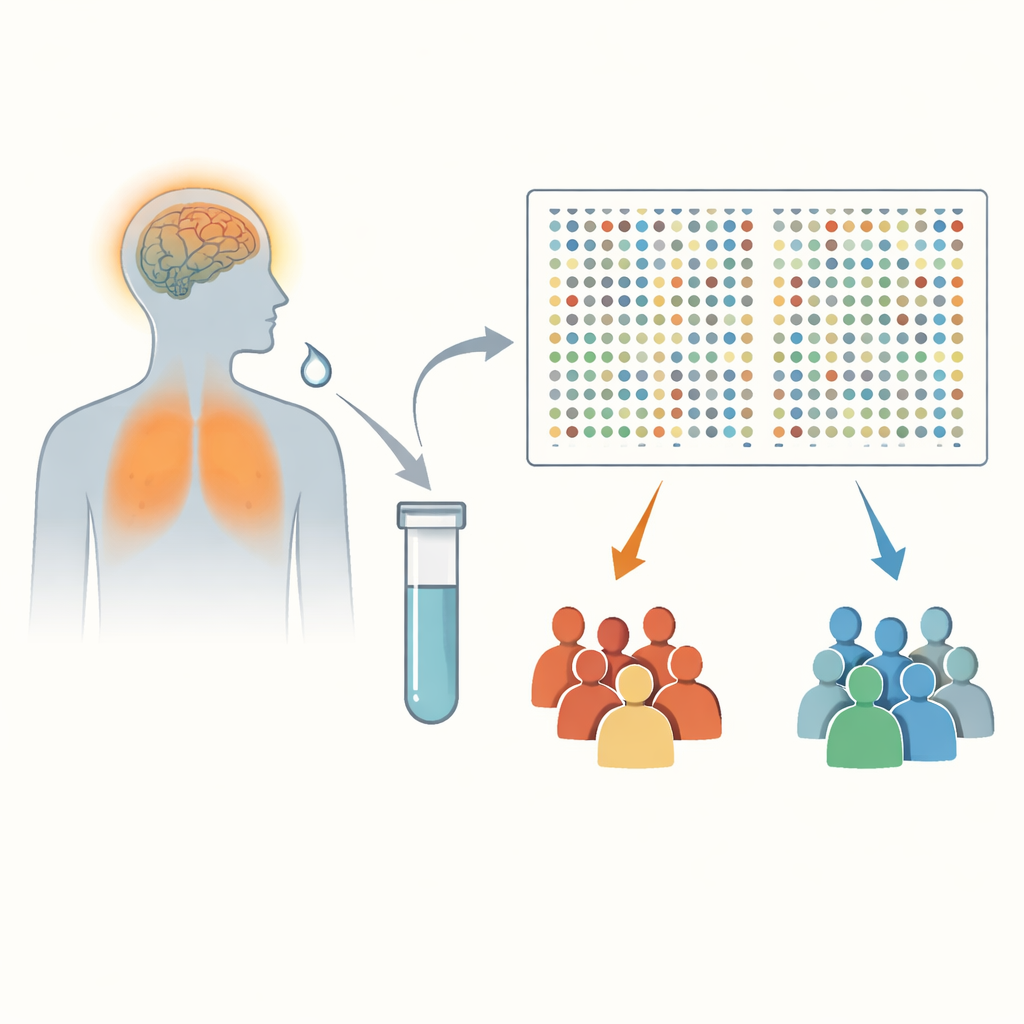
Many people who recover from COVID-19 continue to struggle with lingering problems such as fatigue, “brain fog,” and low mood. These Long COVID symptoms can look a lot like depression, but doctors still lack simple tests to tell what is happening inside the body. This study asked whether a quick saliva test might reveal immune fingerprints linked to depressive symptoms after COVID-19, offering clues to both cause and potential future diagnostics.
Looking for clues in saliva
The researchers focused on IgA, a type of antibody that is naturally abundant in saliva and reflects the body’s defenses along surfaces like the mouth and airways. They collected morning saliva from three small groups of adults in Japan: people who had COVID-19 and later developed moderate to severe depressive symptoms, people with no history of COVID-19 and little or no depression, and people diagnosed with depression but who had never had COVID-19. Everyone filled out a standard questionnaire on mood at the same time their saliva was collected.
A protein map of immune reactions
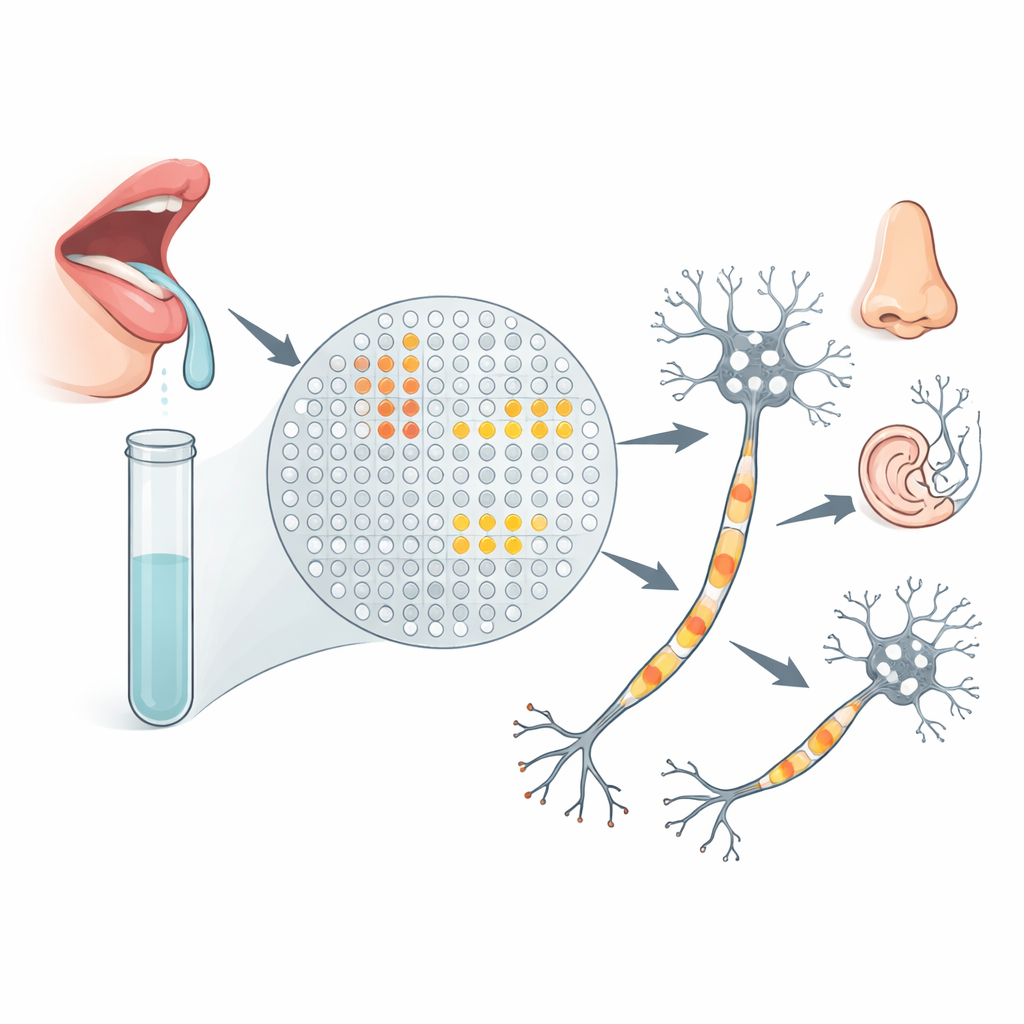
Instead of testing one antibody at a time, the team used a human protein “microarray” slide that displays more than 15,000 different human proteins. When a saliva sample is washed over this slide, any IgA antibodies that recognize one of these proteins will stick to it, creating a pattern of signals across the grid. The scientists then used strict cutoffs to flag proteins that showed clearly higher IgA signals in the COVID-19 group than in the healthy control group, aiming to highlight striking differences rather than subtle shifts that might be due to chance in such a small cohort.
A distinct antibody pattern after COVID-19
The analysis uncovered 65 human proteins that were recognized by IgA antibodies only in people who had experienced COVID-19 with depressive symptoms and not in healthy controls. When they looked at how samples grouped together based on these antibody signals, most of the COVID-19 samples clustered apart from both healthy volunteers and people with depression unrelated to COVID-19. This suggests that the immune response pattern in saliva is not simply a feature of feeling depressed in general, but may be tied specifically to the aftermath of SARS-CoV-2 infection in some individuals.
Links to nerves, senses, and mood
Many of the proteins flagged by these antibodies are involved in nerve cell structure, communication, or sensory functions. For example, some are related to the stability of the long fibers of nerve cells, while others help with smell, balance, or visual processing—functions often disturbed in Long COVID. One protein, NEFH, helps maintain the scaffolding of nerve fibers and has been associated with neurological damage in other conditions. Autoantibodies against NEFH appeared in several people in the COVID-19 group but not in healthy controls. Other targeted proteins, such as CHMP2B and CHMP7, are part of a cellular recycling system that also plays a role in the life cycle of viruses and has been linked to nerve degeneration in previous research.
What the findings do and do not show
Although the newly detected antibodies line up intriguingly with symptoms like cognitive problems, dizziness, and loss of smell, the study does not prove that these antibodies cause depressive symptoms or brain changes. The participants were few in number, differed in medications and timing since infection, and were sampled only once. The authors emphasize that their work is exploratory: the unusual IgA patterns are best viewed as candidate markers of an altered immune state after COVID-19, not as confirmed drivers of disease.
Takeaway for patients and clinicians
To a layperson, the key message is that some people with Long COVID and depressive symptoms appear to carry a distinctive set of saliva antibodies that target certain human proteins, many linked to nerve and sensory functions. If confirmed in larger and more diverse groups, these antibody patterns might eventually help doctors identify subtypes of Long COVID, track who is at risk for ongoing mood and thinking problems, and design more tailored treatments. For now, they offer an important starting point: evidence that the immune system’s lingering footprint after COVID-19 may be tied to how people feel and function months after the initial infection.
Citation: Hikichi, Y., Kunieda, K. Protein microarray-based profiling of salivary IgA antibodies against human proteins in COVID-19 patients with depressive symptoms. Sci Rep 16, 14583 (2026). https://doi.org/10.1038/s41598-026-45180-2
Keywords: Long COVID, salivary antibodies, depressive symptoms, autoantibodies, IgA profiling