Clear Sky Science · en
Effects of short-term application of organic manure on the growth of forage maize (Zea mays L. cv. Kwangpyeongok) and soil bacterial communities
Why this matters for farms and food
Across the world, farmers depend on chemical fertilizers to grow enough food, but this quick boost can quietly damage soil health and the wider environment. At the same time, livestock produce mountains of manure that often becomes a waste problem instead of a resource. This study asks a timely question: can well‑processed cattle manure, applied in the right way, help maize grow as well as with chemical fertilizer, while also building healthier soil life in the short term?
Testing different ways to feed maize
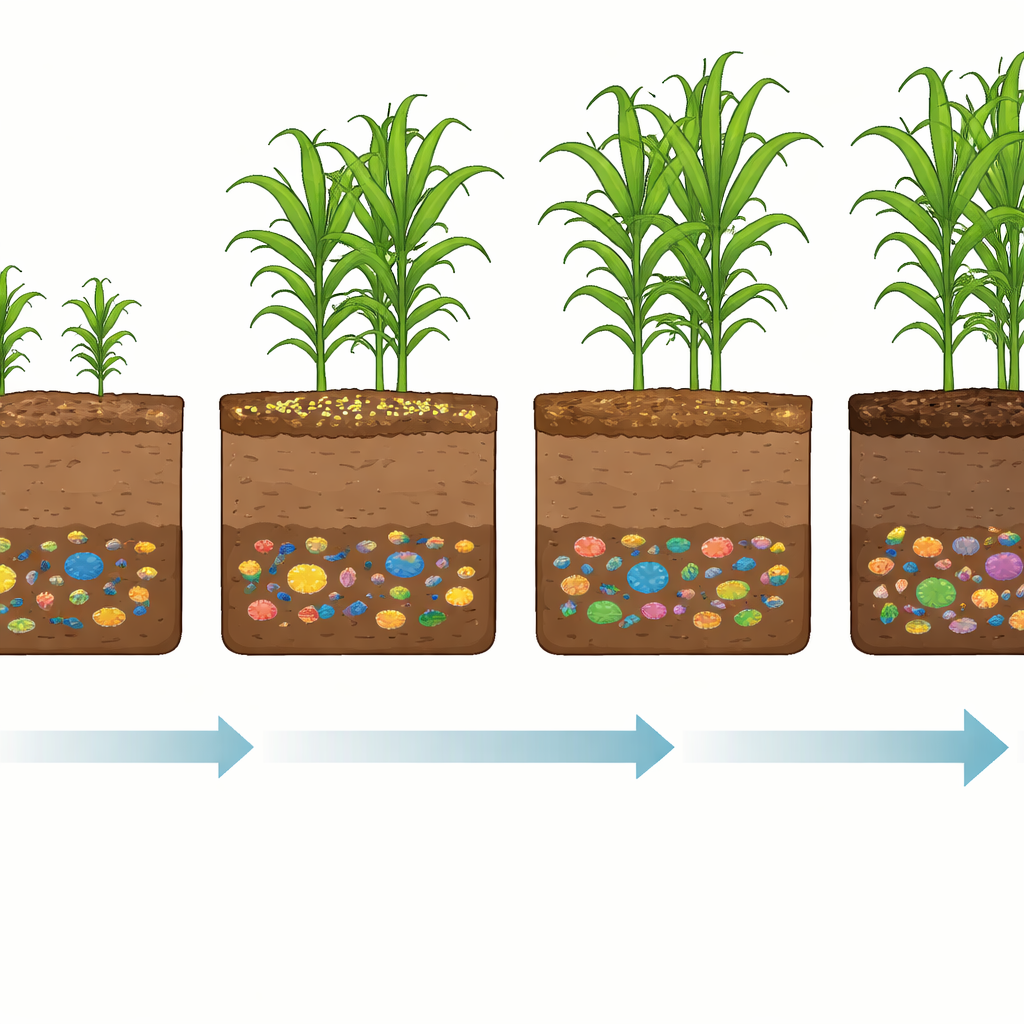
The researchers grew forage maize, a key feed crop for cattle, in field plots that had previously been left fallow. They compared four treatments: no added nutrients, standard chemical fertilizer, a normal dose of composted Hanwoo (Korean cattle) manure, and a high dose of the same compost—four times the usual nitrogen rate. They tracked how tall the plants grew, how heavy the harvest was, and how well the ears formed. At the same time, they measured changes in soil chemistry, such as organic matter and available phosphorus, and took a close look at the soil’s bacterial communities using a high‑resolution DNA sequencing method.
How plants and soil responded
The maize responded quickly to the richest nutrient supplies. Plants given chemical fertilizer or the high compost dose grew much taller—over two meters—than those with no treatment or the standard compost dose. Ear formation and biomass were also strongest in the chemical fertilizer plots, with the high‑compost plots close behind. By contrast, the standard compost dose did little better than having no fertilizer at all over this short season, likely because most of its nitrogen was still locked in organic form and not yet available to the crop.
Soil health below the surface
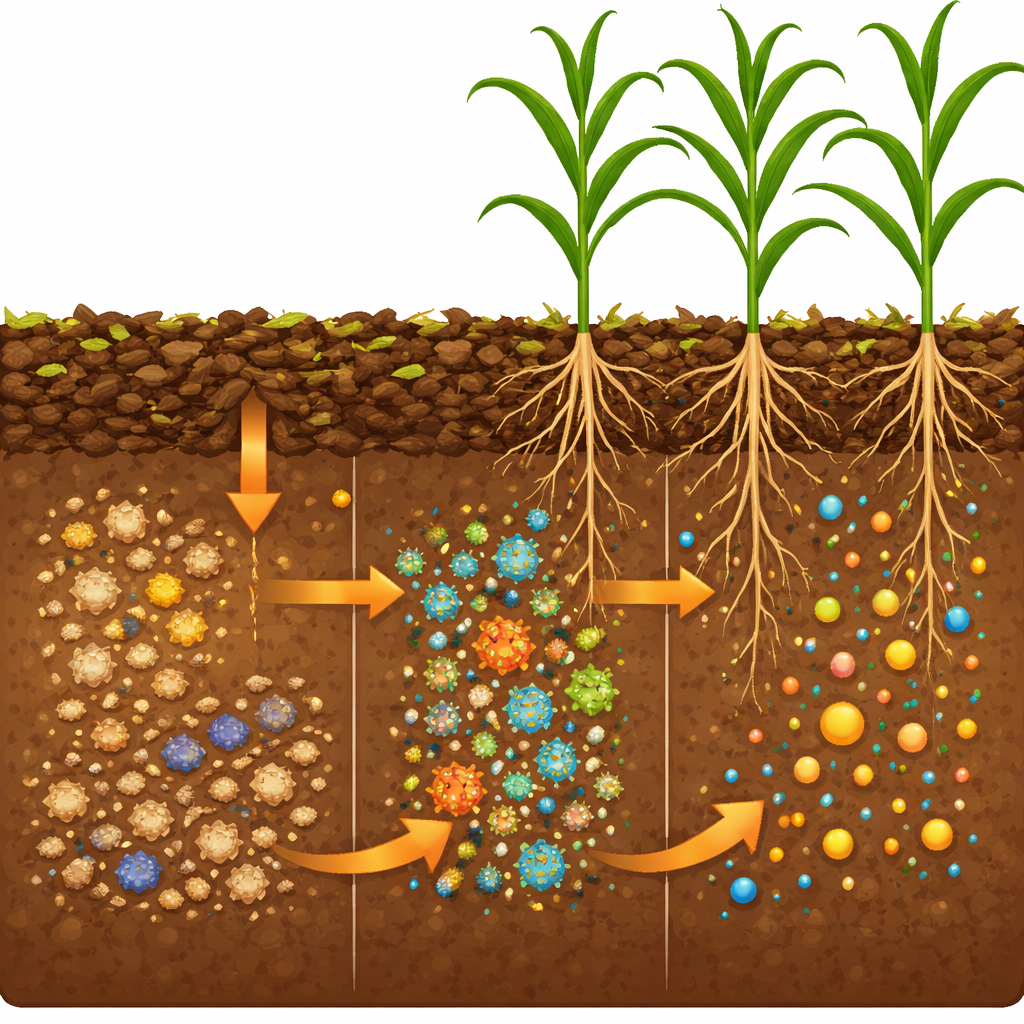
Even over one season, the different fertilizers reshaped the soil. Soils that received compost, at either dose, gained more organic matter and available phosphorus than untreated soils, while chemical fertilizer did not boost these stores and even coincided with lower soil pH and calcium. The compost plots also showed richer and more varied bacterial communities, especially at the standard compost rate where more organic matter remained in the soil. Certain groups of bacteria linked to breaking down organic material and cycling nutrients, such as Proteobacteria and a group called Candidatus Saccharibacteria, became more common under compost. In contrast, the chemical fertilizer plots favored bacteria associated with removing phosphorus, in line with the lower phosphorus found in those soils and in the plant tissues.
Connecting microbes, nutrients, and growth
By matching bacterial shifts with soil measurements, the team found that many of the bacteria enriched by compost were positively related to higher organic matter and phosphorus levels. These microbes appear to thrive in the carbon‑rich environment created by manure and may help release nutrients in forms that plants can use. The high compost dose, in particular, supplied enough immediately available nitrogen to support maize growth that nearly matched chemical fertilizer, while also fostering these nutrient‑cycling communities. However, because it delivered far more total nitrogen and phosphorus than the crop removed in a single season, such a heavy application could risk nutrient losses to water or long‑term buildup if used routinely.
What this means for sustainable farming
In plain terms, the study shows that a large, well‑composted cattle manure dose can grow maize almost as well as chemical fertilizer in the short run and, at the same time, encourage soil bacteria that build fertility. A standard compost rate, however, may be too modest to meet a crop’s immediate needs in previously unfertilized soil. The authors see high‑dose compost use not as a blanket recommendation but as a proof of concept: with careful tuning of rates, compost could help farmers cut dependence on synthetic fertilizers while recycling livestock waste and nurturing a more living, resilient soil. Future work must fine‑tune these doses so that farms can reap the benefits of compost without trading them for hidden environmental costs.
Citation: Shim, SY., Lee, J., Linh, L.T.Y. et al. Effects of short-term application of organic manure on the growth of forage maize (Zea mays L. cv. Kwangpyeongok) and soil bacterial communities. Sci Rep 16, 14291 (2026). https://doi.org/10.1038/s41598-026-45179-9
Keywords: organic manure, forage maize, soil microbiome, chemical fertilizer, composted cattle manure