Clear Sky Science · en
Analysis of functional and serviceability performance in sustainable yarns and socks by using multi-response optimization technique
Why Better Socks Matter
Anyone who has finished a long day with sore, sweaty feet knows that socks are more than an afterthought. The right pair can keep feet dry, cool, and protected, while the wrong pair can trap sweat, cause blisters, and even leave skin exposed to harsh sunlight. At the same time, conventional cotton and synthetic socks come with environmental costs. This study explores whether fibers from plants like banana trees, flax, and hemp can be blended with cotton to create socks that feel good, last longer, and are kinder to the planet.
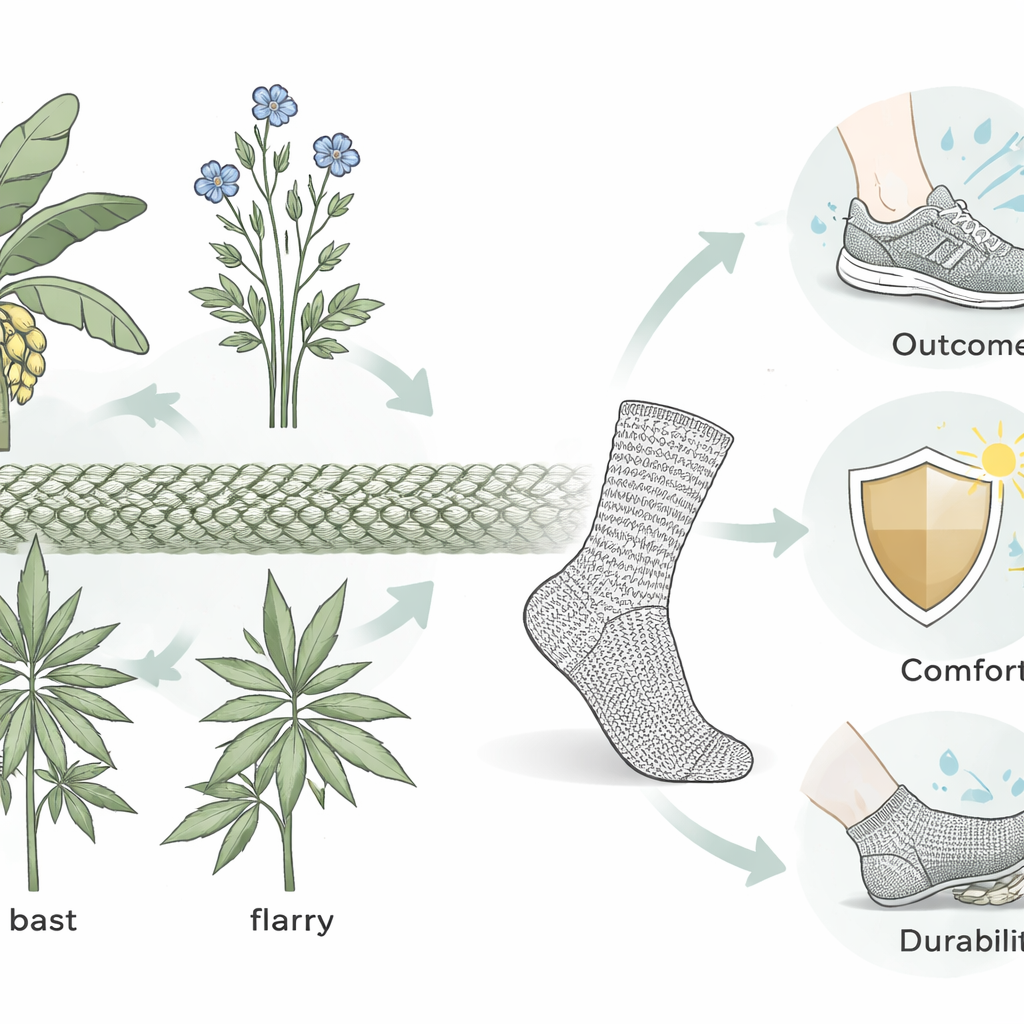
From Farm Plants to Everyday Socks
The researchers focused on three “bast” fibers—banana, flax, and hemp—taken from the stems or stalks of plants rather than from seeds or leaves. These fibers are attractive because they are biodegradable, need fewer chemicals and less water than cotton in the field, and can bring special qualities such as strength or moisture handling. The team spun yarns that mixed each of these fibers with cotton at three levels (10%, 20%, and 30%), plus a pure cotton yarn as a baseline. All yarns were knitted into socks on the same type of machine, using the same loop length and structure, so that any differences in performance would mainly come from the fiber blends themselves.
How the Socks Were Put to the Test
To see how these blends behaved in real life, the socks were tested for several groups of properties. Physical and mechanical tests measured yarn strength, fabric weight, thickness, and resistance to rubbing—important for how long socks last at the heel and toe. Comfort tests measured how easily air passed through the fabric, how well it moved moisture away from the skin, and how heat travelled through it. Functional tests checked how well the fabric blocked ultraviolet (UV) rays from the sun and whether it could naturally slow the growth of odor-causing bacteria. The researchers then used a statistical method called grey relational analysis, which combines many test results into a single overall score so different sock designs can be ranked fairly.
What the Fiber Blends Actually Did
The three plant fibers did not behave the same way, and their effects changed with how much was blended into cotton. Flax blends produced the strongest yarns and, in the finished socks, allowed air to flow more easily through the fabric. Hemp blends stood out for durability: socks with 20–30% hemp resisted abrasion better than pure cotton, suggesting they would wear out more slowly at pressure points inside shoes. Banana fiber blends were especially good at handling moisture and sunlight. Socks with banana fibers absorbed and transported sweat more effectively than pure cotton, helping to keep the foot surface drier, and they offered the highest UV protection of all, especially at the 20% level. Across nearly all measures, modest amounts of bast fibers—10% or 20%—improved performance, while pushing the share to 30% sometimes led to less balanced or more erratic behavior.
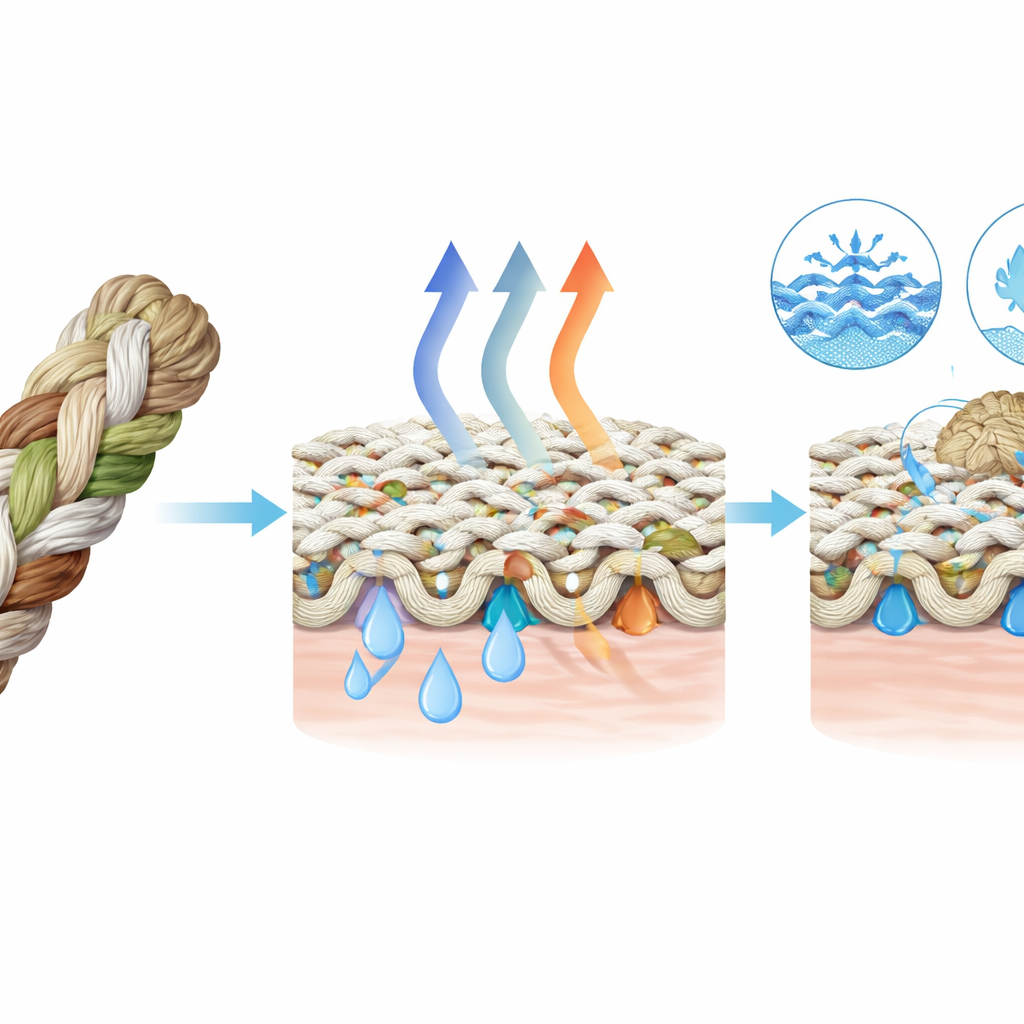
Comfort, Sun Shield, and the Limits of "Natural" Germ Control
All of the socks, including pure cotton, provided excellent protection against UV rays by standard clothing ratings, helped by the relatively thick and dense knit. Still, adding bast fibers, especially banana, nudged that protection even higher. When it came to comfort, blends outperformed pure cotton in overall moisture management, and in many cases in breathability, thanks to the way different fiber shapes and stiffness created more useful micro-channels for air and sweat. On the other hand, none of the socks showed meaningful natural antibacterial effects in the simple plate test used here. The authors suggest that higher amounts of these fibers, or special treatments and plant-based finishes, may be needed before such socks can reliably slow bacterial growth and odor on their own.
What This Means for Future Socks
The study concludes that carefully chosen blends of banana, flax, or hemp with cotton can produce socks that are more durable, more comfortable, and better at blocking sunlight than traditional cotton socks, while potentially reducing reliance on a resource-intensive crop. When all test results were combined, the best overall performer was the sock with just 10% banana fiber, followed closely by 10% flax and 20% banana blends. For everyday wearers, that could translate into socks that stay drier, feel cooler, and last longer, made with fibers that place less strain on the environment. The work also shows that “natural” does not automatically mean antibacterial—but it does point the way toward more sustainable, high-performance footwear made from plant-based materials.
Citation: Jamshaid, H., Chandan, V., Ahmad, A. et al. Analysis of functional and serviceability performance in sustainable yarns and socks by using multi-response optimization technique. Sci Rep 16, 11631 (2026). https://doi.org/10.1038/s41598-026-45167-z
Keywords: sustainable socks, banana flax hemp fibers, moisture management, UV protective textiles, textile durability