Clear Sky Science · en
Thermodynamic calculation of metallic Fe yield and CO2 emissions in gas-based shaft furnace direct reduction process
Turning waste gas into useful metal
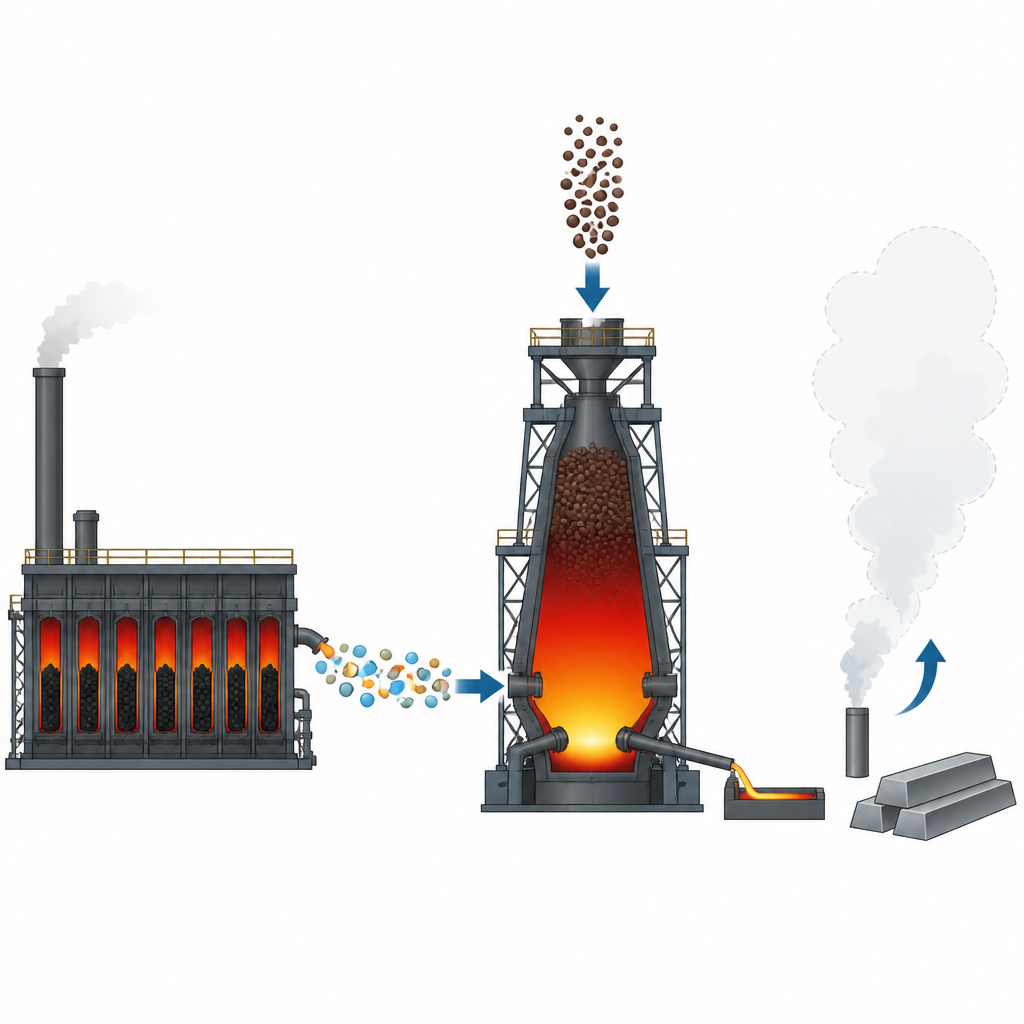
Steel underpins modern life, but making it releases vast amounts of carbon dioxide. In China, where over half of the world’s steel is produced, cutting emissions is essential for climate goals. This study explores how an underused byproduct from coking plants, called coke oven gas, could be turned into both a fuel and a chemical agent to make iron more efficiently in a type of reactor known as a shaft furnace, while lowering carbon pollution.
Why steel’s smokestacks matter
Producing steel usually relies on coal in tall blast furnaces, which lock in high carbon emissions. At the same time, coking plants that prepare coal for steelmaking release large volumes of gas rich in hydrogen and methane. Much of this gas is burned off or wasted. Because it has a similar climate impact per unit of energy as natural gas, using this byproduct more wisely could help replace fossil fuels that must be mined or imported. The question the authors tackle is how far coke oven gas can go in operating gas based shaft furnaces that turn iron ore into solid iron, and what that would mean for carbon dioxide emissions.
Building a virtual iron factory
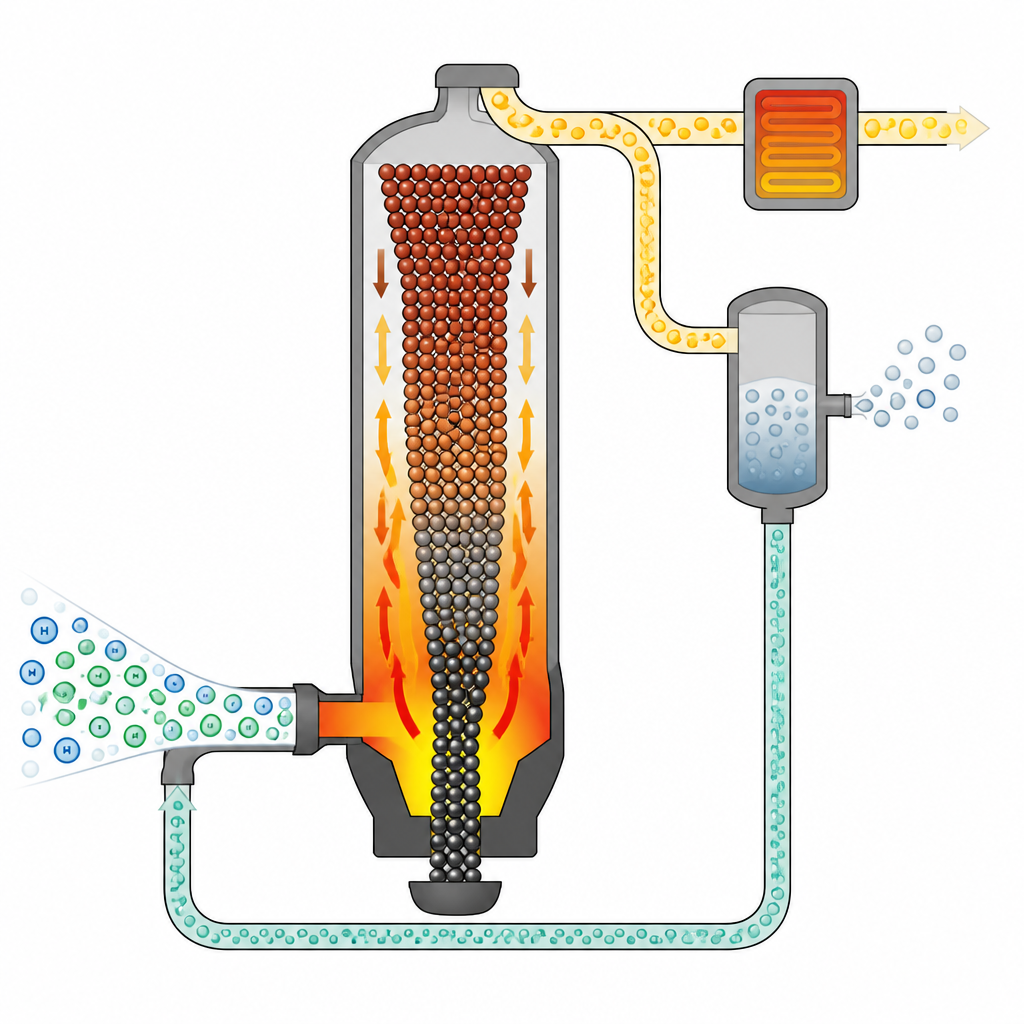
Instead of running expensive pilot plants, the researchers created a detailed thermodynamic model, a kind of virtual factory grounded in the laws of energy and matter conservation. They followed coke oven gas as it is first heated and reformed in a separate furnace to make a hydrogen rich mixture, then sent into the shaft furnace where it strips oxygen from iron ore pellets. The model tracks how much iron metal is produced, how much gas is consumed for chemical reactions and for heat, and how much carbon dioxide leaves with the exhaust. By varying key inputs such as the iron content of the ore, the share of iron fully converted to metal, and the temperature at which metallic iron forms, they could see how each choice affects both yield and emissions.
Quality of ore beats fine tuning
One clear result is that the iron grade of the ore is the main lever. When the iron content rises from relatively poor ore at 45 percent to richer ore at 70 percent, the mass of metallic iron produced per fixed amount of coke oven gas increases by more than 60 percent. At the same time, carbon dioxide released per ton of metal drops sharply, from roughly 1.2 tons to about 0.74 tons. This happens because richer ore carries less non metallic material that must be heated but never turns into iron. Less useless rock in the mix means less gas burned purely to provide heat, and more of the gas can go toward actually reducing iron oxide to metal.
Fine tuning furnace conditions
The team also examined two operating knobs inside the shaft furnace: how completely the ore is turned into metal, and the temperature at which the last step of reduction occurs. Pushing the metallization degree higher tends to raise both iron yield and carbon dioxide per ton of solid product, but it lowers emissions per ton of pure metal because the same amount of gas produces more useful iron. Raising the metallic iron formation temperature slightly reduces metal yield and increases emissions, since hotter operation demands extra gas for heat. Overall, these factors matter, but far less than simply starting with higher grade ore.
Recycling hot gases to cut waste
The model shows that heat balance, not just the chemical reactions, largely controls how much gas the system needs. When the hot exhaust from the top of the shaft furnace is burned in the heating furnace, only about one fifth of that cleaned gas is needed to cover the heating demand. The remaining four fifths can, in principle, be stripped of carbon dioxide and sent back into the system as fresh reducing gas. In a practical example using a coke oven producing gas from 1.2 million tons of coke per year, the available gas could support the production of roughly 4.9 million tons of metallic iron annually in a shaft furnace, while keeping yearly carbon dioxide emissions fixed by the amount of gas produced and then lowering emissions per ton of iron.
What this means for cleaner steel
For readers interested in climate friendly industry, the takeaway is that careful use of existing byproduct gas and better ore quality can make a noticeable dent in the carbon footprint of ironmaking. The study does not promise zero emissions, but it maps out the thermodynamic limits of what coke oven gas based shaft furnaces can achieve. By prioritizing high iron ores, recycling most of the hot exhaust gas, and avoiding unnecessary overheating, steel producers could get more metal out of the same fuel while sending less carbon dioxide into the air.
Citation: Jiang, X., Deng, X., Fan, X. et al. Thermodynamic calculation of metallic Fe yield and CO2 emissions in gas-based shaft furnace direct reduction process. Sci Rep 16, 15263 (2026). https://doi.org/10.1038/s41598-026-45162-4
Keywords: coke oven gas, shaft furnace, direct reduced iron, steel decarbonization, thermodynamic modeling