Clear Sky Science · en
Analyzing fourteen deleterious nsSNPs of CFTR as promising genetic markers for cancer prognosis
Why tiny gene changes can matter for cancer
Cancer risk is often described in broad strokes—family history, environment, lifestyle. But hidden inside our cells, single-letter changes in DNA can quietly tilt the odds for or against disease. This study focuses on such changes in a gene called CFTR, best known for its role in cystic fibrosis, and asks a simple but important question: can specific alterations in this gene help predict who is more likely to develop certain cancers, especially liver cancer? 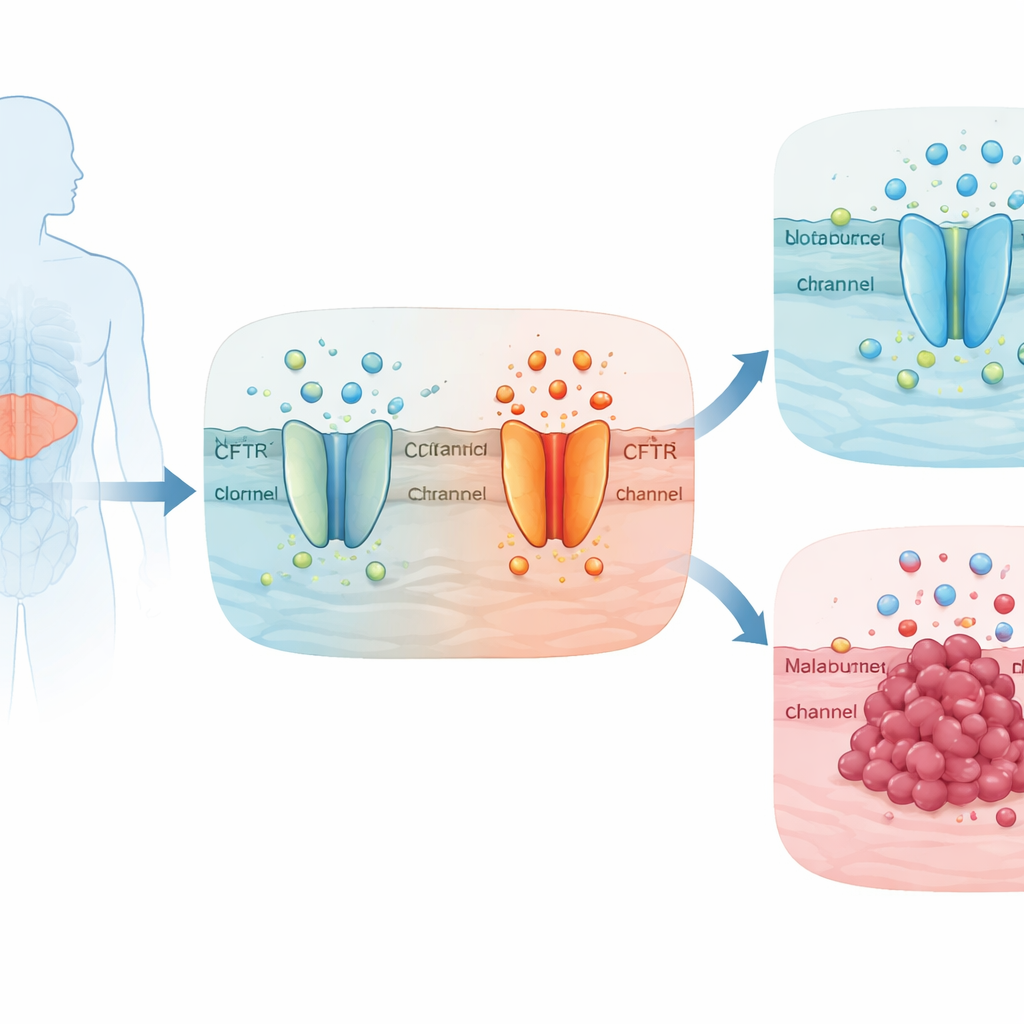
From a salt gatekeeper to a cancer suspect
The CFTR gene encodes a protein that works like a tiny gate in the cell membrane, helping control the flow of chloride and other salts in and out of cells. When this gate fails, tissues in the lungs, pancreas and other organs can malfunction. Earlier research has hinted that CFTR activity is also altered in many tumors, but the exact role of inherited changes in this gene has remained unclear. The authors set out to examine a particular class of DNA changes, called non-synonymous single nucleotide polymorphisms, where a single DNA “letter” swap actually changes the building block of the protein itself. These changes can subtly reshape the CFTR gate, making it more or less stable and, potentially, nudging cells toward cancer.
Finding the riskiest variants on the map
Using large public genome databases, the researchers began with 1,843 CFTR variants that alter the protein sequence. They then used layers of computer tools to predict which changes are most likely to damage the protein’s function. By cross-checking results from several independent algorithms, they narrowed the list to fourteen variants that consistently looked “deleterious,” meaning they probably weaken CFTR’s performance. Many of these high‑risk variants cluster in regions of the protein that bind and use cellular fuel (ATP) or span the cell membrane—areas critical for opening and closing the ion gate. 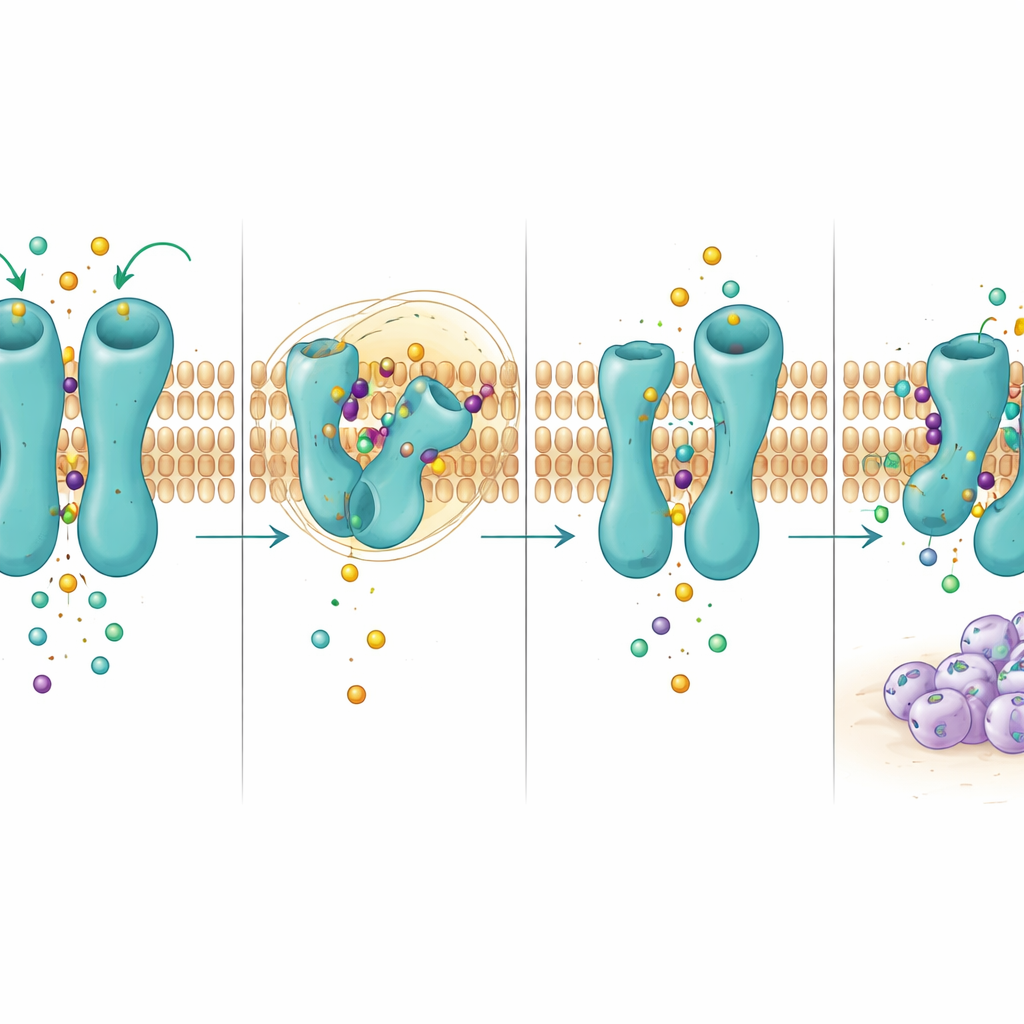
Peering into protein shape and movement
To understand why these variants might be harmful, the team modeled how each one affects CFTR’s three‑dimensional structure and flexibility. With modern prediction tools, they examined whether a swapped amino acid was larger or smaller, charged or neutral, and how that might disturb nearby contacts within the protein. Simulations suggested that most of the fourteen variants reduce CFTR stability, making the gate more likely to wobble or misfold. Some changes alter regions that act like hinges or switches, which could disturb how the channel opens, closes, or responds to signals inside the cell. Even when the overall shape looked similar, subtle shifts in motion hinted that mutated CFTR might not behave like its healthy counterpart.
Testing real patients with liver cancer
Computational predictions are useful, but the key question is whether these variants actually show up more often in people with cancer. The researchers focused on two of the most damaging candidates and genotyped them in 100 patients with hepatocellular carcinoma—a common form of liver cancer—and 100 healthy volunteers. For one variant, called rs556880586, they found a striking pattern: the mixed (heterozygous) form of this variant appeared in 70% of patients but only 19% of controls. Statistical analyses showed that this difference is unlikely to be due to chance, suggesting that carrying this particular CFTR change may increase liver cancer risk. A second variant, rs949472192, showed more balanced frequencies and a weaker signal.
What this means for future care
In everyday terms, this work identifies two specific “spelling changes” in the CFTR gene—especially rs556880586—that seem capable of destabilizing the salt gate protein and are more common in people with liver cancer. While they are not ready for clinical use yet, these variants are promising candidates for future genetic tests that could help flag individuals at higher risk, refine prognosis, or guide more personalized treatment strategies. With further validation in larger and more diverse groups, CFTR variants may join the growing toolkit of genetic markers that support earlier cancer detection and more tailored care.
Citation: Abbas, S., Shabbir, M., Badshah, Y. et al. Analyzing fourteen deleterious nsSNPs of CFTR as promising genetic markers for cancer prognosis. Sci Rep 16, 13261 (2026). https://doi.org/10.1038/s41598-026-45158-0
Keywords: CFTR, cancer genetics, liver cancer, protein variants, biomarkers