Clear Sky Science · en
Environmental food allergen levels in the homes of 3–4-month-old infants: findings from the second phase Chiba study of mother and child health (2nd C-MACH)
Why baby bed dust matters to families
Many parents carefully time when to introduce eggs, milk, wheat, and nuts into their baby’s diet. But far less attention is paid to what babies are quietly breathing in and touching long before that first spoonful. This study from Japan looked at the dust around 3- to 4‑month‑old infants to ask a simple but important question: are tiny bits of common foods already present in their home environment, and could this early contact through the skin play a role in later allergies? 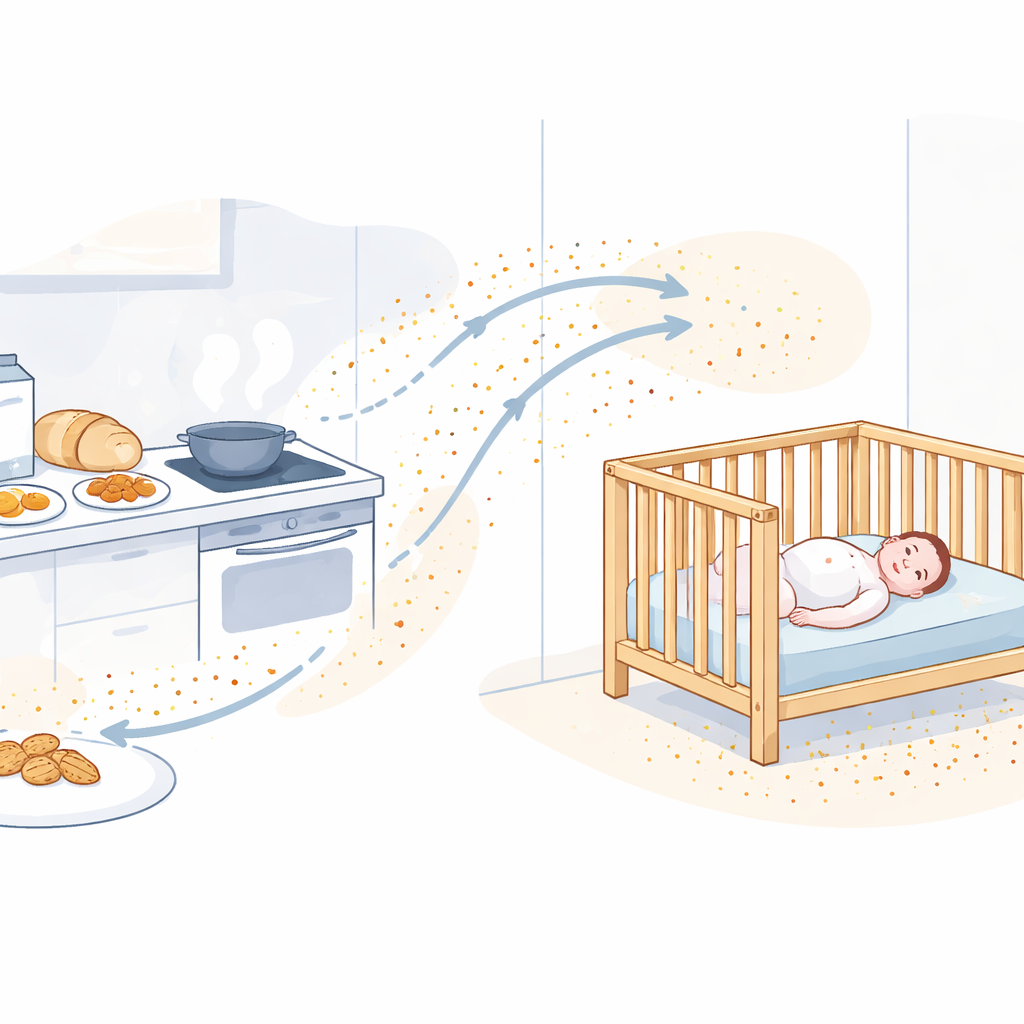
Food pieces you cannot see
Food allergies to hen’s egg, cow’s milk, wheat, and peanuts are an increasing concern in childhood. A leading idea, called the “dual exposure” view, holds that the way a child first meets a food—through the mouth or through the skin—can shape whether the body learns to tolerate it or react against it. Eating small amounts early in life seems to help the immune system accept these foods, while contact through irritated skin may instead prime it to see them as threats. Yet almost nothing was known about how much of these food traces actually end up in infants’ surroundings before they start eating solids.
Collecting dust from baby spaces
The researchers worked within a large birth study based in Chiba, Japan, focusing on 26 families who agreed to an extra home survey. Caregivers used small handheld vacuum cleaners to collect dust from the places their 3–4‑month‑old babies spent the most time, especially bedding. At this age, none of the infants had begun eating complementary foods. The dust was then stored at very low temperatures and sent to the lab, where sensitive test kits were used to measure proteins from hen’s egg, cow’s milk, wheat, peanut, and walnut, as well as proteins from two common house dust mites. These mite proteins served as a familiar yardstick, because they are well-known household triggers of allergy and asthma.
Surprisingly high food traces in baby bedding
The results showed that invisible leftovers from meals are widespread in infant environments. Proteins from hen’s egg, cow’s milk, and wheat were found in dust from every single home. Peanut proteins were present in nearly nine out of ten homes, while walnut proteins turned up in about one third. When the team compared amounts, they found that egg, milk, and wheat proteins were not only common but also present at clearly higher levels than the two mite proteins. Peanut levels were also higher than one of the mite proteins. In other words, from the point of view of a baby lying on a mattress, common food traces in the dust were at least as prominent as the classic “dust allergy” culprits. 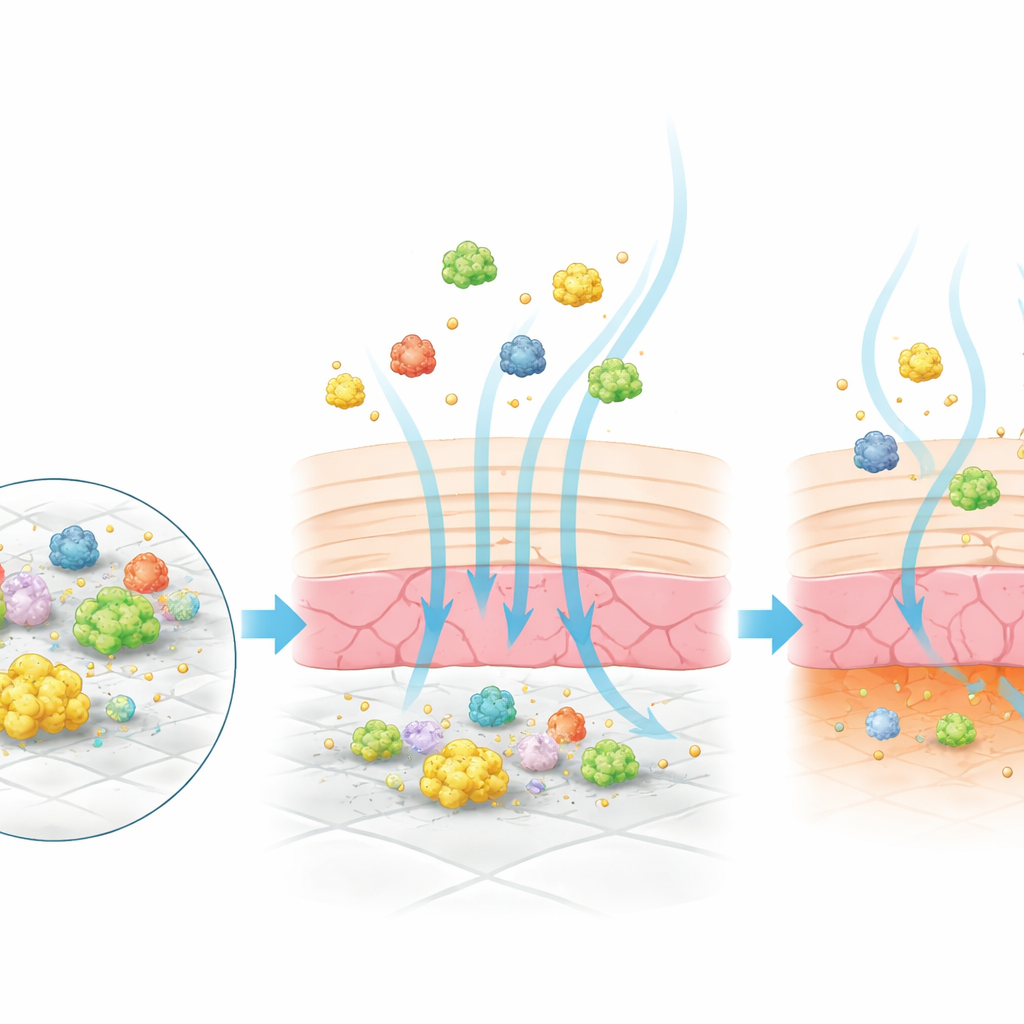
What this could mean for allergy risk
Because infants spend long hours pressed against bedding and floors, with still‑developing skin barriers, this early exposure may matter. Past studies have shown that cooking and eating eggs or peanuts can quickly boost their proteins in house dust, and that these proteins can remain biologically active. The new work extends those findings down to very young babies who have never eaten these foods. It suggests that daily cooking and eating habits of the household may quietly surround infants with a mix of food particles that settle into dust, where they can touch delicate skin—especially in babies with eczema or other skin problems.
Takeaway for parents and future research
This study does not prove that food traces in dust directly cause allergies, but it does show that exposure starts earlier and is stronger than many might assume. The authors conclude that strategies to prevent food allergy should consider not only when and how foods are introduced by mouth, but also how much of those same foods end up on surfaces where babies lie and play. Larger, long‑term studies that track environmental exposure, feeding patterns, skin health, and later allergy diagnoses are needed. For now, the findings encourage a broader view: protecting children from allergies may involve both the high chair and the vacuum cleaner.
Citation: Suzuki, N., Shimatani, K., Takaguchi, K. et al. Environmental food allergen levels in the homes of 3–4-month-old infants: findings from the second phase Chiba study of mother and child health (2nd C-MACH). Sci Rep 16, 14187 (2026). https://doi.org/10.1038/s41598-026-45145-5
Keywords: infant food allergy, household dust, environmental allergens, skin exposure, early life health