Clear Sky Science · en
Performance-driven switched reluctance motor drive using multiport cascaded converter and advanced direct torque control scheme
Why smoother electric drives matter
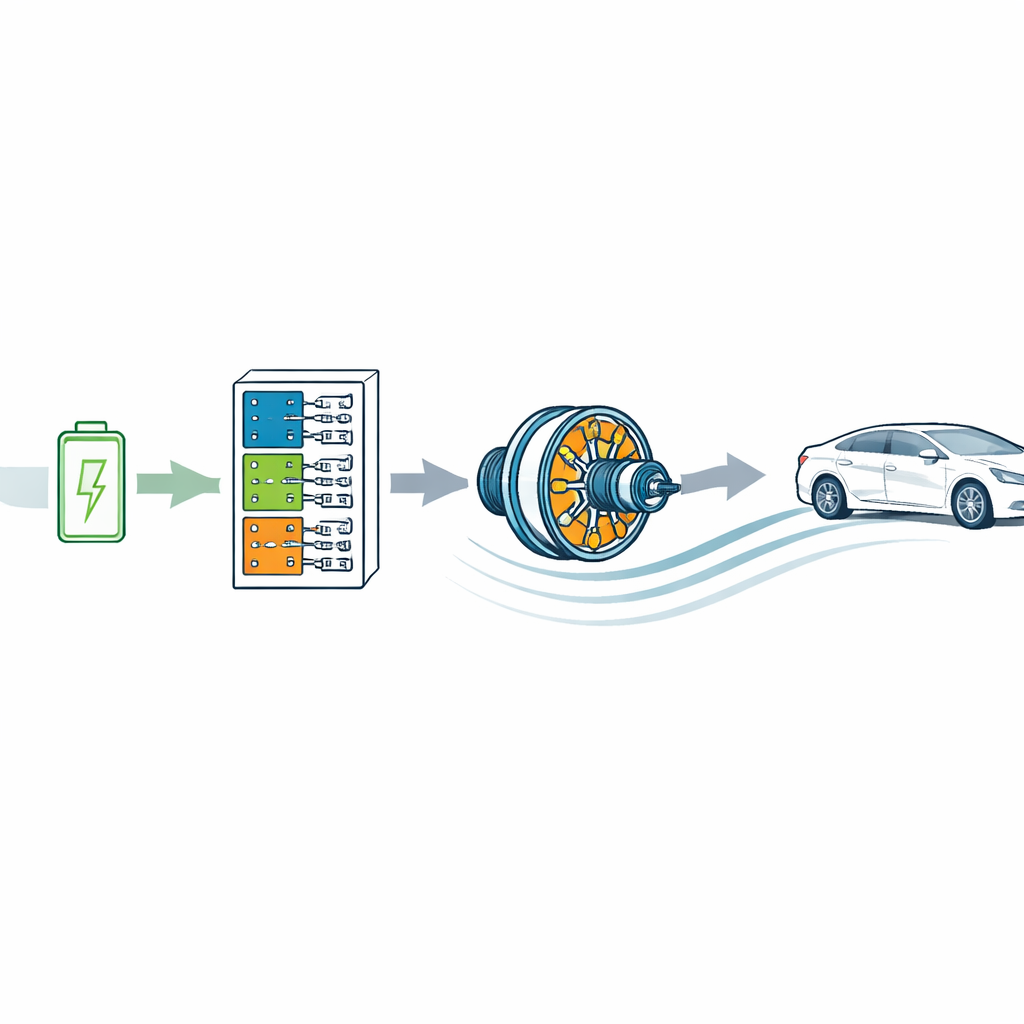
As electric vehicles become more common, drivers expect them to be not only clean and efficient, but also quiet, smooth, and reliable. One promising motor type for future EVs is the switched reluctance motor, which is robust, inexpensive, and free of rare-earth magnets. Yet these motors can suffer from jerky torque and extra vibration, making rides less comfortable and stressing mechanical parts. This paper presents a new way to power and control such motors so they run more smoothly, waste less energy, and better suit demanding traction tasks in cars.
A different kind of electric motor
The study focuses on switched reluctance motors, which look quite different inside from the more familiar permanent magnet machines. Instead of using magnets on the rotor, these motors rely on the rotor’s tendency to move toward regions where magnetic paths are easier—regions of higher inductance. By switching current on and off through several stator windings in sequence, the controller pulls the rotor around and produces torque. This design is rugged, simple, and cheap to build, and it avoids dependence on rare-earth materials. However, rapid on–off switching and the motor’s strongly non‑linear magnetism can create large ripples in torque and current, causing noise, vibration, and extra wear in electric vehicles.
A new power “bridge” for the motor
To tame these problems, the authors redesign the electronic power stage that connects the battery to the motor. Instead of a conventional two‑level converter, which abruptly applies either full voltage or zero to each phase, they propose a modular multiport cascaded converter made of stacked submodules per phase. Each phase can now see several intermediate voltage levels, not just on or off. This multilevel approach smooths the voltage waveform, lowers the electrical stress on switches and insulation, and reduces unwanted harmonics in the current. The modular structure is also easier to scale and more tolerant to faults, which is important for safety‑critical traction systems.
Smarter real-time torque control
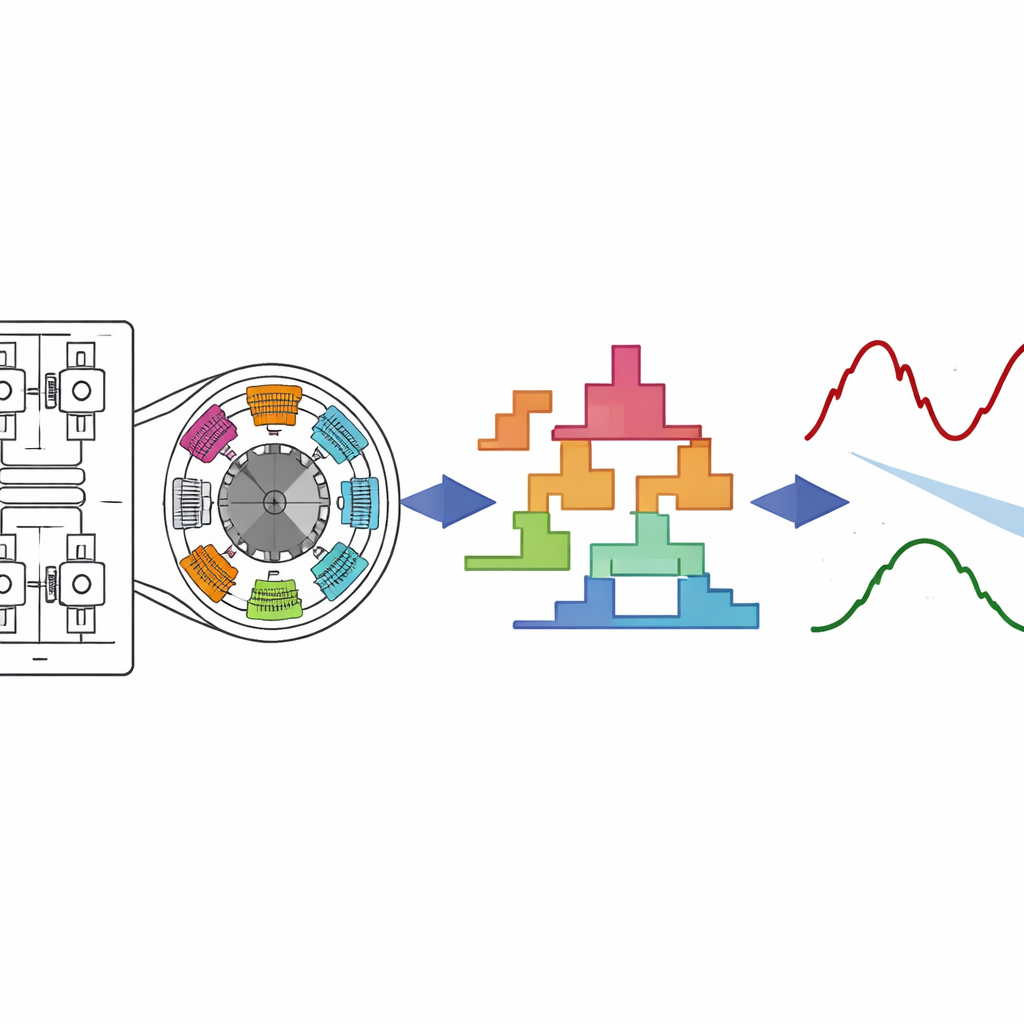
The hardware is paired with an enhanced direct torque control scheme that acts like a rapid‑fire traffic director for the power switches. Rather than slowly shaping currents through traditional feedback loops, direct torque control estimates the motor’s magnetic flux and torque in real time and selects from a set of voltage patterns based on which way and how strongly the torque needs to change. In this work, the authors design detailed mathematical models of the motor’s non‑linear behavior and organize the possible voltage patterns into eight sectors and eight vectors. A custom switching table then chooses the best pattern from the multilevel converter at each instant, keeping torque and flux within tight bands while minimizing unnecessary switching.
From computer model to real test bench
The team validates their approach in two stages. First, they build a detailed simulation of a four‑phase, 8/6 switched reluctance motor driven by the new converter and control scheme in MATLAB/Simulink. They examine speed, torque, and phase currents under steady running and rapid speed changes, and compare the results to a conventional converter. Then they construct a 2.2‑kilowatt laboratory setup with industrial power modules, sensors, and an encoder. Experiments include steady cruising at 1000 revolutions per minute, step changes between 400, 1400, and 2400 revolutions per minute, as well as acceleration, braking, and load disturbances. Across these tests, the new drive holds speed accurately while producing noticeably cleaner current waveforms and smoother torque.
What the improvements mean on the road
Quantitatively, the proposed converter and control reduce torque ripple by up to about 41.5 percent compared with the conventional design, bringing ripple values down to roughly 16–25 percent depending on speed and load. At the same time, the system shows faster response to changes in driver demand, limited overshoot when speeds are adjusted, and slightly better efficiency, all while operating at a fixed and predictable switching frequency. In everyday terms, this means an electric vehicle using such a drive could accelerate and decelerate more smoothly, generate less noise and vibration, and place less stress on its components. Although the new hardware is more complex and costly than standard converters, the authors argue that its combination of robustness, smoothness, and control precision makes it a strong candidate for future high‑performance electric traction systems.
Citation: Deepak, M., Santhakumar, K., Sathiyasekar, K. et al. Performance-driven switched reluctance motor drive using multiport cascaded converter and advanced direct torque control scheme. Sci Rep 16, 12211 (2026). https://doi.org/10.1038/s41598-026-45141-9
Keywords: switched reluctance motor, electric vehicle drives, torque ripple reduction, multilevel power converter, direct torque control