Clear Sky Science · en
Development and evaluation of cardiovascular disease risk prediction models for patients with type 2 diabetes
Why this research matters to people with diabetes
Heart disease is the leading cause of death for people living with type 2 diabetes, yet doctors still rely on risk calculators built for the general public. This study asks a simple question with big consequences: can we do better for people with diabetes by building a risk tool tailored to them, and can that tool work fairly for people of different sexes and racial and ethnic backgrounds?
Heart trouble and diabetes go hand in hand
Adults with type 2 diabetes face much higher chances of heart attacks, strokes, and heart failure than people without diabetes. Existing prediction tools, such as the widely used Pooled Cohort Equations and the newer PREVENT risk scores, estimate who is likely to develop cardiovascular disease over the next decade. However, these tools were not designed specifically for people with type 2 diabetes, may not reflect today’s treatments and lifestyles, and were mostly built using data from White and Black adults only. That leaves open questions about how accurate and fair they are for the diverse group of patients who actually show up in clinics.
A new way to estimate near term heart risk
To tackle this gap, the researchers turned to the National Institutes of Health All of Us program, a large and unusually diverse health study that includes extensive electronic records, lab results, and survey answers. They focused on 23,795 adults aged 40 and older with type 2 diabetes and followed them for up to several years to see who developed major heart problems, including heart attacks, strokes, or heart failure. Using this information, they built a statistical survival model designed to predict each person’s chance of having one of these events within the next three years, based on factors such as age, blood pressure, lab tests, past medical history, medications, and social conditions like housing stability and income. 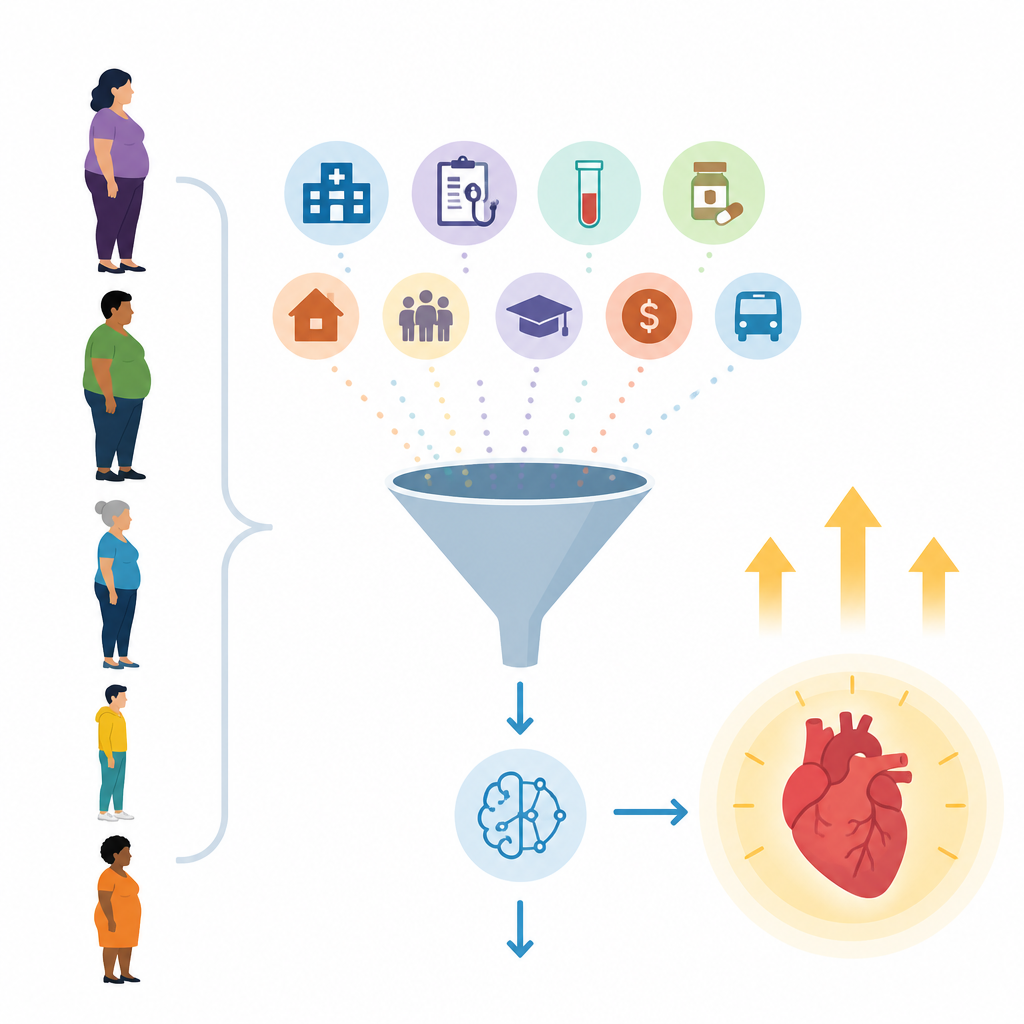
What turned out to matter most
When the team probed the model to see which factors carried the most weight, a clear pattern emerged. For the full group of patients, a previous history of cardiovascular disease was by far the strongest warning signal of another future event. Among people without any prior heart disease, age became the leading factor. Kidney related measures, such as a history of kidney disease and blood tests like creatinine and calcium, also rose to the top, highlighting the tight link between kidney health and heart problems in people with diabetes. Surprisingly, several social and economic features, including employment status, education, and housing type, were also highly influential, underscoring how everyday living conditions shape health risks alongside biology.
Putting the new model to the test
The researchers then asked how well their new diabetes focused model stacked up against the PREVENT equations. In the test group of nearly 4,800 patients, the new model more accurately ranked who was at higher or lower risk, both in the full sample and among those without prior heart disease. It also produced risk estimates that aligned closely with what actually happened over three years, while PREVENT tended to overestimate risk, especially for patients who were less likely to experience an event. To probe fairness, the team used special measures that account for people who leave the study or have competing health problems. Across sex and race or ethnicity groups, the new model generally showed higher accuracy and similar or smaller gaps in performance than PREVENT. 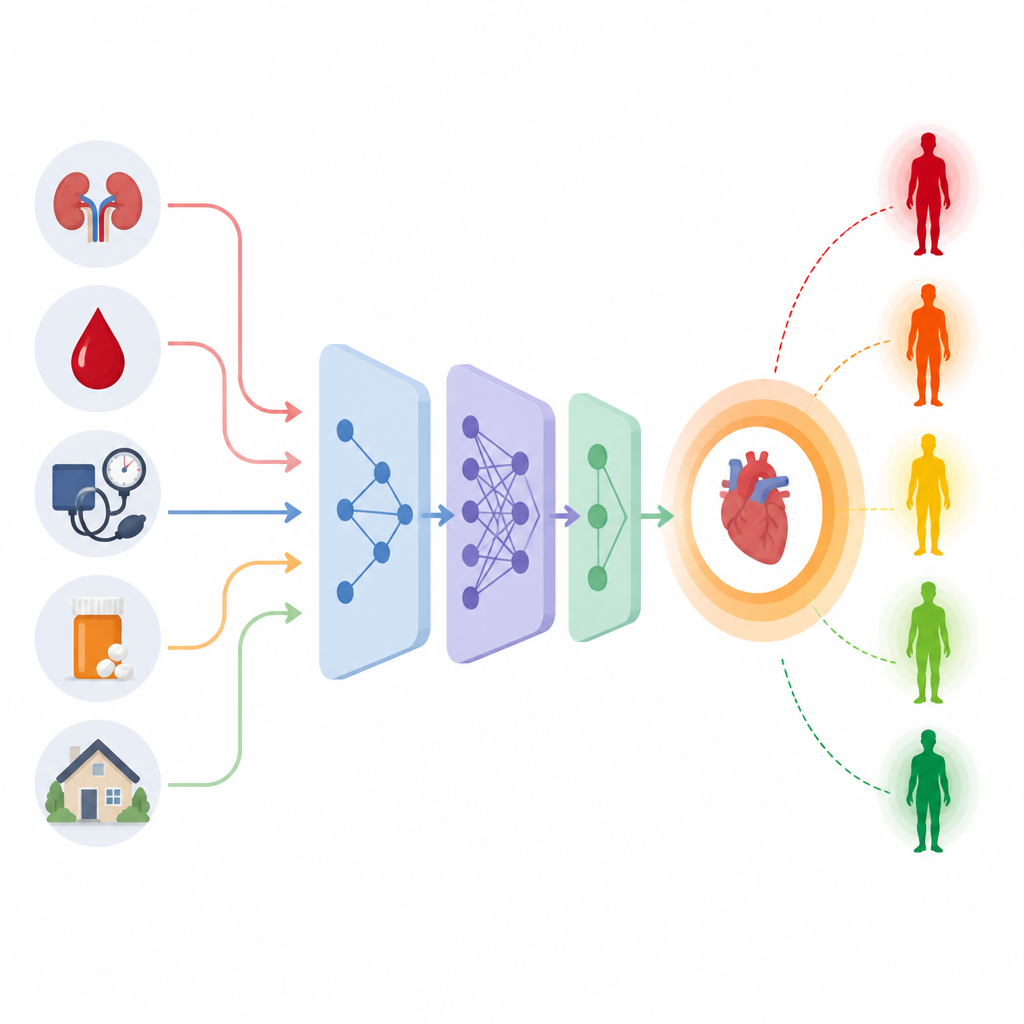
Balancing accuracy and fairness
The study also explored whether including race and ethnicity as inputs helped or hurt fairness. When the researchers removed these variables from the model, its overall accuracy dropped and performance worsened for most subgroups. Keeping race and ethnicity in the model, combined with rich information on social and economic conditions, yielded both better predictions and more even performance across groups in this dataset. The authors caution that this is a complex and context dependent issue, but their results suggest that, at least in this setting, using race and ethnicity may help avoid underestimating risk for some patients.
What this means for patients and clinicians
In plain terms, the work shows that a risk calculator built specifically for people with type 2 diabetes, using modern and diverse data, can do a better job of estimating short term heart risk than a one size fits all tool. By capturing kidney health and social circumstances alongside traditional risk factors, the new model may help clinicians more accurately identify which patients need more aggressive prevention and which can avoid unnecessary treatments. While it still needs testing in other health systems, this approach offers a step toward more precise and more equitable heart risk assessment for the millions of adults living with type 2 diabetes.
Citation: Yang, Y., Liu, T., Liao, CY. et al. Development and evaluation of cardiovascular disease risk prediction models for patients with type 2 diabetes. Sci Rep 16, 15574 (2026). https://doi.org/10.1038/s41598-026-45129-5
Keywords: cardiovascular disease, type 2 diabetes, risk prediction, health equity, survival modeling