Clear Sky Science · en
Study of nasal heating function based on 40 cases of nasal cavity model
Why nose warmth matters in everyday life
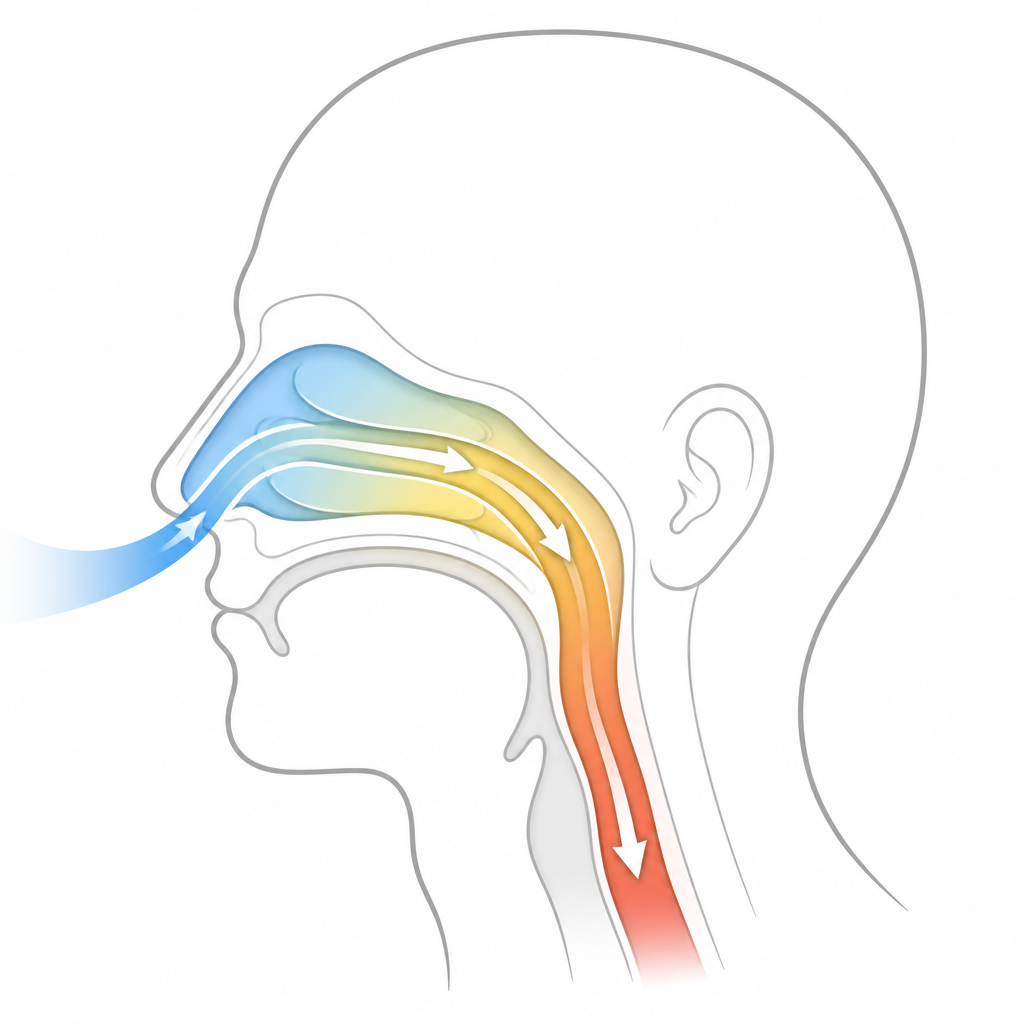
Each time you breathe in, your nose quietly works to warm chilly air before it reaches the lungs. When this warming process falls short, cool air can irritate the throat and chest, and people may feel stuffy even if their nose is not blocked. This study explores how the shape of the nasal passages affects their ability to heat incoming air, using computer models based on medical scans from 40 healthy adults.
Looking inside forty real noses
To link nasal shape with warming power, the researchers first collected CT scans from 40 volunteers with healthy noses. From these scans they built three dimensional computer models of each person’s nasal cavity, including the winding passages and narrow openings that steer airflow. They then used fluid simulation software to mimic gentle breathing, at a steady rate similar to quiet rest, and calculated how air temperature changed as it traveled from the nostrils to the back of the throat.
Where most of the warming happens
The simulations confirmed that most heat exchange takes place in the front part of the nose, just behind the nostrils. As air moves through this region, it rapidly gains several degrees before gradually warming further in the deeper passages. The lower nasal passage, known as the inferior meatus, tended to run slightly warmer than the middle passage along the same cross section. This pattern suggests that different channels within the nose share the task of warming air, with some areas acting more like a heat reservoir that backs up the others.
Key nose features that shape air warming
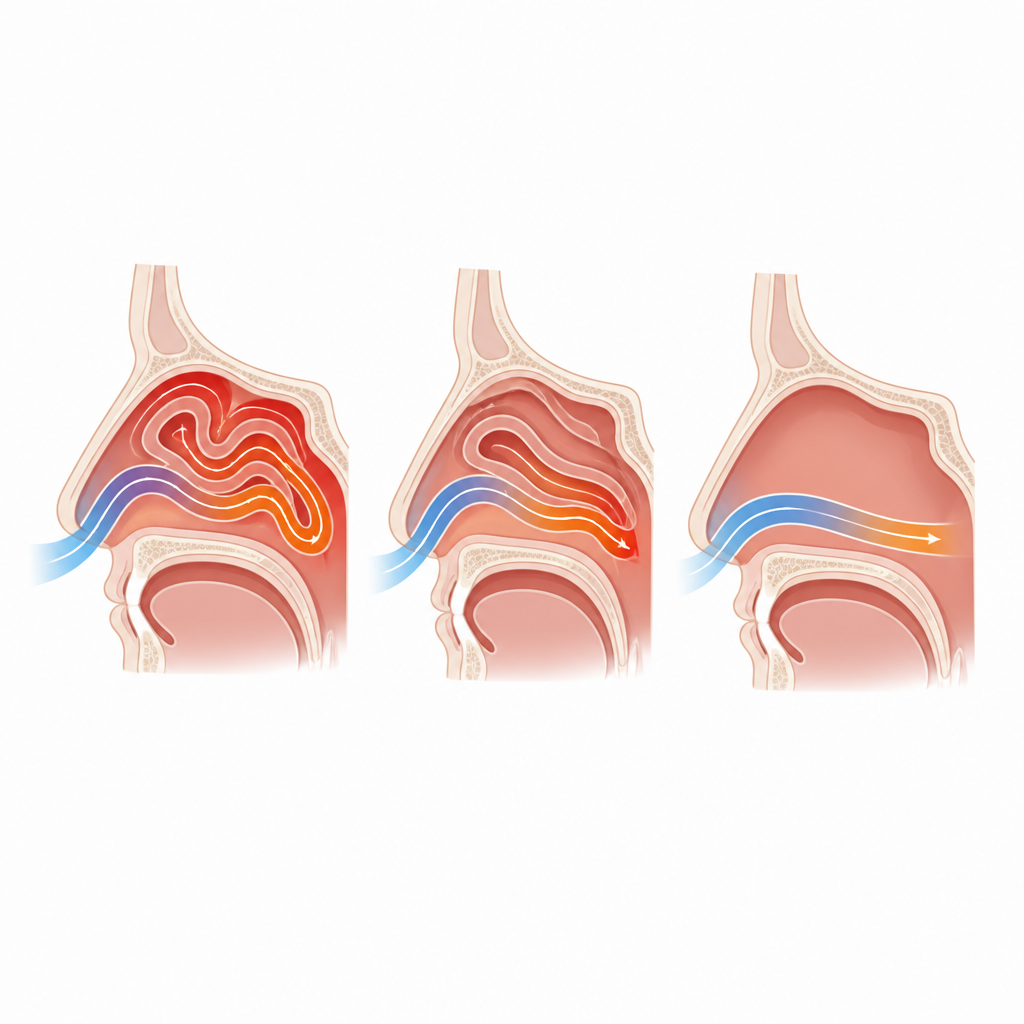
To understand which structural traits matter most, the team grouped the 40 noses by four simple geometric measures: how much inner surface they had relative to their internal volume, how wide the passages were on average, how large the nostril openings were, and the angle at which air enters from outside. Noses with a larger inner surface compared to volume showed stronger overall warming, while those with wider passages tended to warm air less. In contrast, nostril size and entry angle had only weak links to the final air temperature at the back of the nose, although smaller nostrils did help boost warming in the very front region.
How airflow paths influence warming
The direction of incoming air did not clearly change the total heating but it did alter where inside the nose the work was done. In models where the flow was guided more toward the middle passage, that channel carried cooler air at its entrance and had to perform more heating. When flow favored the lower passage, that region shared more of the load and overall warming tended to improve slightly. Measurements of heat flow across the nasal lining showed a steep drop from front to back, underlining that the front threshold area is the main heat exchange zone while deeper regions provide reserve capacity.
What this means for health and treatment
Overall, the study finds that noses with more internal surface and moderately narrow passages are better at warming inhaled air, while very wide airways and large nostrils can reduce this effect. Yet the nose also compensates along its length, so people with different nostril sizes may end up with similar air temperatures by the time it reaches the throat. These insights, captured in a quantitative model linking nasal shape to heat flow, could help doctors plan surgeries or other treatments that preserve or restore the nose’s natural warming role, supporting comfortable breathing and protection of the lower airways.
Citation: Yu, S., Wu, Y., Guo, Y. et al. Study of nasal heating function based on 40 cases of nasal cavity model. Sci Rep 16, 14801 (2026). https://doi.org/10.1038/s41598-026-45098-9
Keywords: nasal airflow, airway heating, nose anatomy, computational modeling, respiratory comfort