Clear Sky Science · en
Association between maxillary central incisor tooth form and face shape using digital AutoCAD analysis in Pakistani adults
Why Faces and Teeth Need to Get Along
When people seek a better smile, they often hope their new teeth will look as if they have always belonged to their face. For decades, dentists have been taught that the shape of the front teeth should echo the outline of the face, flipped upside down. This idea promises an easy shortcut to choosing natural-looking replacement teeth, especially for people who have lost their own. But does this rule actually match how real faces and teeth look in everyday people? This study tested that long‑held belief in young Pakistani adults using precise digital measurements.
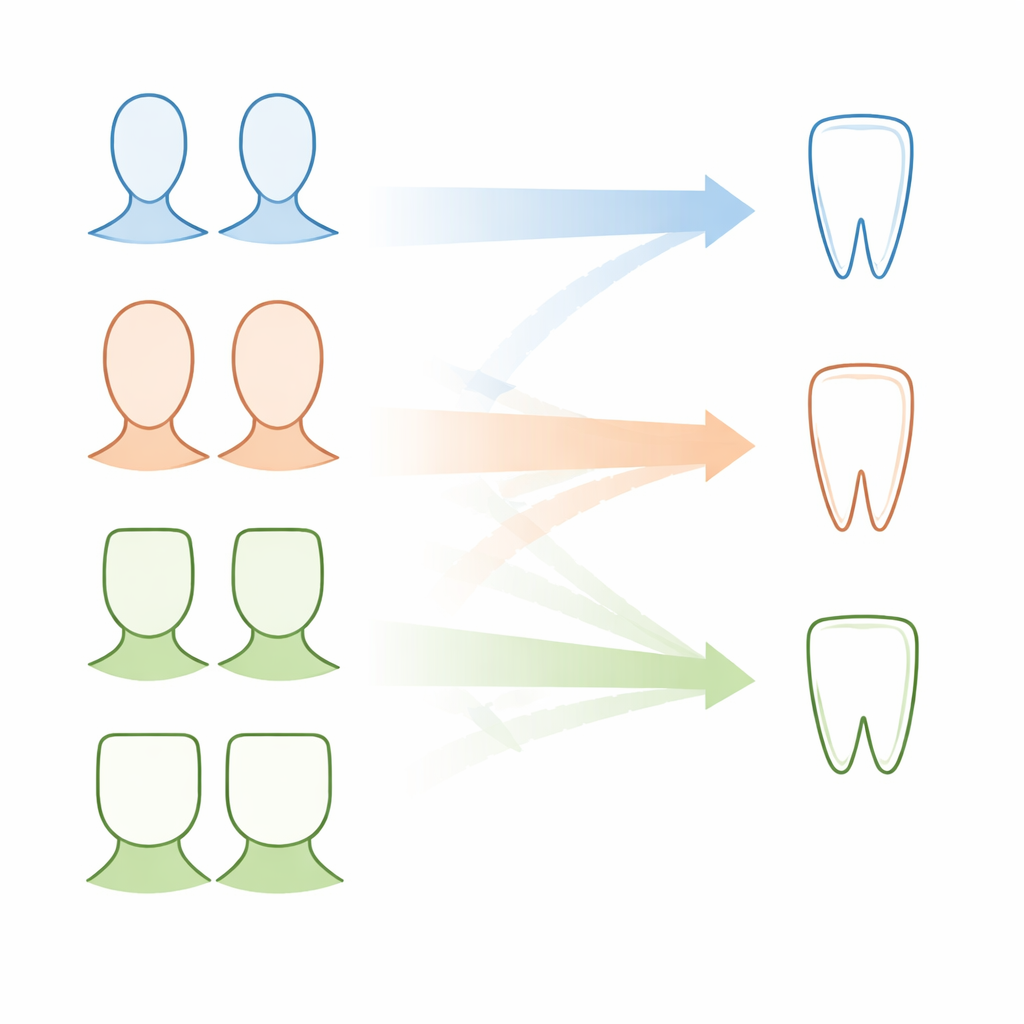
Old Ideas About Matching Faces and Smiles
Earlier theories in dentistry suggested that beauty in a smile comes from “harmony” between tooth shape, face shape, and even personality. One classic rule, known as William’s “Law of Harmony,” divides both faces and upper front teeth into three simple shapes: tapered, ovoid, and square. The rule claims that a person with, say, a tapered face should naturally have tapered front teeth, and that dentists can safely copy this pattern when designing dentures or cosmetic restorations. Later, an expanded “dentogenic” theory even linked tooth shape to gender, suggesting squarer teeth suit men while softer, more oval teeth suit women. These ideas are still mentioned in textbooks and can influence real treatment decisions.
How the Digital Measurements Were Done
To move beyond guesswork, the researchers studied 153 healthy Pakistani adults between 18 and 30 years old, with natural, well-aligned upper front teeth. For each person, they took two standardized photographs: a portrait with lips closed and a close-up of the upper front teeth with the lips retracted. They first traced the outlines of one central front tooth and the whole face using a digital drawing app, then imported these into AutoCAD, a design program more often used by engineers and architects. Within this software, they drew carefully positioned lines and tangents around the tooth and the inverted face, creating simple ratios that captured how tapered, oval, or square each outline was. Every tooth and every face was then sorted into one of the three shape groups according to predefined cutoffs.
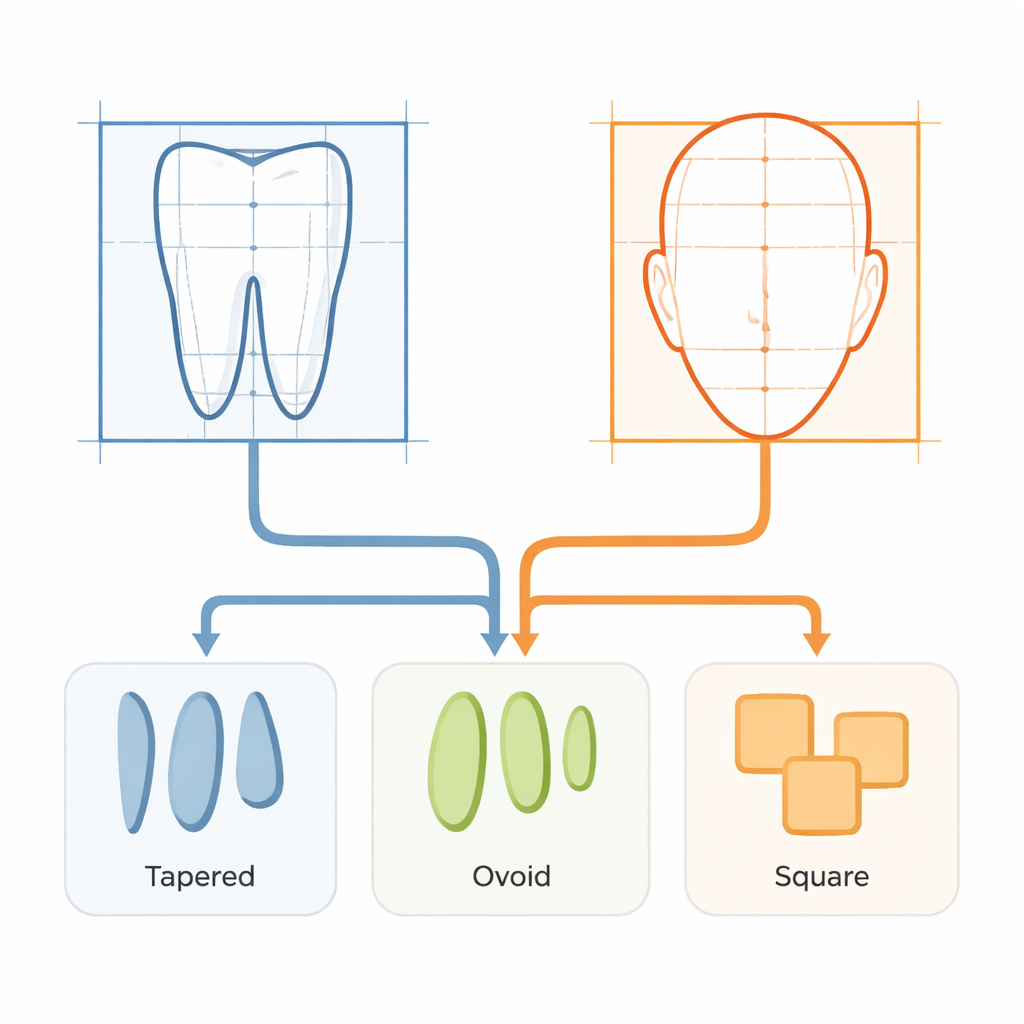
What the Faces and Teeth Really Looked Like
The most common tooth shape in this group was tapered, appearing in about half of all participants, followed by ovoid, with square teeth being relatively rare. Facial shapes showed a different pattern: among men, tapered faces were most frequent, while among women, ovoid faces were more common; square faces again were the least frequent in both sexes. When the researchers compared tooth shape with gender, they found no meaningful differences—men and women shared very similar patterns of tooth forms. By contrast, gender did relate to face shape: men more often had tapered faces, and women more often had ovoid faces, a difference that reached statistical significance.
Putting the Harmony Theory to the Test
The key question was whether a person’s face shape actually matched the shape of their front tooth, as the harmony theory predicts. The digital ratios did show that tapered teeth occurred most often overall, and tapering faces also appeared frequently. However, when the researchers used statistical tests to check for a true pattern—such as tapered faces consistently paired with tapered teeth—they found no significant association. The same was true when they looked more closely at different combinations of tooth and face shapes within men and women separately. In other words, while some individual people did have matching shapes, the population as a whole did not follow the simple face‑mirrors‑tooth rule.
What This Means for Real‑World Smiles
For patients, the study’s conclusion is reassuring: there is no single “correct” front tooth shape dictated by the outline of the face. In this sample of Pakistani adults, William’s “Law of Harmony” did not hold up, and gender did not reliably predict tooth form either. That means dentists should be cautious about relying on facial shape alone when selecting artificial teeth or planning cosmetic work. Instead, they are better off considering a richer mix of factors—how the lips move during speech and smiling, how the teeth fit together, the curve of the smile line, the overall dental arch, and, importantly, the patient’s own preferences. A natural-looking smile, the authors suggest, comes less from strict rules and more from an individualized balance between form, function, and personal identity.
Citation: Anees, R., Chaudhary, M.A.G. & Fatima, S.K. Association between maxillary central incisor tooth form and face shape using digital AutoCAD analysis in Pakistani adults. Sci Rep 16, 11627 (2026). https://doi.org/10.1038/s41598-026-45093-0
Keywords: dental aesthetics, face shape, tooth form, prosthodontics, Pakistani adults