Clear Sky Science · en
Uncovering potentially targetable genes in liver fibrosis via bioinformatics and experimental validation
Why liver scarring matters to everyone
Liver fibrosis is a slow buildup of scar tissue that can eventually lead to cirrhosis and liver cancer, conditions that claim millions of lives worldwide. Yet doctors still have few tools that directly stop or reverse this scarring once it is underway. This study asks a simple but important question: which specific genes in the liver might serve as practical targets for new drugs or diagnostic tests, helping to catch or curb fibrosis before it causes irreversible damage?
Hunting for signals in big data
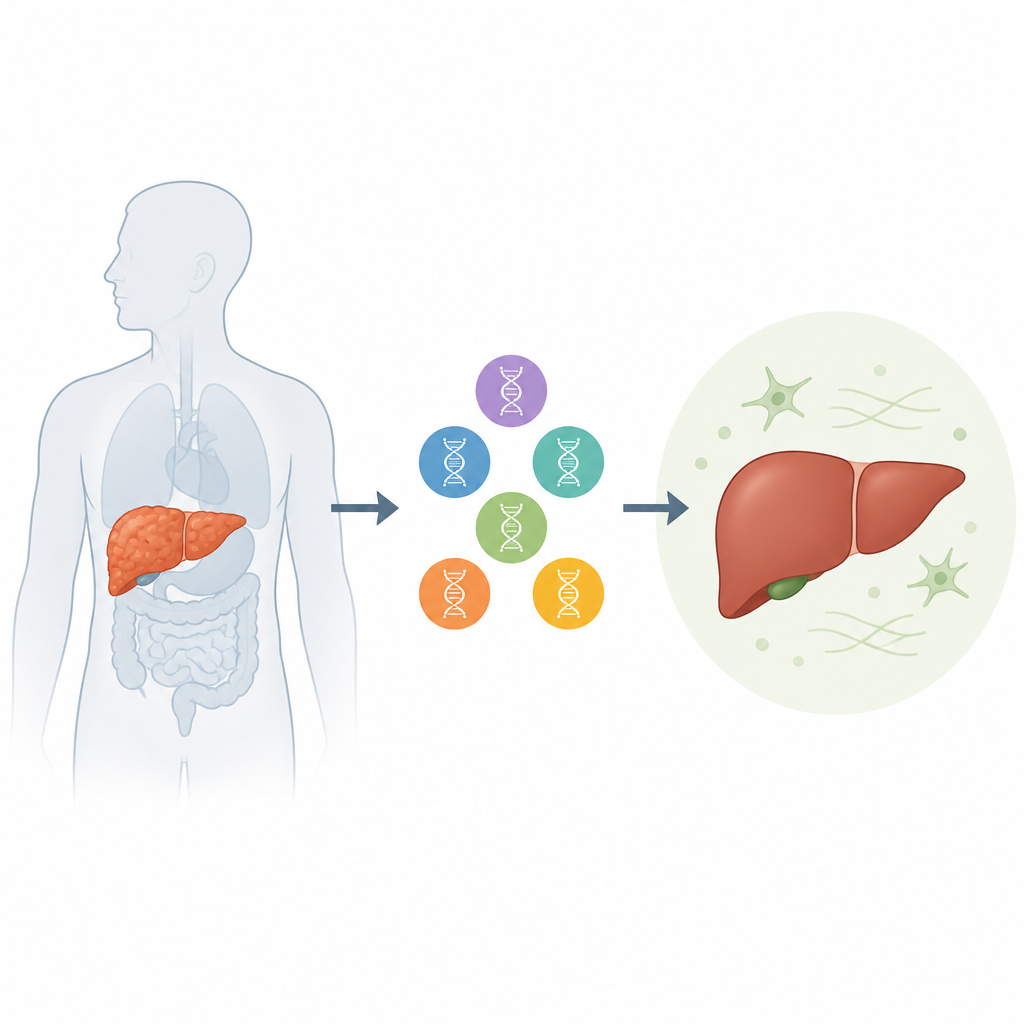
To find such targets, the researchers turned to public gene activity datasets from people with and without liver fibrosis. They combined two large collections of liver tissue samples and carefully corrected for technical differences so that the data could be reliably compared. Using statistical tools, they looked for genes that were switched on much more strongly in scarred livers than in healthy ones. They then linked these genes into groups that tend to rise and fall together, focusing on those clusters most closely tied to the presence of fibrosis.
Narrowing down to eight key genes
Next, the team cross-checked these fibrosis-related genes against databases of proteins that are already considered “druggable,” meaning they can potentially be targeted by medicines. This multi-step filter highlighted eight genes that stood out in scarred liver tissue: AQP1, CCL19, CXCL6, CXCL9, CXCL10, EPCAM, IGJ, and LUM. All eight showed higher activity in fibrotic samples and were able to distinguish fibrotic from non-fibrotic livers with good accuracy in computer-based tests. In other words, their combined patterns act like a molecular fingerprint of liver scarring.
Links between immunity, scarring, and liver cells
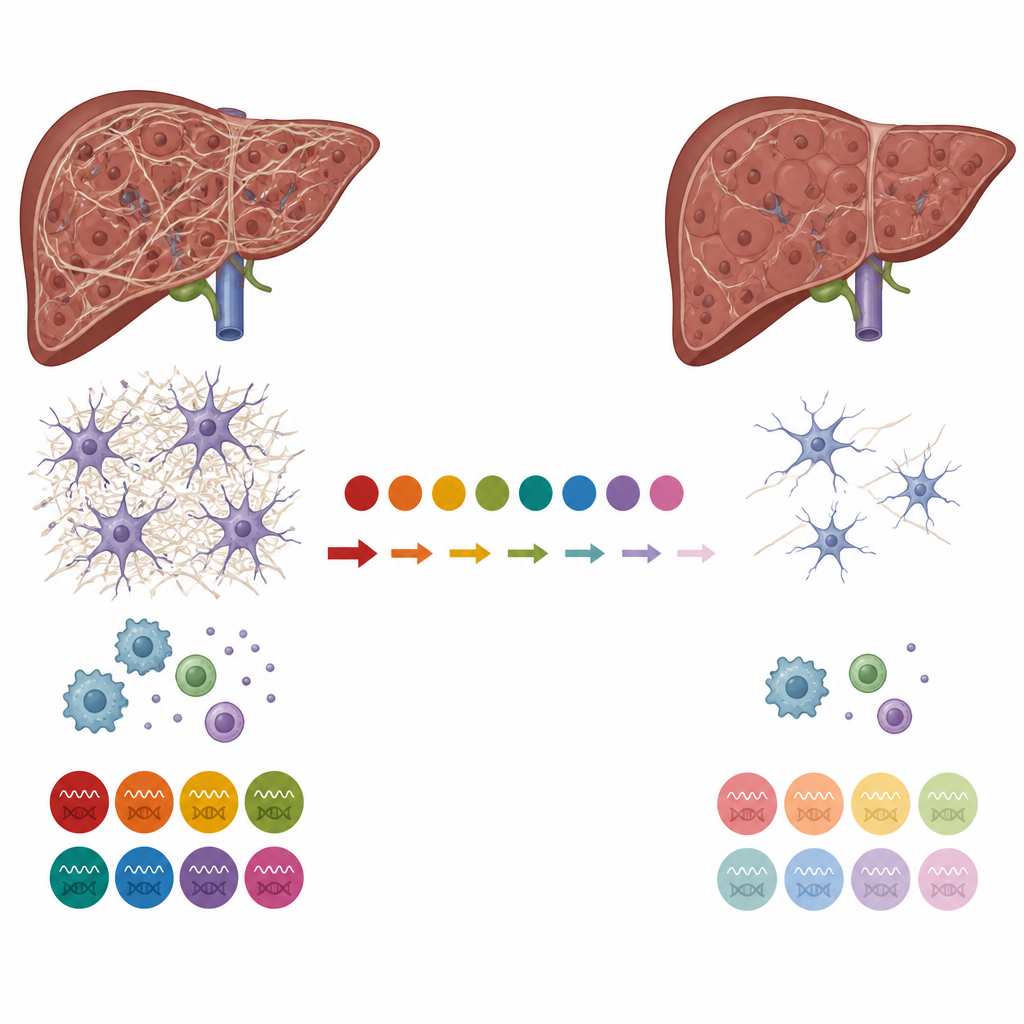
What do these genes actually do? Several, such as CXCL6, CXCL9, CXCL10, and CCL19, help guide immune cells to sites of injury and shape how those cells behave. The study found that when these genes were more active, there were clear shifts in the mix of immune cells in the liver, including types linked to inflammation. Another gene, LUM, is involved in the structure of the tissue itself and is tied to the mesh of proteins that forms scar tissue. EPCAM is a marker of certain epithelial cells in the liver, hinting at changes in how these cells respond to long-term damage. Together, these signals suggest that the highlighted genes sit at key junctions between inflammation, cell behavior, and the buildup of scar tissue.
Zooming in on one promising target
Among the eight genes, AQP1 received special attention. This gene encodes a channel that helps move water across cell membranes. In liver samples from patients with fibrosis, AQP1 was much more abundant than in healthy tissue. When the researchers examined liver sections under the microscope, they saw strong AQP1 staining in fibrotic regions, although it did not perfectly overlap with classic scar-forming cells. To test whether AQP1 is more than just a bystander, they reduced its activity in a human liver cell line that mimics scar-forming cells. Under a strong scarring signal, cells with less AQP1 grew more slowly, were less activated, and moved less, all signs that AQP1 may help drive the processes that thicken and spread scar tissue.
What this work means going forward
This study does not deliver a new drug, but it offers a focused shortlist of genes that are strongly tied to liver scarring and that may be reachable with medicines. The findings suggest that liver fibrosis is shaped by a close interplay between immune signals, structural proteins, and specific liver cell types, with genes like AQP1, EPCAM, LUM, and several chemokines sitting at crucial points in these networks. For patients, the long-term hope is that such genes could form the basis of future blood tests to flag harmful scarring earlier, or become targets for treatments that calm inflammation and limit the buildup of liver scar tissue.
Citation: Li, H., Xie, D., Wu, Q. et al. Uncovering potentially targetable genes in liver fibrosis via bioinformatics and experimental validation. Sci Rep 16, 14832 (2026). https://doi.org/10.1038/s41598-026-45080-5
Keywords: liver fibrosis, gene targets, AQP1, immune signaling, extracellular matrix