Clear Sky Science · en
The combined inhibitory effect of butaselen and decitabine against lung cancer cells
Why pairing medicines can matter
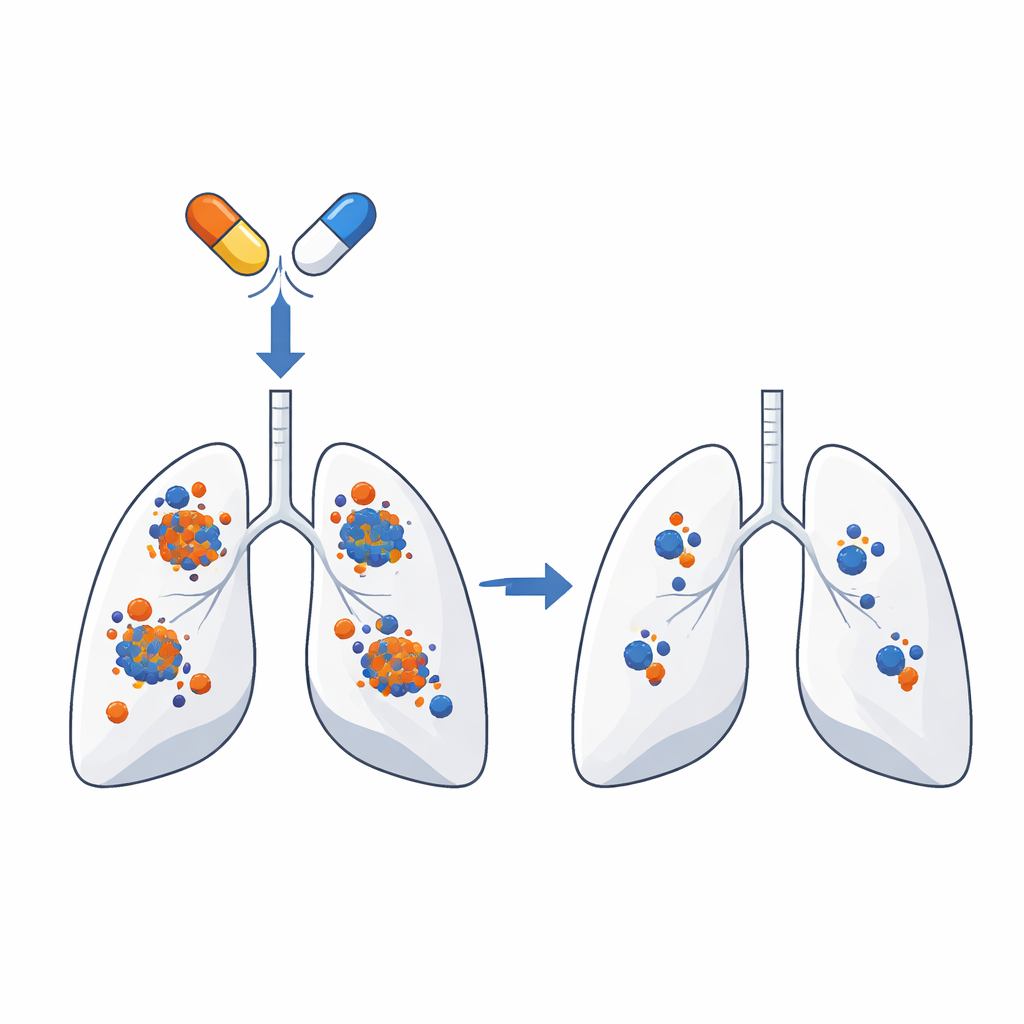
Lung cancer is still one of the deadliest cancers, and many patients do not respond well to current treatments. Doctors and scientists are therefore searching for combinations of medicines that can work together better than any single drug alone. This study looks at a new pairing of two experimental approaches and asks a simple question with big implications: can joining forces make lung cancer cells easier to kill while keeping doses lower?
Two different ways to attack cancer cells
The researchers focused on two compounds that harm cancer cells in very different ways. One, decitabine, is already approved for blood cancers and works by loosening abnormal chemical tags on DNA that silence protective genes. On their own, however, solid tumors like lung cancer often shrug off this drug or require doses so high that side effects become a problem. The second compound, butaselen, is an organoselenium molecule that interferes with a cell’s antioxidant defenses, making cancer cells more vulnerable to stress. It is still in early clinical testing. Because these drugs hit separate weak points in the cell, the team wondered whether using them together would push lung cancer cells past a tipping point.
Putting the drug duo to the test in lung cancer cells
To explore this idea, the scientists studied two common laboratory models of non-small cell lung cancer, called A549 and H1299 cells. They treated the cells with each drug alone and with carefully chosen mixtures of both, then measured how well the cells survived, multiplied, and moved across a surface. They also examined whether the cells activated programmed cell death, a controlled form of self-destruction. Across these experiments, butaselen by itself clearly damaged the cancer cells, while decitabine alone had only a modest impact, echoing its known weakness in solid tumors. Yet when the two were combined at particular dose ratios and for enough time, the cancer cells fared much worse than with either drug alone.
How the combination changes cell behavior
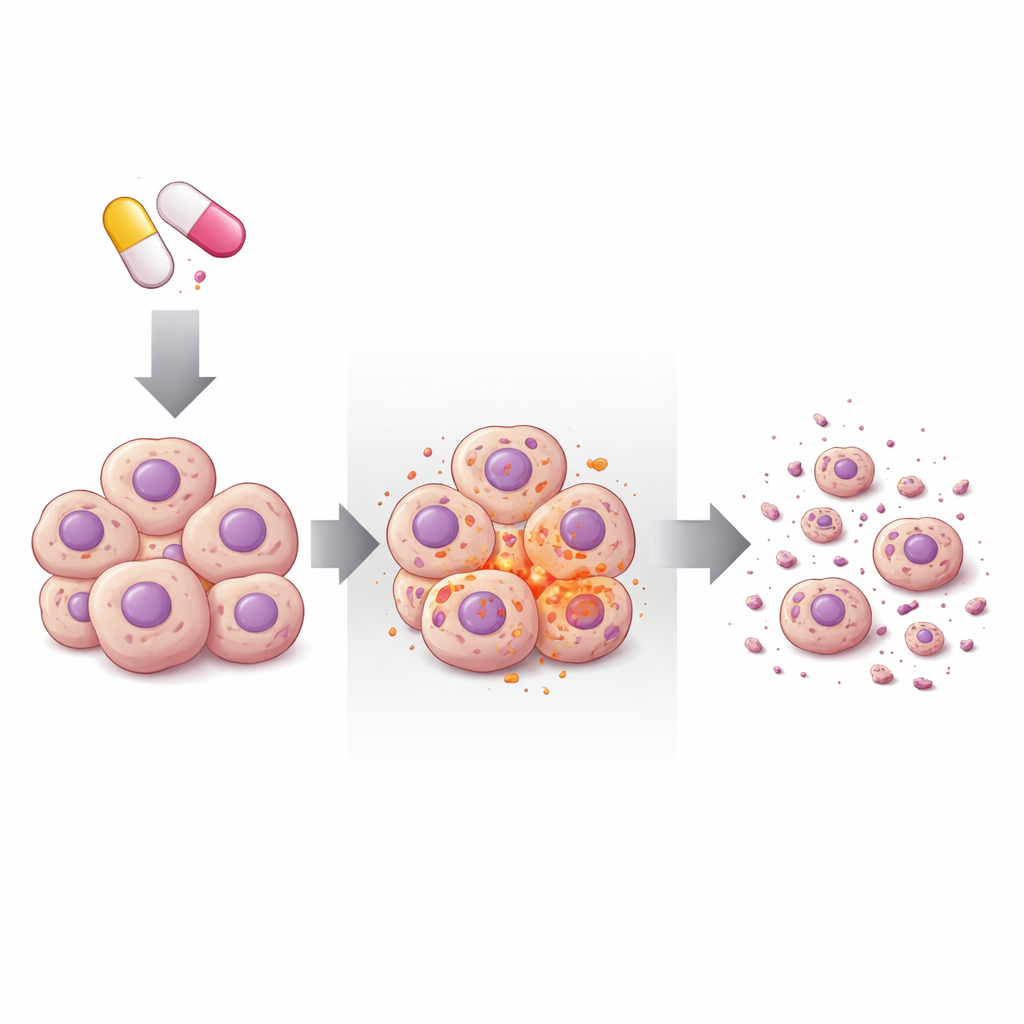
The most striking changes appeared in tests of growth and movement. The combination treatment sharply reduced the number of colonies the cells could form, a sign that many cells lost their ability to keep dividing. It also slowed their migration into a scratch-like gap in a cell layer, suggesting a reduced capacity to spread. Flow cytometry, a method for counting different cell states, revealed that many more cells entered an apoptosis-like, or self-destructing, state when exposed to both drugs together. These findings indicate that butaselen helps tip decitabine-treated cells away from survival and toward death, and does so more effectively than simply increasing the dose of one drug.
Switching key proteins toward cell death
To understand why the partnership worked better, the team looked at several proteins that act as switches for growth, death, and movement. Both drugs decreased the level of DNMT1, an enzyme that helps maintain DNA’s chemical tags, but the combination lowered it the most. At the same time, proteins linked to stopping cell division and blocking spread—p21, HOXA9, and E-cadherin—were all higher after combined treatment than after either drug alone. The balance between two opposing survival proteins, Bcl-2 and Bax, also shifted in a way that favors apoptosis. In short, the combined drugs nudged multiple control systems inside the cancer cells away from growth and migration and toward shutdown.
What this could mean for future lung cancer care
While this work was done entirely in dishes of cancer cells, it points to a promising direction. By pairing a drug that alters DNA regulation with one that weakens cancer cells’ stress defenses, the researchers were able to block lung cancer cell growth, movement, and survival more strongly than with either drug alone, and potentially at lower doses. For patients, the hope is that such combinations could one day make stubborn tumors more responsive without adding excessive toxicity. The next steps will require testing this strategy in animal models and, if results remain encouraging, in early clinical trials to see whether the laboratory promise of this drug duo can translate into safer, more effective treatments for people with lung cancer.
Citation: Chen, Y., Lin, C., Lu, Y. et al. The combined inhibitory effect of butaselen and decitabine against lung cancer cells. Sci Rep 16, 14560 (2026). https://doi.org/10.1038/s41598-026-45054-7
Keywords: lung cancer, drug combinations, epigenetic therapy, cell death, targeted treatment