Clear Sky Science · en
Dysregulated landscape of RNA-binding proteins in unexplained recurrent spontaneous abortion revealed by bulk and single-cell transcriptome
Why early pregnancy loss matters
Many pregnancies end in miscarriage, and for some women this heartbreak repeats again and again without a clear medical explanation. This study looks inside the lining of the uterus in early pregnancy at the level of single cells and their RNA to ask a focused question: which molecules that control RNA are misregulated in women with unexplained recurrent miscarriage, and how might that disturb the cells that normally help support and protect an embryo?
Key support cells in the uterine lining
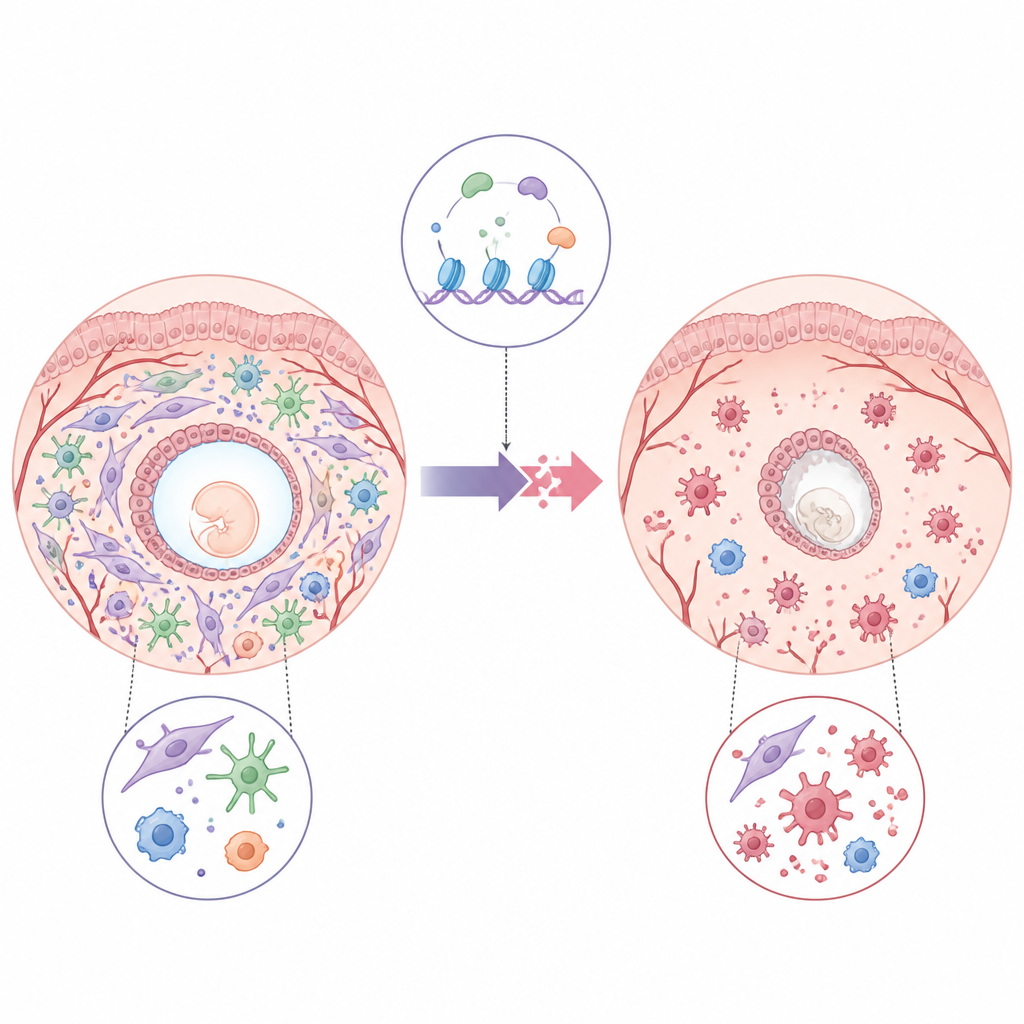
Pregnancy requires a dramatic reshaping of the uterine lining so it can feed and shelter the embryo. A central role is played by decidual stromal cells, specialized support cells that emerge from ordinary uterine tissue at the start of pregnancy. Using single cell RNA sequencing on tissue from women with unexplained recurrent spontaneous abortion and from healthy early pregnancies, the researchers mapped all major cell populations in the decidua. They found immune cells, blood vessel cells, fibroblasts, trophoblasts from the placenta, and others, but decidual stromal cells were the most abundant. In women with recurrent loss, however, this critical population was reduced, hinting that failure of these support cells may destabilize pregnancy.
Molecules that manage RNA go off balance
The team focused on RNA binding proteins, a large family of molecules that decide how RNAs are processed, translated and degraded, and therefore fine tune which proteins a cell makes. By clustering cells based only on the activity of more than two thousand known RNA binding proteins, they could still clearly separate the different cell types in the decidua. This showed that each cell type carries its own RNA binding fingerprint. Comparing healthy tissue with tissue from recurrent loss revealed broad shifts in these regulators. In particular, some RNA binding proteins were switched on across many immune and non immune cells, while others that help build ribosomes tended to be switched off, suggesting a widespread disturbance in how cells handle RNA and protein production.
Vulnerable stromal cell subgroups and altered cell fates
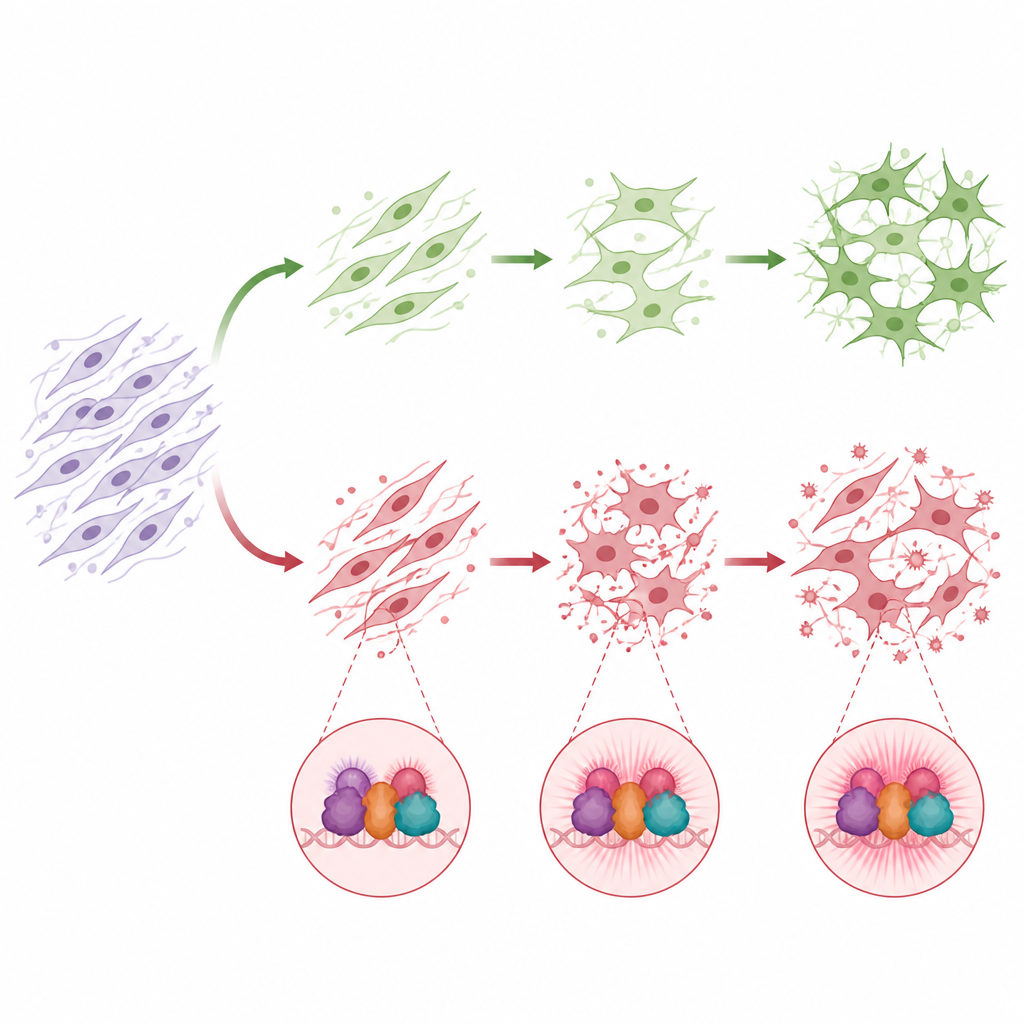
Zooming in on decidual stromal cells, the researchers discovered several distinct subgroups, each with its own pattern of genes and RNA binding proteins. Some of these subgroups were greatly diminished or almost missing in women with recurrent loss. Using a computational approach called pseudotime, they reconstructed how stromal cells normally progress from an early state toward more mature forms during pregnancy. In healthy tissue, cells could follow two branches, but in recurrent loss they were biased toward one branch associated with an altered end state. Along this altered path, three RNA binding proteins in particular became steadily more active, suggesting they may steer cells into a less supportive, more pathological fate.
Three candidate markers at the heart of the problem
Across single cell data and independent bulk RNA sequencing from whole tissue, three RNA related genes stood out: DCN, LGALS3 and SLC3A2. All three were more highly expressed in decidual stromal cells from women with recurrent loss, and many other cell types showed raised levels of DCN and LGALS3 as well. These molecules have been linked in earlier work to inflammation, fibrosis, and problems in pregnancy, such as poor placental development or excessive cell aging. Here, their coordinated rise in specific stromal cell subsets, particularly along the abnormal differentiation branch, suggests that they may help drive or reflect the shift from a nurturing to a hostile uterine environment.
What this means for understanding recurrent loss
To a lay reader, the core message is that recurrent unexplained miscarriage may not be caused by a single faulty organ or hormone, but by a subtle breakdown in the molecular managers of RNA inside the uterine lining. This breakdown appears to shrink helpful stromal cell populations, push surviving cells down a distorted developmental path, and alter signaling between immune and structural cells at the site where embryo and mother meet. The three highlighted genes, DCN, LGALS3 and SLC3A2, emerge as promising markers of these changes and possible future targets for tests or therapies. While the work is based on computational analysis and still needs experimental confirmation, it offers a detailed map of where and how cell level regulation goes wrong in many cases of otherwise unexplained pregnancy loss.
Citation: Zhu, Y., Chen, D., Xu, B. et al. Dysregulated landscape of RNA-binding proteins in unexplained recurrent spontaneous abortion revealed by bulk and single-cell transcriptome. Sci Rep 16, 15287 (2026). https://doi.org/10.1038/s41598-026-45052-9
Keywords: recurrent miscarriage, decidual stromal cells, RNA binding proteins, single cell RNA sequencing, pregnancy loss mechanisms