Clear Sky Science · en
Medium -term monitoring and machine learning-based forecasting of drought dynamics in Iran
Why future drought matters for everyday life
Drought is not just about empty rivers and cracked earth; it reaches into food prices, jobs, health, and even where people can live. Iran, already one of the world’s driest countries, is facing growing pressure on its water supplies. This study asks a simple but urgent question: how will droughts across Iran change in the coming years, and can modern computer tools give planners a clearer warning before conditions worsen?
Looking back over half a century
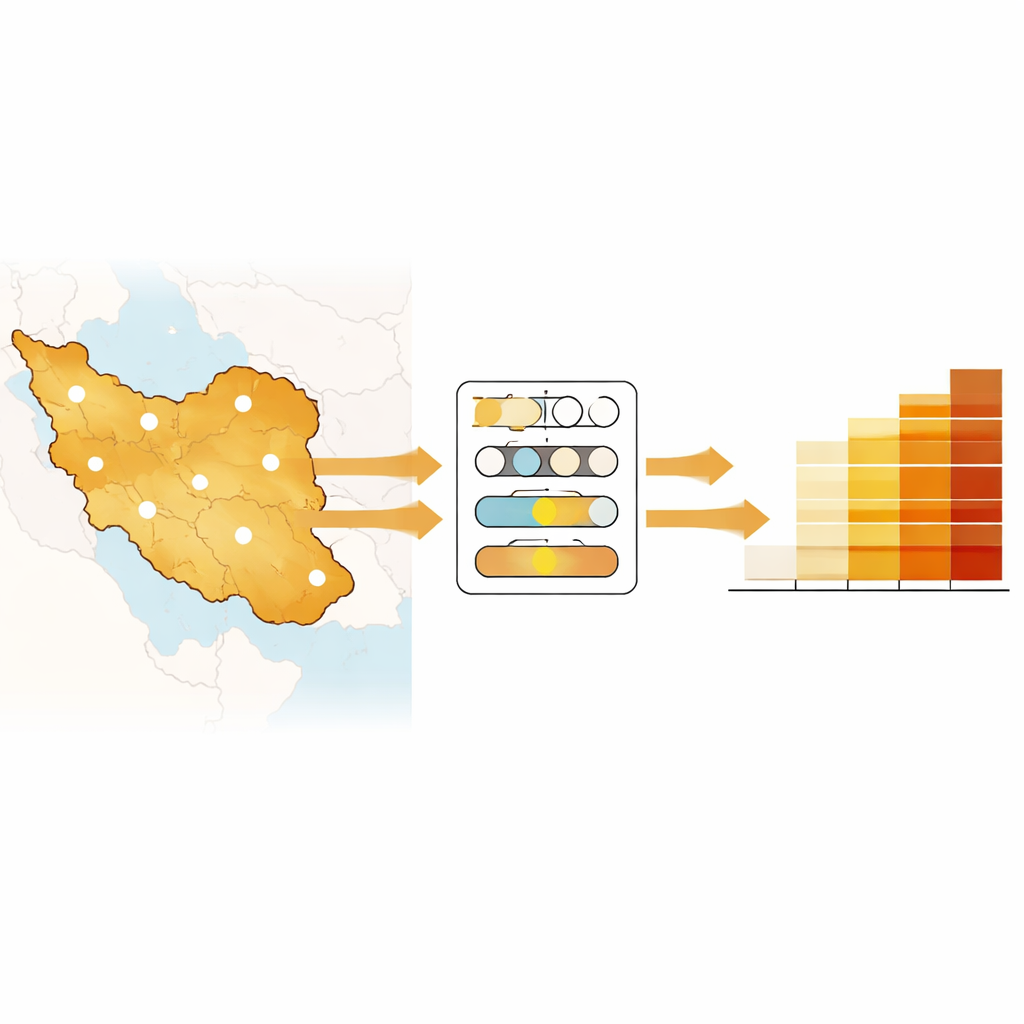
The research team assembled 58 years of weather records, from 1967 to 2024, at 34 carefully chosen meteorological stations that span Iran’s wide range of climates, from humid northern coasts to parched deserts. Using a measure called the Reconnaissance Drought Index—built from both rainfall and the drying power of heat and wind—they classified each month, season, and year as wetter than normal, normal, or various levels of dry. Over the long term, “normal” years were indeed the most common, especially at the annual scale. Yet the data also showed that when multi‑year droughts set in, they could be deep and persistent, badly straining rivers, reservoirs, and groundwater.
Teaching machines to read the climate
To move from diagnosis to prediction, the study turned to machine learning, a branch of computer science that lets algorithms learn patterns from data. The author tested two advanced approaches: a support vector machine, a flexible method that draws nonlinear boundaries between categories, and a bidirectional long short‑term memory network, a deep learning model designed to track patterns in sequences. Because the support vector machine is very sensitive to its internal settings, three nature‑inspired optimization schemes—based on pelican hunting behavior, genetic evolution, and bird flocks—were used to tune it. The pelican optimization algorithm emerged as the clear winner, finding parameter combinations that substantially improved accuracy, especially for correctly identifying different drought classes.
Choosing the best forecasting engine
Armed with this tuned hybrid model, the researcher then pitted it against the deep learning network on unseen data from 2019 to 2024. At monthly, seasonal, and annual scales, the support‑vector‑plus‑pelican system consistently outperformed the deep network. It matched observations more closely, made smaller errors, and, most importantly, was far better at distinguishing between “normal,” “moderately dry,” and more severe dry conditions. The deep network, despite its sophistication, struggled with a dataset that is large by hydrology standards but modest by deep learning standards. This head‑to‑head test underscores an important lesson: for medium‑sized climate records, a well‑tuned, relatively compact algorithm can beat a more elaborate neural network.
A future that is drier, not wilder
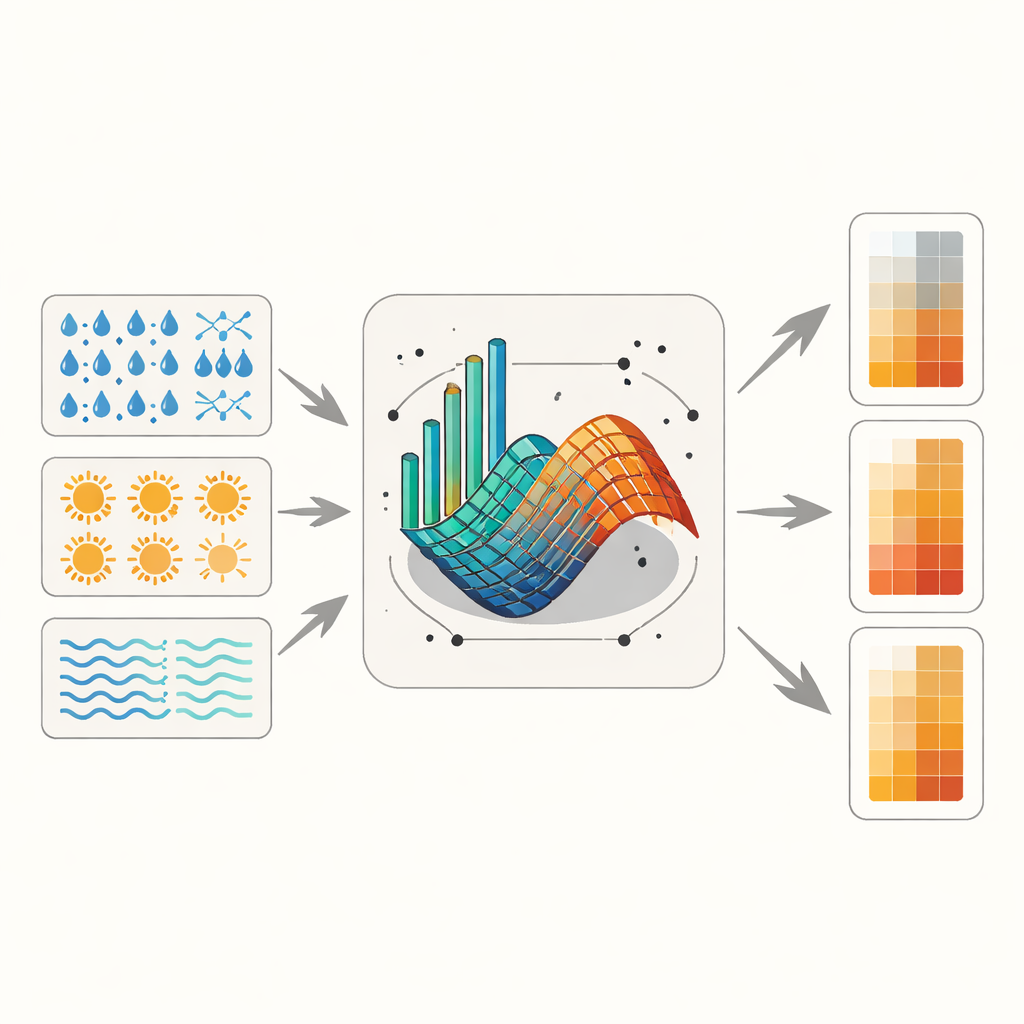
Using the best‑performing model, the study projected drought classes from 2025 to 2036. The outlook is sobering. Across Iran, “normal” and “moderately dry” conditions are expected to dominate at monthly, seasonal, and yearly scales. Very wet and extremely wet years, which help refill aquifers and lakes, nearly vanish from the forecast. At the same time, a statistical trend test shows a strong and spreading shift toward dryness. When future projections are added to the historical record, the share of stations with a clear drying signal jumps sharply, especially at short‑term and seasonal scales. In other words, Iran’s climate is not just occasionally dry; it is drifting toward a more firmly arid state.
What this means for people and policy
For non‑specialists, the core message is straightforward but alarming: if current patterns continue, Iran is likely to face more frequent and persistent droughts, while the rare “good” wet years that once offered relief may almost disappear. The study’s machine‑learning forecasts do not account for every possible future influence, such as global climate‑model projections or local water‑management choices, but they provide a sharp, data‑driven warning. To protect harvests, cities, and ecosystems, Iran will need forward‑looking water policies: careful groundwater use, more efficient irrigation, and land practices that conserve moisture. The tools tested here show that with the right data and algorithms, societies can see such dangers coming—and still have time to act.
Citation: Zarei, A.R. Medium -term monitoring and machine learning-based forecasting of drought dynamics in Iran. Sci Rep 16, 14303 (2026). https://doi.org/10.1038/s41598-026-45031-0
Keywords: drought forecasting, water scarcity, machine learning, Iran climate, water management