Clear Sky Science · en
Thermal, economic, and environmental assessment of optimal aerogel insulation thickness compared with conventional materials in syrian climates
Why wall insulation matters for daily life
Keeping buildings warm in winter and cool in summer uses a large share of the world’s energy, and in Syria this is especially important as cities rebuild in very different climates, from hot deserts to mild coasts. This study asks a simple but powerful question: how thick should wall insulation be, and which material makes the most sense, when you care not only about your heating bill but also about how much floor space you can rent out and how much pollution is released to the air?
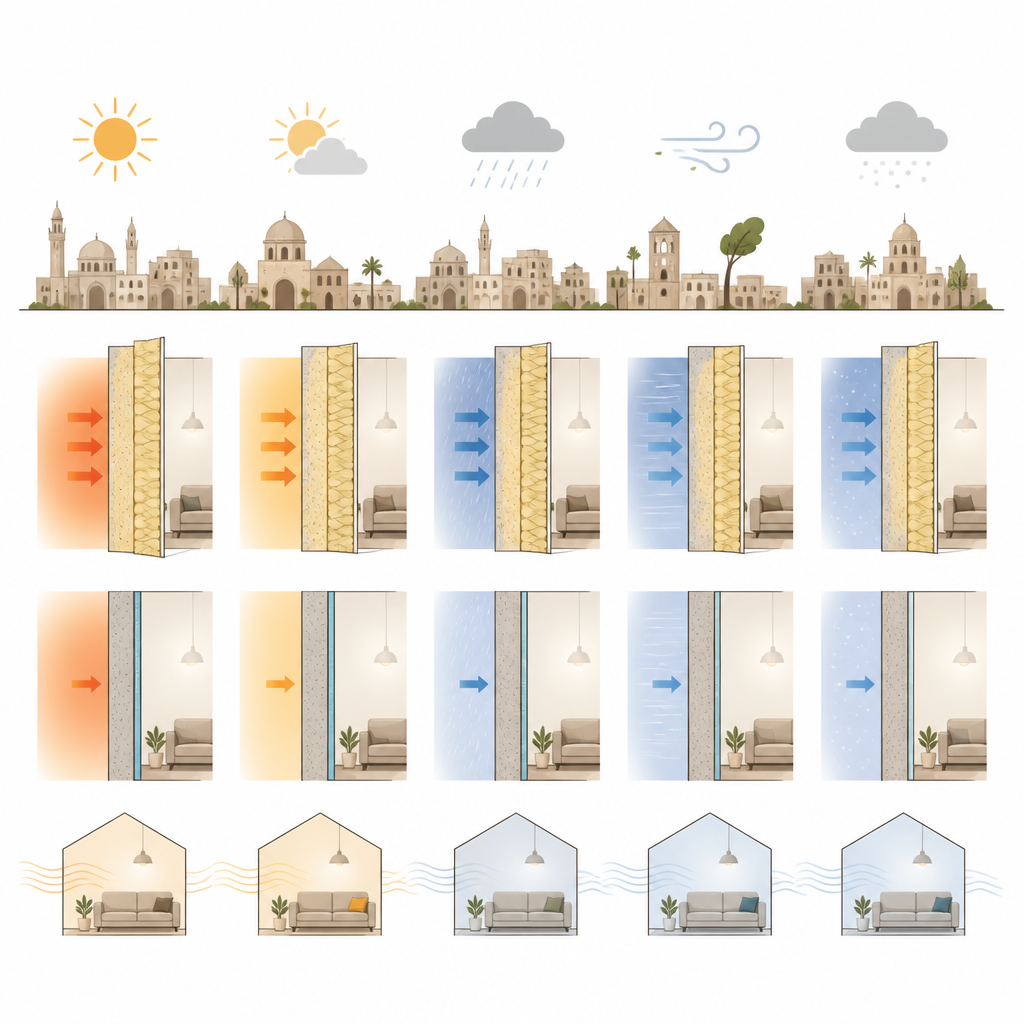
New and old ways to block heat
The researchers compared a new nano based material called aerogel with three familiar wall insulations: glass wool, extruded polystyrene foam, and polyurethane foam. They studied a typical commercial building and used long term weather records for five Syrian cities that span four climate zones, along with three common energy sources: diesel and bottled gas for heating, and electricity for cooling. Using a standard “degree day” method, they linked outdoor temperatures to how much heating or cooling a building would need over a year, then combined this with fuel prices, insulation costs, and a ten year life cycle cost model to find the insulation thickness that gives the lowest overall cost.
Finding the sweet spot in thickness
Heat loss through a wall falls quickly as insulation gets thicker, but the cost of extra material rises steadily. The team showed that total cost forms a shallow U shape: first it drops as energy use falls, then rises once added thickness no longer pays for itself. For conventional materials, the best thickness typically ranged from 6 to 15 centimeters, with glass wool usually needing the greatest thickness. Aerogel, by contrast, reached its optimum at only 1 to 11 millimeters, thanks to its ability to block heat with very little material. Without considering space, glass wool gave the lowest life cycle cost and the fastest payback, while aerogel looked expensive because of its high price per cubic meter even though it was used in thin layers.
When thin walls pay for themselves
The picture changed once the value of floor space was added. Because aerogel is so thin, it frees up usable interior area compared with bulky glass wool or foam. In high rent cities like Damascus and Aleppo, that extra space can be rented, turning saved centimeters in the wall into real income. When the authors counted this rental value, aerogel often became the best economic choice, with high net savings and short payback times. In Latakia, where a diesel fueled system plus aerogel gave an extremely low optimum thickness of about one millimeter, the payback period shrank to just over a year because the small up front cost was quickly offset by the value of recovered floor area. In lower rent cities, however, the extra space was worth less, so cheaper conventional materials such as polystyrene or polyurethane remained the better bargain.
Balancing money and pollution
The study also looked at pollution from burning diesel and bottled gas to run heating systems, focusing on carbon dioxide and sulfur dioxide. Thicker insulation always cut emissions by reducing fuel use, but because aerogel’s optimum thickness was so small, it did not reduce fuel use as much as the thick glass wool in most cases. As a result, glass wool delivered the largest emission cuts, while aerogel achieved more modest reductions. Climate also played a big role: colder Damascus had the highest fuel use and emissions even after insulation, while milder Latakia had the lowest. Bottled gas produced less carbon pollution than diesel, especially in the colder cities.
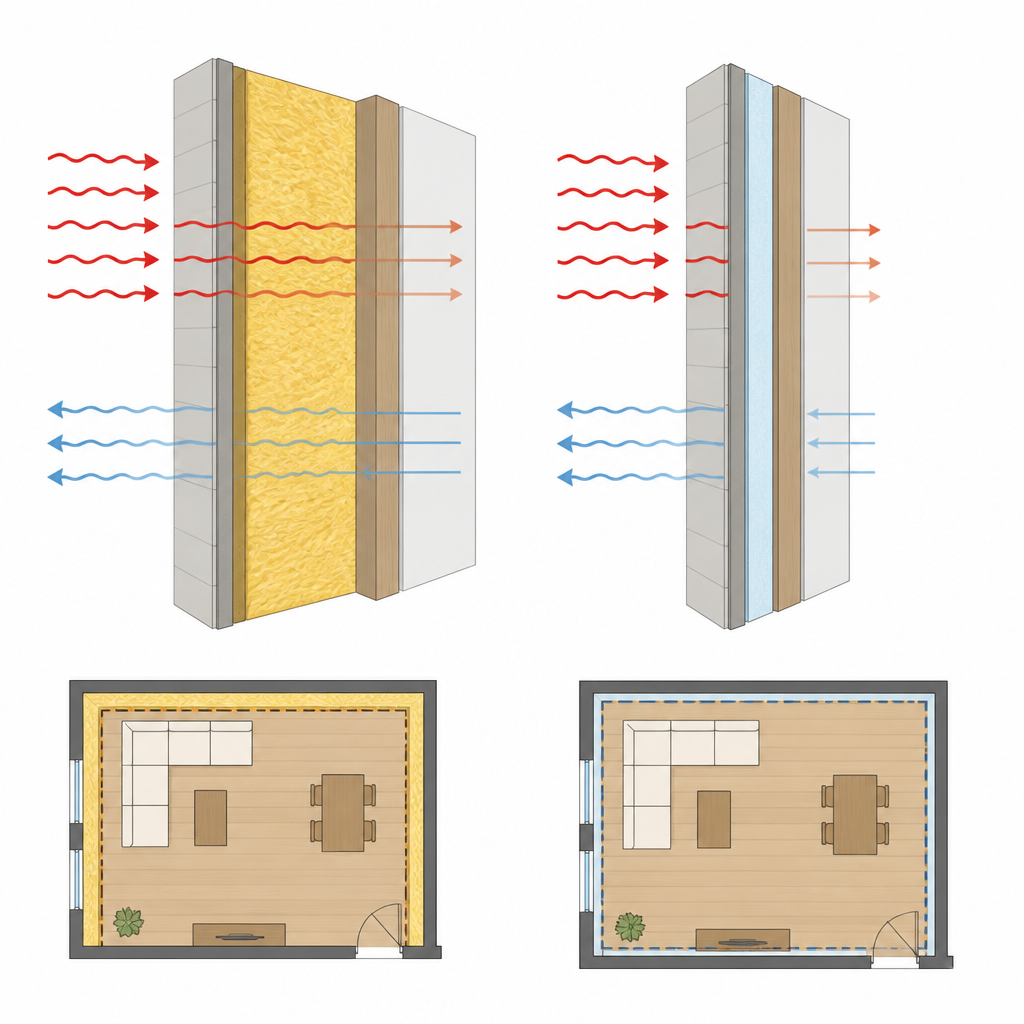
What this means for future buildings
For people planning or rebuilding properties, the study’s message is that there is no single “best” insulation for all of Syria. Aerogel’s ultra thin layers make the most sense where every square meter of floor space is valuable and fuel use is high, while conventional materials like glass wool, polystyrene, and polyurethane can be smarter choices where land is cheaper or climates are milder. The authors conclude that the right wall design must balance upfront cost, long term energy savings, available space, local rents, and environmental goals, rather than focusing on thermal performance alone.
Citation: Dory, L., Alghoraibi, I., Altunji, N. et al. Thermal, economic, and environmental assessment of optimal aerogel insulation thickness compared with conventional materials in syrian climates. Sci Rep 16, 14889 (2026). https://doi.org/10.1038/s41598-026-45028-9
Keywords: building insulation, aerogel, energy efficiency, life cycle cost, Syrian climates