Clear Sky Science · en
Photodynamic larvicidal activity of magnesium chlorophyllin and magnesium chlorophyllin zinc oxide nanocomposite against Spodoptera frugiperda with non-target safety assessment
Greener ways to protect staple crops
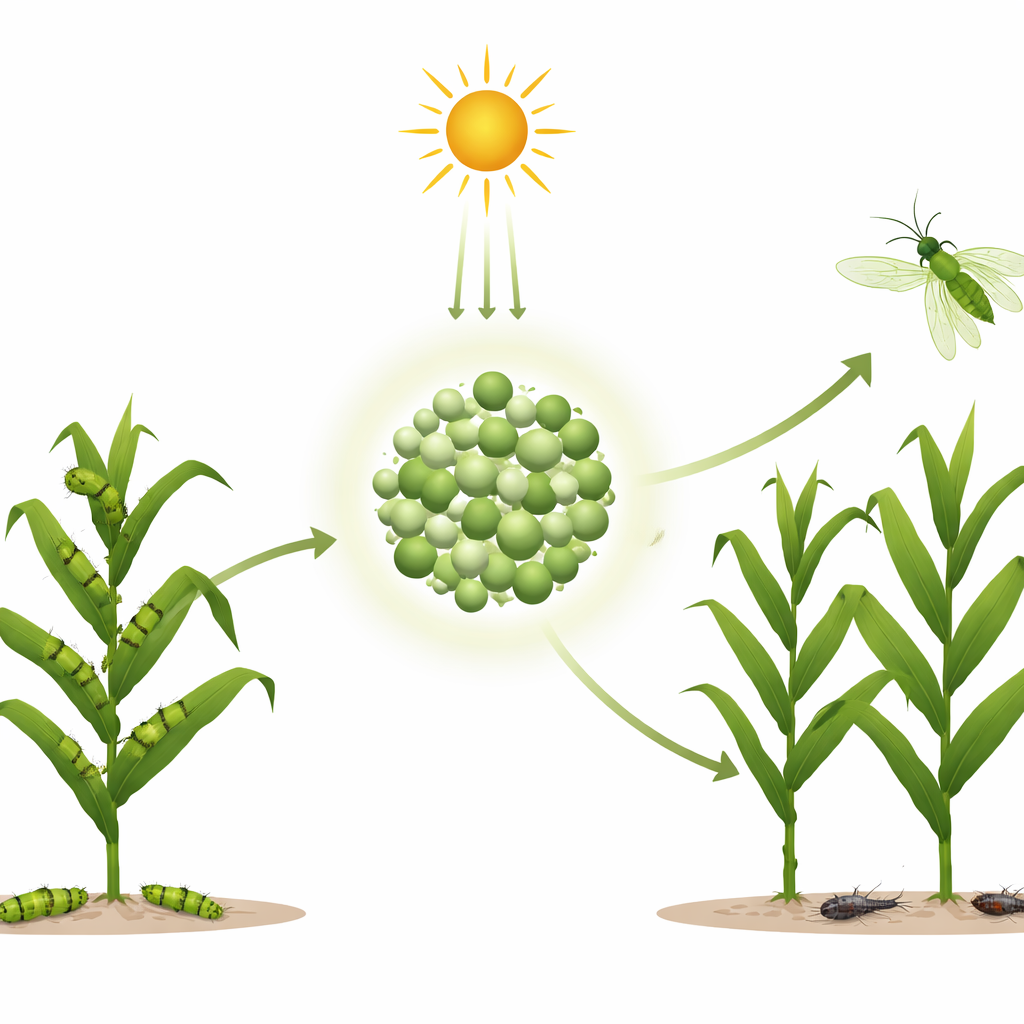
Maize farmers around the world are battling the fall armyworm, a caterpillar that can wipe out more than half a field’s yield and is steadily expanding its range. Conventional chemical sprays are losing their punch as insects evolve resistance, while raising concerns about pollution and harm to beneficial insects. This study explores a different idea: harnessing a plant-derived dye, related to the green pigment in leaves, and combining it with tiny particles of zinc oxide to create a light-activated treatment that kills the pest caterpillars but leaves a key beneficial predator largely unharmed.
A stubborn pest and a new light-based strategy
The fall armyworm, Spodoptera frugiperda, is an invasive caterpillar that has recently spread into Egypt and many other regions, threatening maize and other cereals. It reproduces quickly, disperses widely, and has already evolved resistance to multiple insecticides, forcing farmers to spray more often and at higher doses. To tackle this, the researchers turned to magnesium chlorophyllin, a water‑soluble derivative of chlorophyll, the molecule plants use to capture sunlight. When exposed to light, chlorophyllin can generate highly reactive forms of oxygen that damage cells. By formulating this compound alone and also attaching it to zinc oxide nanoparticles, the team tested whether they could build a new kind of “photo‑insecticide” that is triggered by sunlight rather than by traditional nerve‑targeting chemistry.
Building and testing tiny light-activated particles
The scientists first synthesized zinc oxide nanoparticles and then coated them with magnesium chlorophyllin to form a hybrid nanocomposite. Advanced microscopy confirmed that the particles were only a few billionths of a meter across and well crystallized, while light‑absorption measurements showed clear signatures of both zinc oxide and chlorophyllin, indicating successful coupling. These optical changes suggested that the particles should harvest light efficiently and favor the formation of reactive oxygen species when illuminated. The team then exposed second‑instar fall armyworm larvae to maize leaves dipped in different concentrations of either plain magnesium chlorophyllin or the chlorophyllin–zinc oxide nanocomposite, allowing a period in the dark for feeding before placing the larvae in sunlight.
Strong hit on the pest, soft touch on its ally
Both formulations proved highly toxic to the caterpillars under light, with lethal concentrations in the sub‑milligram‑per‑liter range and slightly stronger effects for the nanocomposite, especially after longer dark feeding. The results indicate that giving the larvae more time to ingest the treated leaves allows more of the light‑sensitive compound to accumulate before sun exposure delivers a fatal burst of oxidative damage. Importantly, the team also tested the same doses on Chrysoperla carnea, a lacewing whose larvae are valuable predators of aphids in fields. Whether the lacewings were sprayed directly or fed prey that had eaten treated leaves, their mortality remained very low, and the doses needed to cause harm were hundreds of times higher than those that killed fall armyworm. This wide safety margin suggests the approach could fit into integrated pest management programs that aim to conserve beneficial insects.
Peeking inside the caterpillar’s chemistry
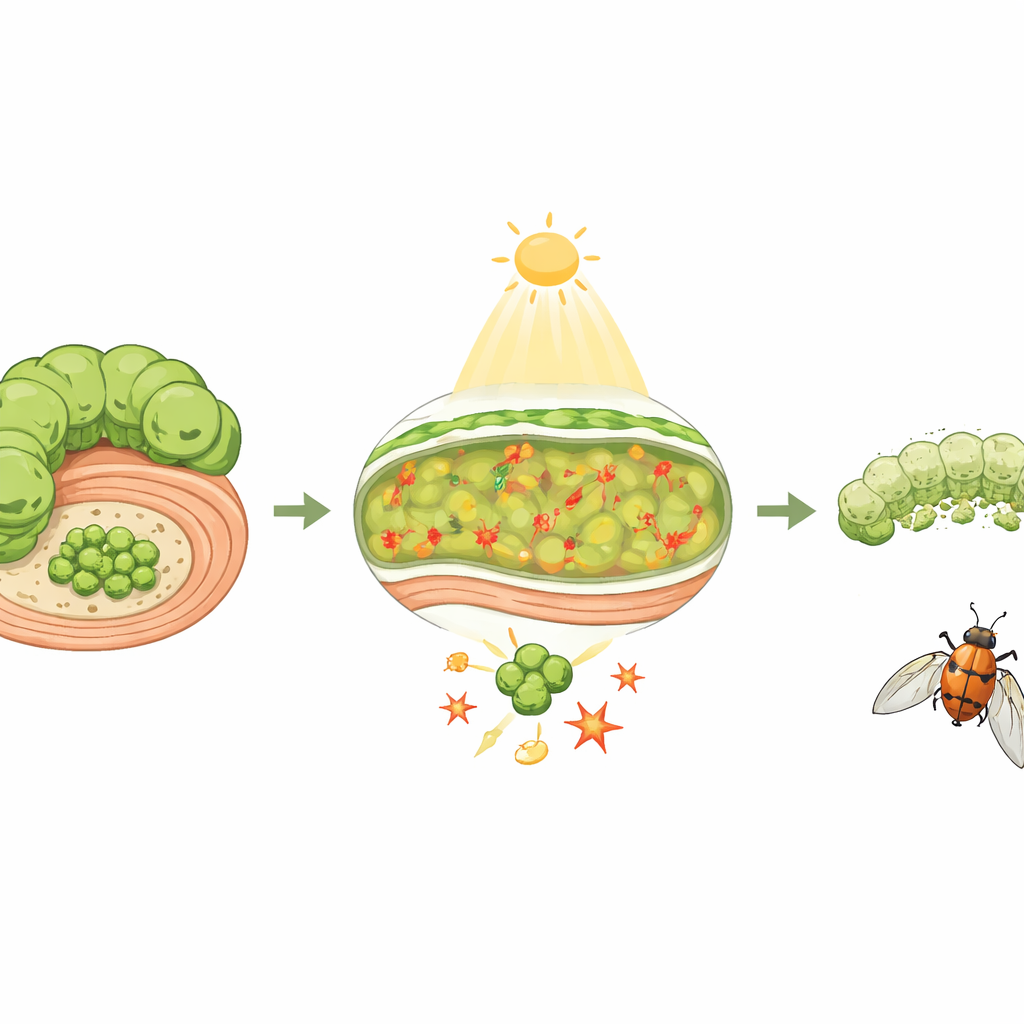
To understand what happens inside the pest, the researchers measured two families of detoxification enzymes that insects routinely use to break down foreign chemicals: glutathione S‑transferases (GSTs) and carboxylesterases. In treated fall armyworm larvae, GST activity dropped, while carboxylesterase activity rose, with stronger shifts for the nanocomposite. These changes are consistent with heavy oxidative stress that overwhelms the larvae’s normal defenses. Computer‑based molecular docking added another piece of the puzzle: simulations showed magnesium chlorophyllin binding tightly to a specific GST from fall armyworm, in the same pocket used by natural substrates, and more moderately near the active center of a carboxylesterase. Such interactions could help block detoxification pathways and amplify the toxic impact of light‑generated reactive oxygen species.
What this means for future pest control
The study concludes that magnesium chlorophyllin and its zinc oxide nanocomposite are promising, environmentally friendly alternatives to conventional insecticides for controlling fall armyworm. They act through light‑driven oxidative damage and interference with detoxification enzymes, rather than classic nerve poisoning, which may help slow the spread of resistance. At the same time, their low toxicity to a key beneficial predator points to good ecological compatibility. While field trials and further structural studies are still needed, these chlorophyll‑based nano‑formulations offer a glimpse of a future in which farmers protect crops with smart, sunlight‑activated tools inspired by the chemistry of plants themselves.
Citation: Elshemy, H.M., Rady, M.H., Mahmoud, S.M.F. et al. Photodynamic larvicidal activity of magnesium chlorophyllin and magnesium chlorophyllin zinc oxide nanocomposite against Spodoptera frugiperda with non-target safety assessment. Sci Rep 16, 12068 (2026). https://doi.org/10.1038/s41598-026-45022-1
Keywords: fall armyworm, chlorophyllin, nanopesticides, photodynamic control, beneficial insects