Clear Sky Science · en
TUBB2A related epilepsy: novel variants and genotype-phenotype correlation
Why tiny building blocks in brain cells matter
Parents of children with seizures often ask why epilepsy appears so early in life and why some children also struggle with learning and movement. This study looks at one small but crucial brain protein that helps shape nerve cells before birth. By following families, scanning brains, and testing cells in the lab, the researchers show how subtle changes in this protein can ripple outward, affecting brain structure, seizure risk, and a child’s development. 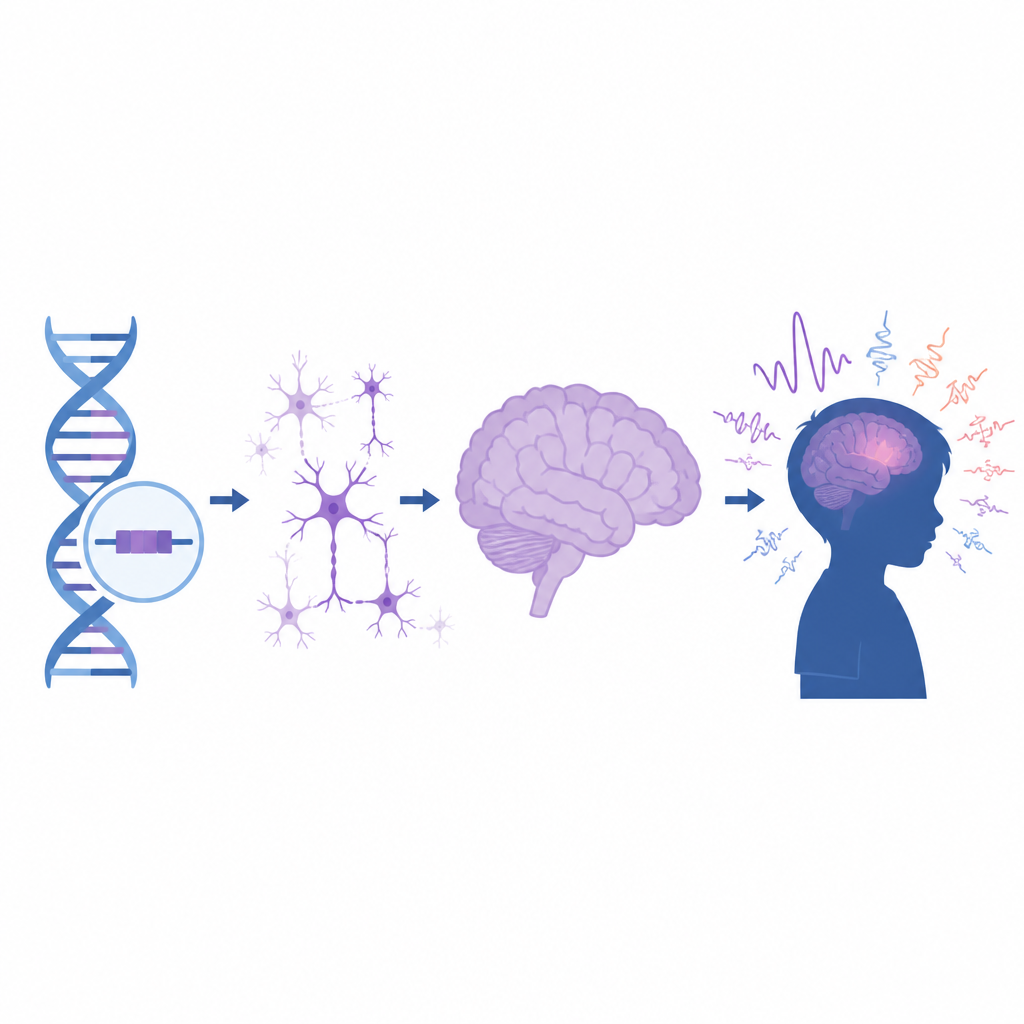
From gene change to childhood seizures
The team focused on a gene called TUBB2A, which provides instructions for a protein used to build the inner scaffolding of brain cells. They collected detailed medical information from five children treated at their hospital and combined it with reports from 23 children described in earlier papers, for a total of 28 young people with epilepsy and TUBB2A changes. Seizures typically began very early, most often before a child’s first birthday, and included epileptic spasms, focal seizures that start in one part of the brain, and jerking attacks called myoclonic seizures. Every child had some degree of delayed development or intellectual disability, and some also showed features of autism or movement problems.
How the brain’s surface and wiring are altered
Brain scans revealed that nearly all of these children had visible changes in how the outer layer of the brain formed. Many had a missing or underdeveloped bridge between the two brain halves, known as the corpus callosum, and a large share had unusually small heads or broad, thickened folds on the brain surface, a pattern called pachygyria. Others showed abnormal white matter, cerebellum, or deep brain structures. A small number, however, had scans that looked normal, hinting that microscopic wiring problems can exist even when standard imaging appears reassuring. 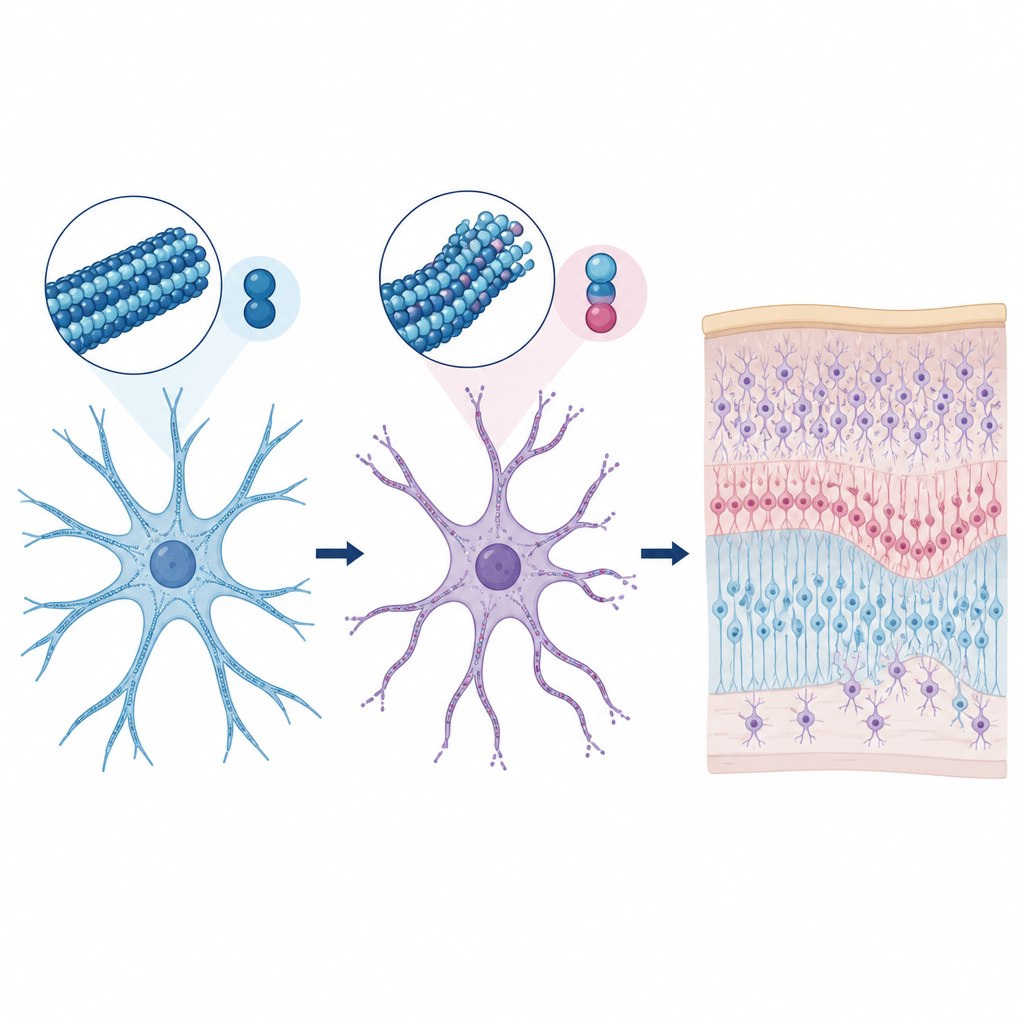
Zooming in on the brain’s inner scaffolding
To move beyond brain images, the researchers asked how specific TUBB2A changes affect cells. They introduced four newly discovered variants and four known variants into cultured human cells. Under the microscope, all eight versions disturbed the cell’s internal scaffolding, which is made of long protein tubes that guide cell division and help nerve cells extend. Some altered proteins were less stable and broke down more quickly. Others failed to join the normal tube network or caused the spindle, the structure that pulls chromosomes apart during cell division, to become misshapen. When the cells were forced to dismantle and rebuild their internal tubes, those carrying TUBB2A variants did so more slowly and less completely than cells with the typical protein.
Linking specific changes to more severe problems
The study compared where each variant sits within the 3D shape of the TUBB2A protein and matched this to patient features. About two thirds of the variants clustered at or near the contact point where two tubulin units lock together to form a working pair, and some lay where the protein interacts with a molecular motor that moves cargo along the tubes. Children whose variants disturbed these key contact sites were more likely to show severe brain surface changes such as pachygyria. Even within the same family, though, symptoms could vary: two siblings sharing the same TUBB2A change ranged from difficult-to-control epilepsy to only fever-triggered seizures, showing that other genetic or environmental factors also shape the outcome.
What this means for families and future research
For families confronting early-onset epilepsy and developmental delay, this work highlights TUBB2A as an important piece of the puzzle. The findings suggest that certain changes in this gene weaken the internal scaffolding of developing brain cells, disturb cell division and migration, and in turn raise the chance of both brain malformations and seizures. The study does not yet offer targeted treatments, and the authors stress that their patient group is still small and based mainly on cell models. However, mapping how different variants behave at the cellular level brings medicine closer to predicting disease severity, improving diagnosis, and eventually designing therapies that better support children living with TUBB2A-related epilepsy.
Citation: Liu, W., Chen, M., Tang, X. et al. TUBB2A related epilepsy: novel variants and genotype-phenotype correlation. Sci Rep 16, 14821 (2026). https://doi.org/10.1038/s41598-026-44992-6
Keywords: TUBB2A, epilepsy, brain development, cortical malformations, microtubules