Clear Sky Science · en
Paternal heat conditioning enhances offspring’s thermal resilience via epigenetic regulation of mir-210a
Why hot dads matter for baby chicks
As heat waves grow more frequent, keeping farm animals healthy in high temperatures is a pressing challenge. This study shows that briefly warming chicken embryos not only helps those birds cope better with heat later in life, but also passes that advantage to their sons’ chicks. The work traces this inherited heat resilience to tiny regulators in the brain and sperm, offering clues to how animals may adapt to a warming world and how breeders might raise more heat-tolerant flocks.
Warming eggs to build tougher birds
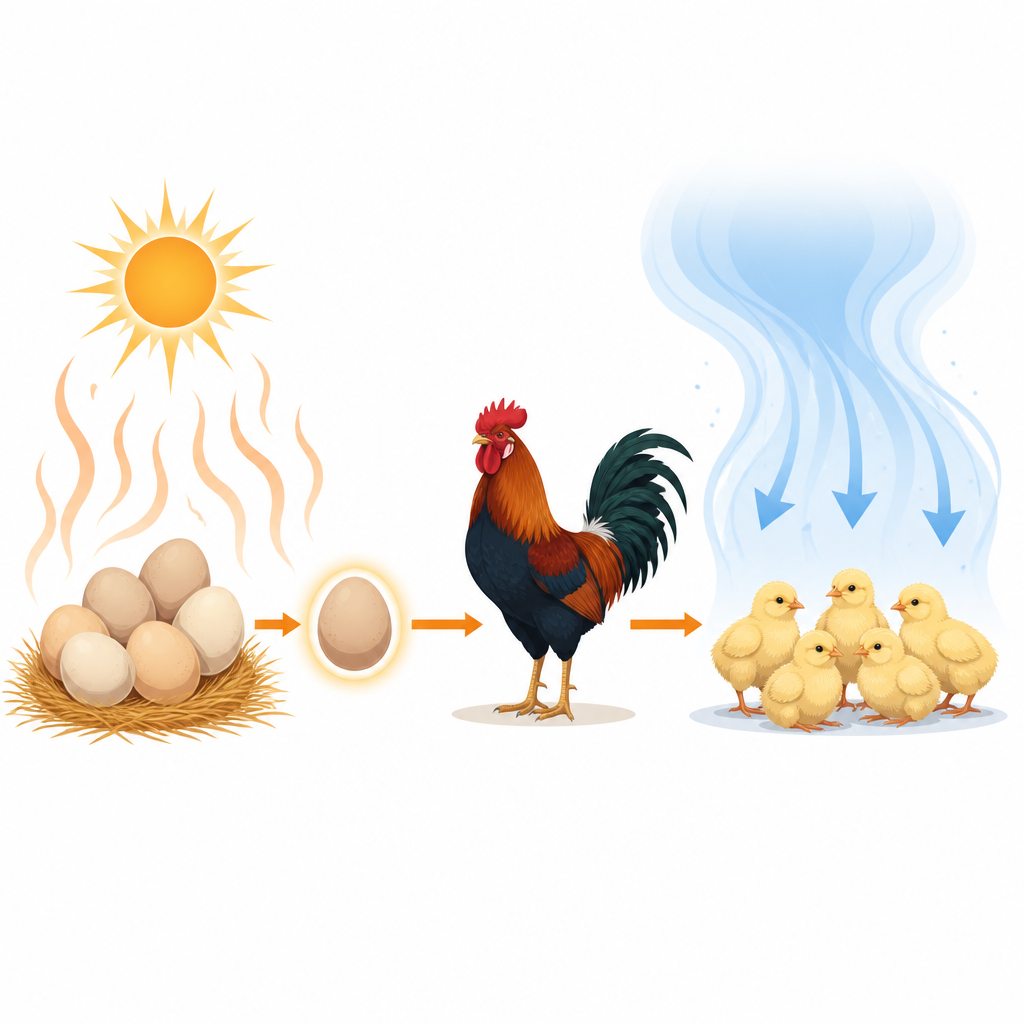
The researchers started by gently warming fertilized broiler eggs for part of their development, a process they call embryonic heat conditioning. These future fathers, once grown, were mated with untreated hens to produce the next generation, whose eggs were incubated under normal conditions. When both generations of chicks were ten days old, they faced a controlled heat challenge. Compared with control birds, heat-conditioned fathers and their offspring showed smaller rises in body temperature, a simple but powerful sign that their bodies could better handle heat stress.
Signals written on DNA without changing genes
To uncover how this resilience is stored and passed on, the team looked beyond the DNA sequence itself to epigenetic marks, chemical tags that sit on DNA and help turn genes on or off. They focused on the preoptic area and anterior hypothalamus, a small brain region that acts as a thermostat in birds and mammals. Using genome-wide measurements of DNA methylation, they found altered patterns near the genes of many microRNAs, short RNA molecules that fine tune gene activity. One microRNA, called miR-210a, stood out because its control region was more heavily methylated in heat-conditioned birds and their offspring.
A tiny RNA that shifts with heat
The team measured miR-210a levels in the thermostat region of the brain before and after heat exposure. At rest, both heat-conditioned fathers and their chicks had higher amounts of this microRNA than controls. After six hours of heat, however, miR-210a levels dropped sharply only in the heat-conditioned lines, matching the time window when their body temperature was being held in check. To test whether miR-210a could drive changes in other genes, the scientists injected synthetic miR-210a into the brain ventricles of young, untreated chicks. Six hours later, dozens of genes linked to chromatin organization, stress responses, and heat production pathways had shifted their activity, even though body temperature itself did not change during this brief experiment.
From fathers’ sperm to chicks’ brain thermostat
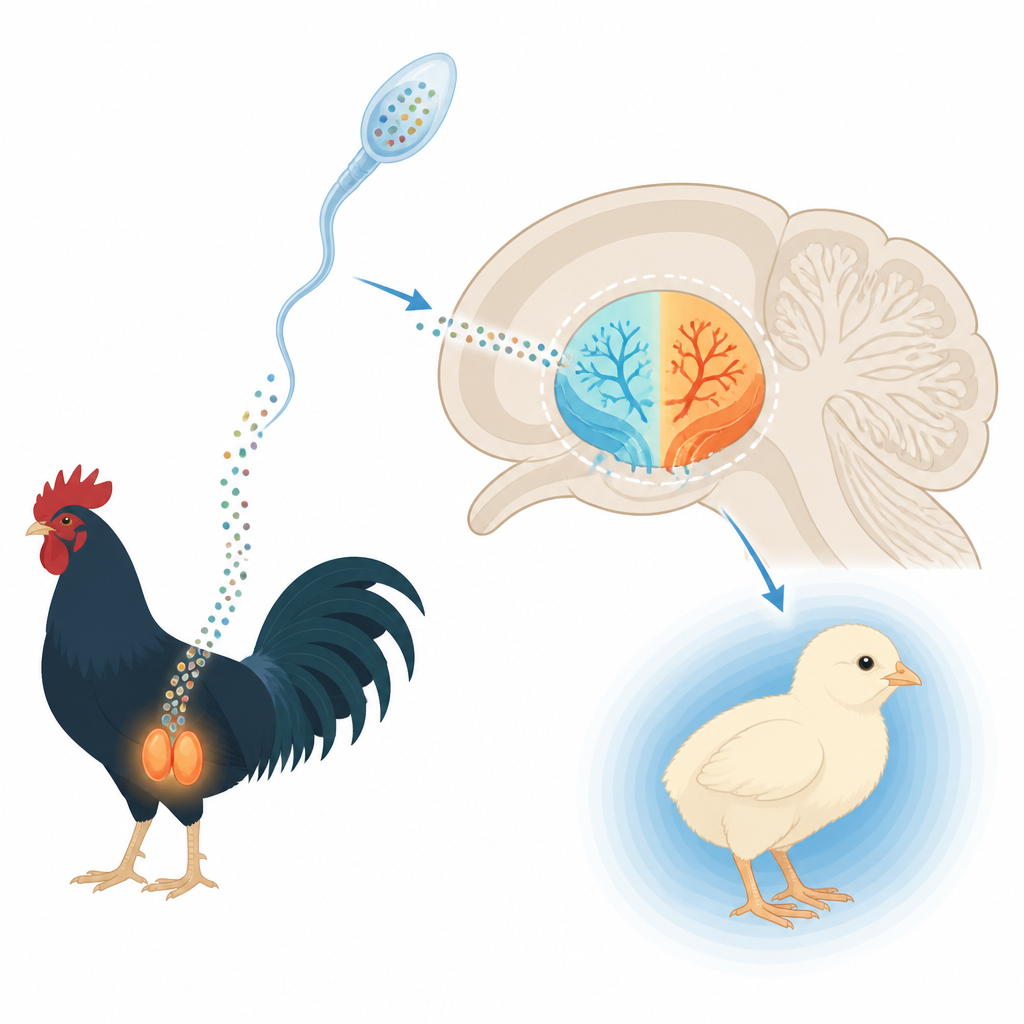
Digging deeper, the researchers compared genes altered by miR-210a in the brain with methylation changes found in sperm from heat-conditioned fathers and in the brains of their chicks. One gene, ARID5B, emerged as a central player. It helps shape how DNA is packed and read in cells. In sperm from heat-conditioned roosters, parts of the ARID5B gene carried extra methyl marks, hinting at a heritable change. In the brains of conditioned birds and their offspring, ARID5B levels were reduced, and its binding to the miR-210a control region shifted with heat exposure. When the team experimentally altered ARID5B in chick brains, miR-210a levels changed as well, supporting a feedback loop between the two.
What this means for chickens in a warming world
Together, these results suggest that a carefully timed warm spell during egg development rewires a father rooster’s germ cells and his brain thermostat in a way that can be passed to his chicks. This rewiring appears to act through epigenetic marks on DNA and a partnership between ARID5B and miR-210a, which together adjust networks of genes involved in stress handling and heat production. For non-specialists, the key message is that early heat exposure can leave a chemical memory in fathers that makes their offspring better at staying cool. Understanding and harnessing such natural memory could help poultry producers raise birds that cope more safely with rising temperatures.
Citation: Ravi, P.M., Kisliouk, T., Druyan, S. et al. Paternal heat conditioning enhances offspring’s thermal resilience via epigenetic regulation of mir-210a. Sci Rep 16, 14749 (2026). https://doi.org/10.1038/s41598-026-44987-3
Keywords: heat stress, epigenetics, microRNA, poultry, thermal resilience