Clear Sky Science · en
Bacillus megaterium strain KGA3 increases saline–alkaline tolerance of maize by recruiting keystone taxa in rhizosphere soil
Helping Crops Thrive in Tough Soils
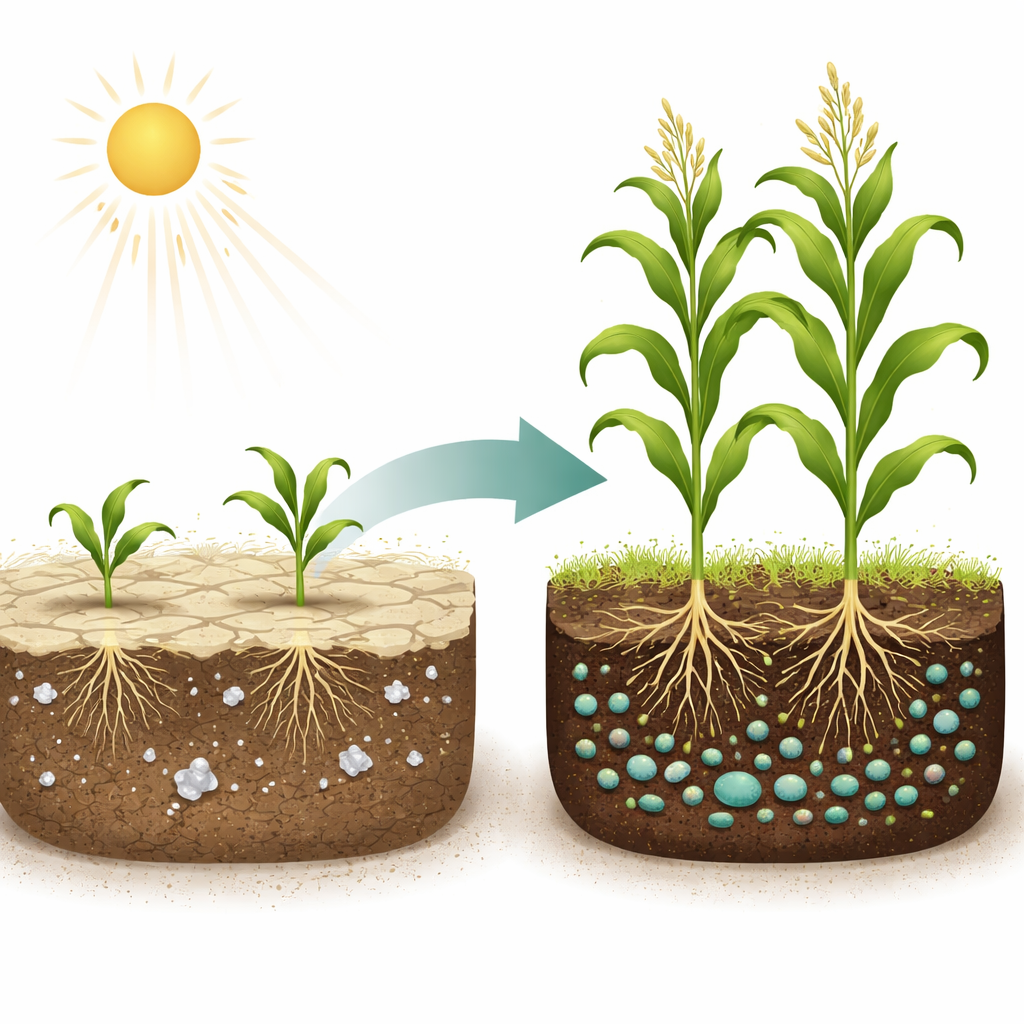
Across many dry regions of the world, farmers battle soils that are both salty and alkaline. These harsh conditions lock up nutrients that crops like maize need, stunting growth and slashing harvests. This study explores whether a naturally occurring soil bacterium, Bacillus megaterium strain KGA3, can be added to fields to gently reshape the underground life around roots, turning a hostile soil into one that feeds plants instead of starving them.
Why Salty, Alkaline Soils Are a Problem
In normal soils, phosphorus, nitrogen, and potassium provide the fuel for plant processes such as energy production and building DNA. In saline–alkaline soils, however, high levels of salts and a very high pH cause phosphorus to bind tightly with metals like calcium, forming hard-to-dissolve compounds. At the same time, excess sodium and other salts disturb the balance of helpful ions, damage roots, and reduce the plant’s ability to take up water. Farmers often respond with heavy doses of fertilizer, but much of it becomes chemically locked away, wasting money and creating runoff that can pollute rivers and lakes.
A Helpful Bacterium from the Local Soil
The researchers worked in northern China on fields with extremely salty, alkaline clay soil where maize struggles to grow. Instead of importing foreign microbes, they isolated a promising strain of Bacillus megaterium directly from the roots of maize already surviving in that area. This strain, called KGA3, can free up phosphorus and is known to support plant growth. In a field trial, some maize plots were planted normally, while others received a solid inoculant made from KGA3 mixed with corn straw at sowing time. Over the season, the team measured soil chemistry, enzyme activity, root nutrients, grain yield, and the make-up of bacterial communities around the roots.
How the Soil and Microbes Responded
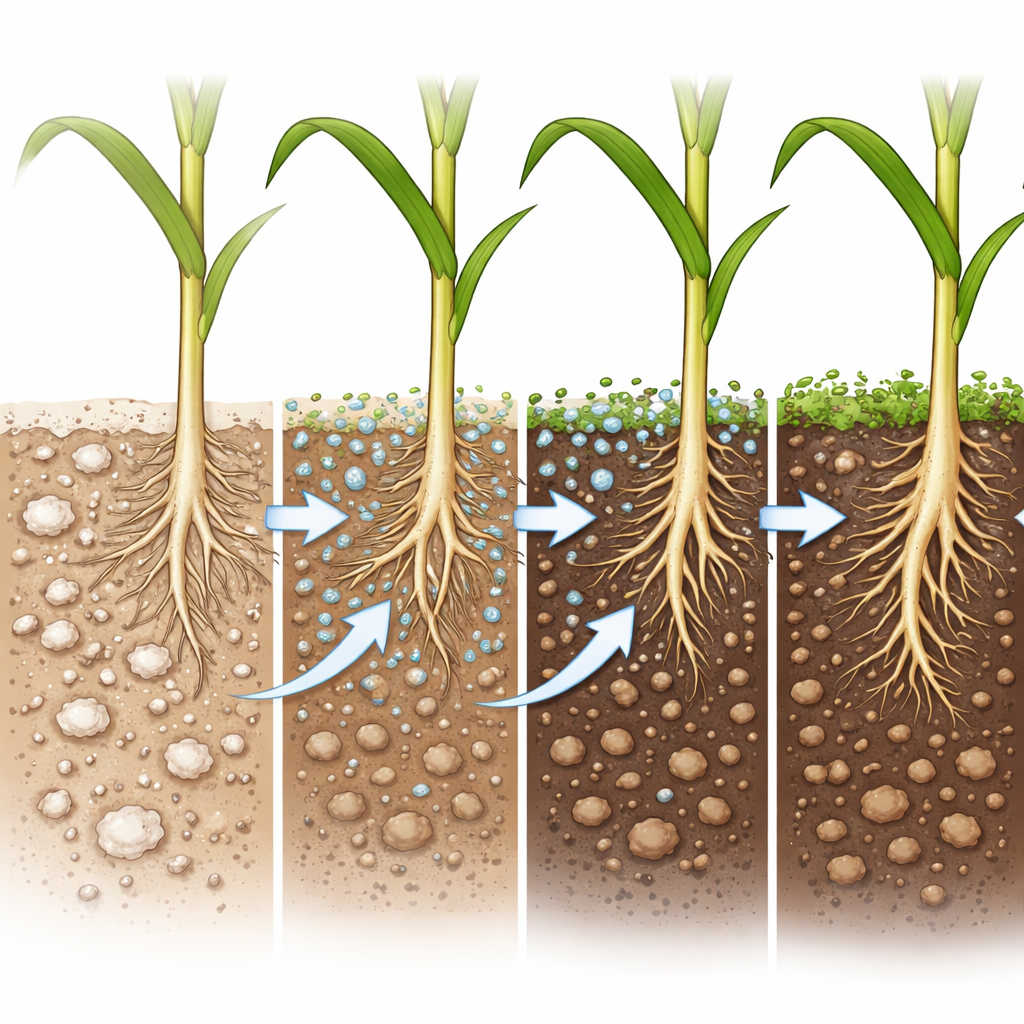
Adding KGA3 triggered a cascade of changes belowground. Soils in treated plots showed much higher levels of available nitrogen and potassium, as well as a strong rise in microbial biomass and in key enzymes that drive nutrient cycling, such as dehydrogenase and protease. Beneficial ions like water-soluble potassium, calcium, and sulfate increased, while some troublesome ions associated with alkalinity, such as bicarbonate and chloride, went down. The overall saltiness of the soil, measured as electrical conductivity, dropped sharply. When the researchers examined the bacterial DNA, they found that KGA3 did not simply boost diversity, but reorganized the community. Two major groups, Proteobacteria and Cyanobacteria, became dominant near maize roots in treated plots, and the pattern of connections among species grew denser and more stable, suggesting a more resilient underground network.
Keystone Microbes and Bigger Harvests
Network analysis highlighted a handful of “keystone” bacterial types that sat at the hubs of these underground interaction webs. In untreated soil, these key players were mostly unclassified. With KGA3, the keystone taxa shifted toward well-known Proteobacteria, which were strongly linked to higher levels of helpful ions and enzyme activities. This indicates that KGA3 not only survives in the root zone but recruits and supports other microbes that together improve soil quality. The maize plants responded dramatically: roots from treated plots contained more nitrogen, phosphorus, and potassium, had greater dry weight, and supported much higher yields. Grain harvests rose almost fivefold compared with untreated plots, even though the overall level of easily available phosphorus in the soil did not change much.
What This Means for Farmers
The study shows that introducing a locally adapted strain of Bacillus megaterium can help maize withstand salty, alkaline soil not by dumping in more fertilizer, but by rebuilding the living soil around roots. KGA3 and the microbial partners it attracts increase key nutrients and rebalance ions, while stabilizing the soil’s bacterial community. For farmers in semiarid regions, such inoculants could become practical “biofertilizers” that reduce dependence on chemical phosphorus fertilizers and make otherwise marginal land more productive, offering a more sustainable path to feeding growing populations.
Citation: Xu, Y., Zhang, S., Tu, X. et al. Bacillus megaterium strain KGA3 increases saline–alkaline tolerance of maize by recruiting keystone taxa in rhizosphere soil. Sci Rep 16, 10900 (2026). https://doi.org/10.1038/s41598-026-44985-5
Keywords: saline alkaline soil, maize, biofertilizer, rhizosphere microbes, Bacillus megaterium