Clear Sky Science · en
A diagnostic model based on pulmonary microbiota and host gene expression to distinguish colonization from pneumonia
Why this matters for patients with lung problems
Pneumonia kills hundreds of thousands of people each year, yet doctors still struggle to tell when germs in the airway are simply "riding along" and when they are truly causing disease. Because current tests often blur this line, many patients receive broad antibiotics just in case, feeding drug resistance and side effects. This study explores whether a detailed look at both the lung microbes and the body’s own response in sputum can more clearly separate harmless colonization from genuine pneumonia.
Looking inside ICU lungs
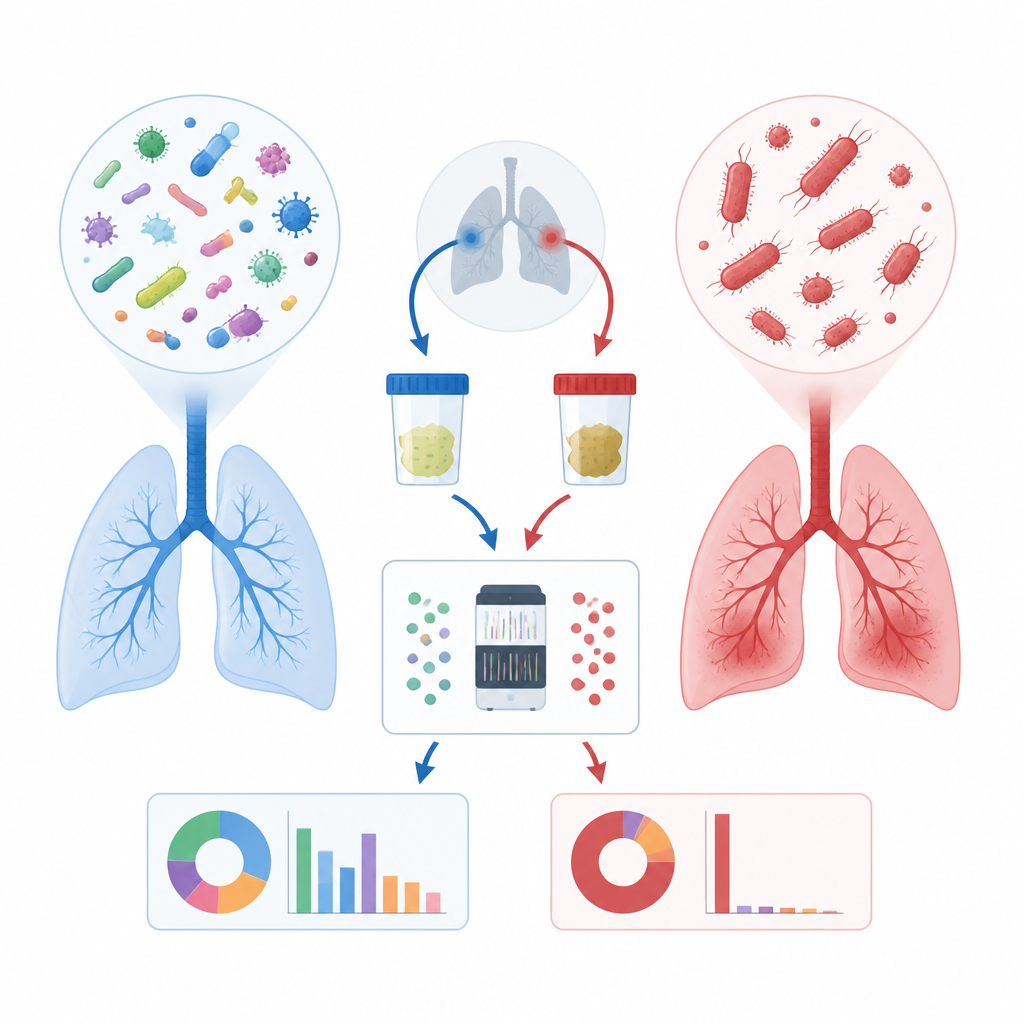
The researchers followed patients with severe brain injuries who were admitted to a neurosurgical intensive care unit. These patients needed breathing tubes or tracheostomies to protect their airways, which also increased their risk of hospital-acquired pneumonia. From each person, the team collected deep sputum samples on the same day as chest scans and routine lab tests. Specialists carefully reviewed imaging and clinical signs to classify people as having true infectious pneumonia or merely carrying microbes in their airways without active disease. This careful sorting provided a solid foundation for testing new diagnostic ideas.
Good neighbors versus invaders
Using broad DNA and RNA sequencing, the team mapped which microbes lived in the lower airways and how active they were. People with colonization tended to have a richer, more balanced mix of species, resembling a stable neighborhood of microbes. Those with pneumonia showed a shift toward fewer types but higher levels of well-known hospital germs such as Acinetobacter and Klebsiella. In the infection group, these pathogens were not just present; they were metabolically busy, with heightened production of key building blocks needed for growth. This pattern fits the idea that a collapse in microbial diversity and a surge of active invaders can tip the lung from quiet coexistence into disease.
How the airway lining fights back
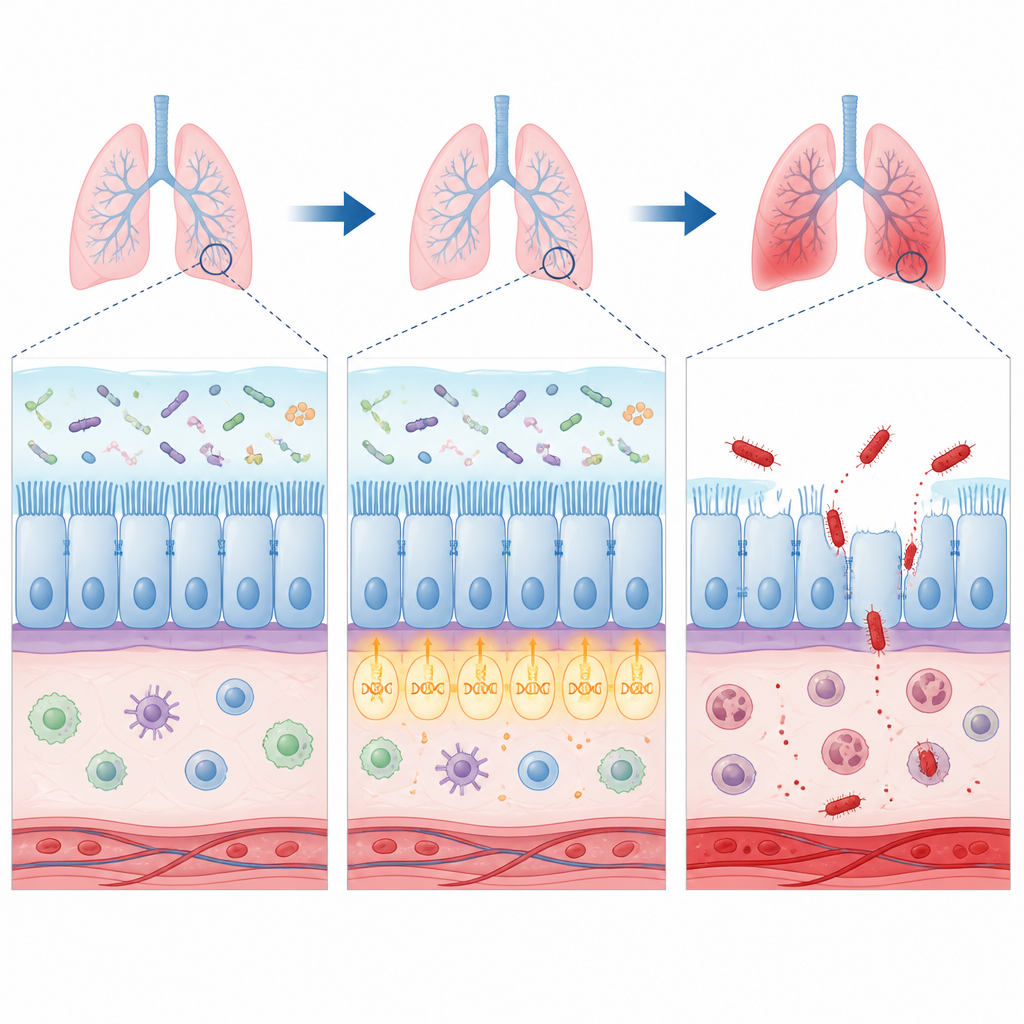
The same sputum samples also revealed how human cells were reacting. More than two thousand genes were expressed differently between colonization and infection. In colonized airways, many genes linked to tissue repair, cell-to-cell attachment and finely tuned immune control were switched on. These included networks that help lung cells maintain a tight barrier and call in immune cells without provoking runaway inflammation. Network analyses showed that several core control hubs worked together to keep the epithelial lining stable and able to recover from insults. In other words, when microbes were only visiting, the lung surface appeared to be actively reinforcing itself.
Building a smarter test
The team then asked whether a combined "host and microbe" snapshot could help doctors distinguish colonization from pneumonia better than routine blood tests. They used machine learning to pick out a small set of human genes whose activity patterns carried the most information. A model built on seven such genes, together with microbial features, separated colonization from infection with high accuracy in the main group of patients, and still performed well in a small validation group. This beat a simpler model that relied only on standard markers such as white blood cell counts and blood acidity, hinting that multi-layered molecular data can sharpen clinical judgment.
What this could mean for care
For a layperson, the key message is that the lungs tell two stories at once: what germs are present and how the body is responding. This study shows that reading both stories from a sputum sample can help tell harmless carriage apart from true pneumonia more reliably than current tools. If confirmed in larger and more diverse groups of patients, such approaches could help doctors avoid unnecessary antibiotics while still catching dangerous infections early, leading to more precise and safer treatment for people with serious lung problems.
Citation: Fu, Z., Sun, Y., Yao, H. et al. A diagnostic model based on pulmonary microbiota and host gene expression to distinguish colonization from pneumonia. Sci Rep 16, 15943 (2026). https://doi.org/10.1038/s41598-026-44972-w
Keywords: pneumonia diagnosis, respiratory microbiome, host gene expression, metagenomic sequencing, antibiotic stewardship