Clear Sky Science · en
Association of P2Y12 G52T genetic polymorphism with recurrent thromboembolic events in stroke and myocardial infarction patients on clopidogrel therapy: a prospective observational study
Why some heart and stroke patients still face danger
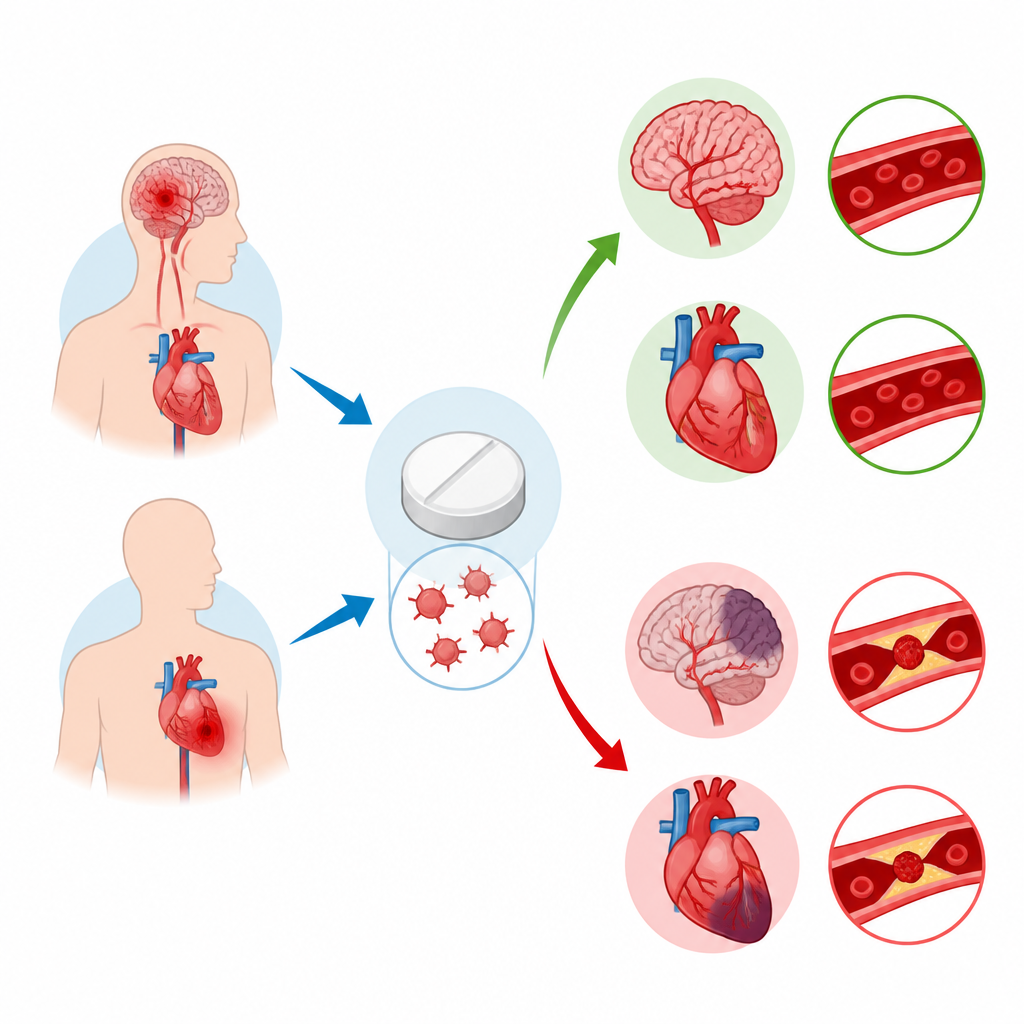
Many people who survive a heart attack or stroke are prescribed a blood thinner called clopidogrel to stop new clots from forming. Yet a worrying number go on to have another event. This study asked a simple but pressing question for patients and families: are repeat strokes and heart attacks mainly driven by an inherited quirk in a blood cell gene, or by everyday factors such as blood pressure, blood sugar, and smoking?
A closer look at a key blood cell switch
Clopidogrel works by blocking a tiny switch on platelets, the blood cells that help clots form. This switch is called the P2Y12 receptor and is controlled by the P2Y12 gene. Earlier work hinted that a small change in this gene, known as G52T, might alter how well clopidogrel can do its job. The researchers followed 100 adults in India who had experienced an ischemic stroke, mini stroke, or heart attack and were taking clopidogrel. Half had suffered a repeat clotting event, and half had not. The team collected medical histories, lifestyle information, and blood samples to see who carried the gene change and whether it lined up with who got sick again.
What the gene test did and did not show
In the laboratory, the team examined each person’s DNA to see whether they had the usual form of the P2Y12 gene or a mutant version with the G52T change. If this variant strongly weakened clopidogrel, one would expect it to be more common in those with repeat strokes or heart attacks. Instead, the proportions were almost the same in both groups. About 14 to 16 percent carried the mutant form regardless of whether they had another event, and statistical tests showed no meaningful link between the gene change and recurrence. This suggests that in this group of South Indian patients, this particular genetic twist is not the main driver of clopidogrel failure.
The powerful role of everyday habits and health
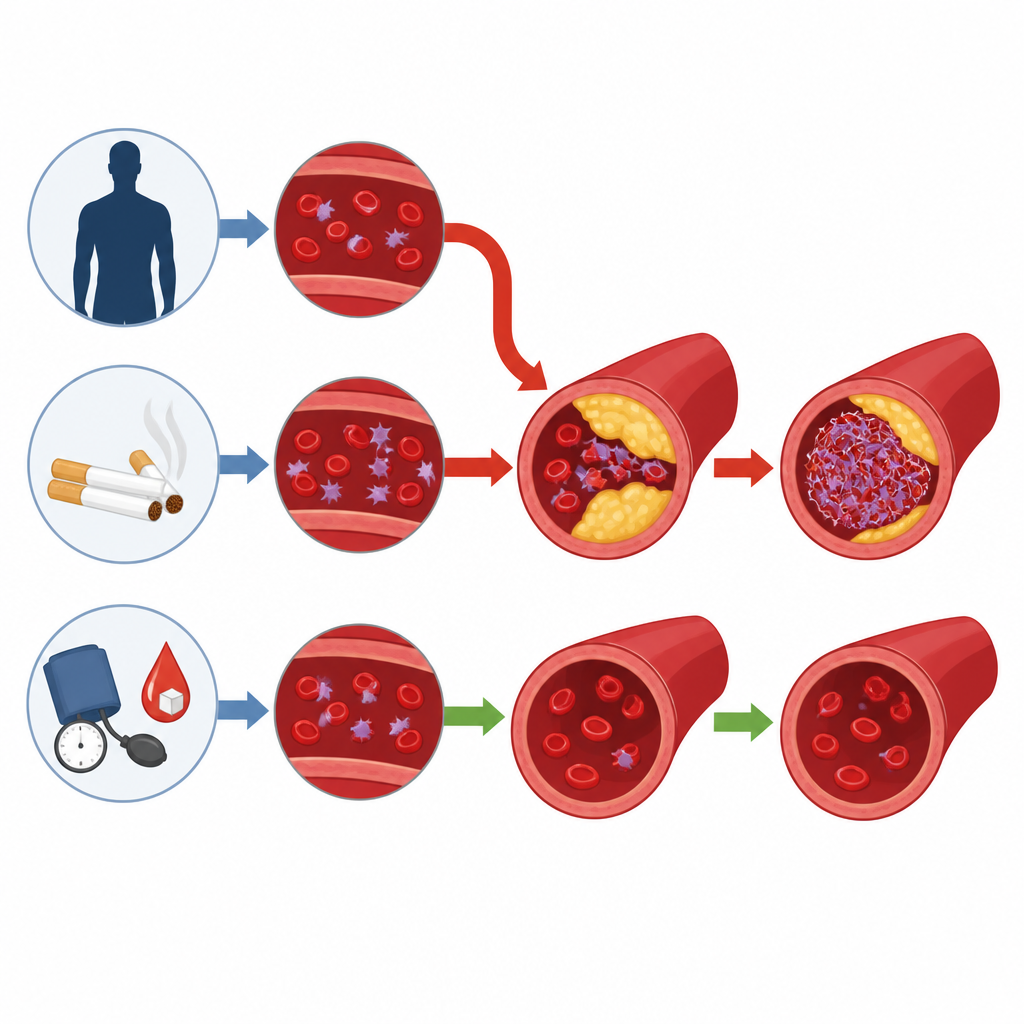
When the researchers turned to non genetic factors, a very different picture emerged. Men were more likely than women to have another event. Smoking stood out strongly: almost all repeat cases with a smoking history had smoked for many years, and those who kept smoking were at especially high risk. Long standing high blood pressure was also tied to recurrence, even though readings at clinic visits and use of blood pressure pills looked similar between groups. Diabetes itself was common in both sets of patients, but those with longer lasting disease and poor day to day sugar control were much more likely to suffer another stroke or heart attack. In contrast, factors such as obesity, cholesterol problems, and the choice between single or dual antiplatelet treatment showed little difference between groups.
What this means for treatment decisions
By weighing gene data against real world health and lifestyle measures, the study found that the P2Y12 G52T change does not meaningfully predict who will have another clot while on clopidogrel in this population. Instead, controllable factors such as smoking, long term high blood pressure, and poorly managed diabetes play a much bigger part. For patients and clinicians, the message is clear: while gene tests may still help in special cases, the most reliable protection lies in quitting smoking, keeping blood pressure and blood sugar in check, and closely following medical advice. Future research with larger and more varied groups may clarify which genetic tests are truly useful, but the everyday steps that protect the heart and brain are already within reach.
Citation: Baiju, A., Riyas, M., Rajalakshmi, S. et al. Association of P2Y12 G52T genetic polymorphism with recurrent thromboembolic events in stroke and myocardial infarction patients on clopidogrel therapy: a prospective observational study. Sci Rep 16, 15432 (2026). https://doi.org/10.1038/s41598-026-44969-5
Keywords: clopidogrel resistance, recurrent stroke, heart attack, genetic polymorphism, smoking and hypertension