Clear Sky Science · en
Novel strategy for boosting thermoelectric performance of organic materials with low electrical conductivity
Turning Body Heat into Everyday Power
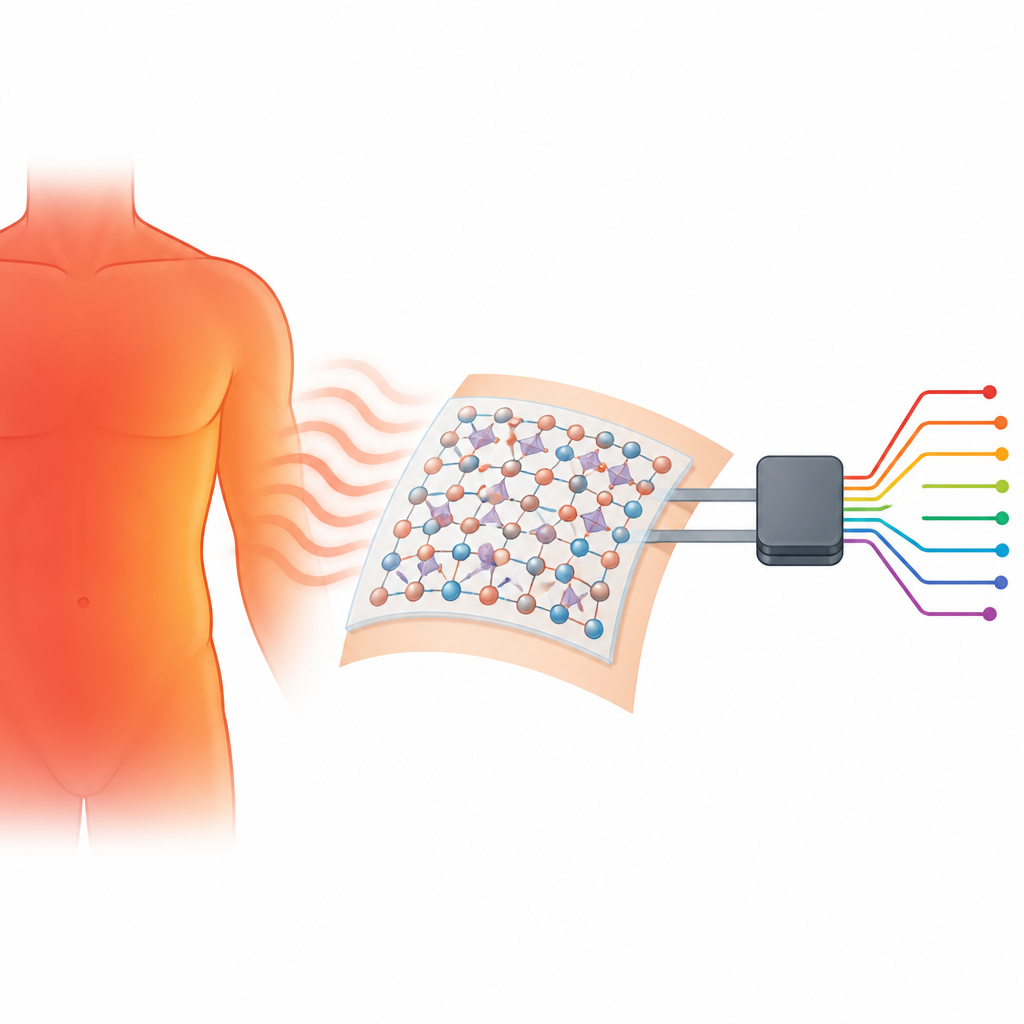
Imagine charging small gadgets just by wearing a lightweight patch on your skin. This study explores a new kind of flexible material that can turn body warmth into electricity far more efficiently than most organic materials used so far. The work points toward power sources that could be built directly into clothes, health sensors, or smart glasses without bulky batteries.
Why Harvesting Body Heat Is Hard
Thermoelectric materials create a voltage when one side is warmer than the other. To be useful, they must balance three things at once: how well they conduct electricity, how strongly they respond to a temperature difference, and how easily heat leaks through them. Many plastics and organic films are attractive because they are flexible and naturally block heat, but they usually conduct electricity poorly. When researchers try to boost their electrical conductivity by adding charge carriers, they often lose the large voltage response that makes them interesting in the first place.
A Special Organic Molecule and Tiny Oxide Clusters
The team focused on films made from fullerene, a soccer ball shaped carbon molecule often called C60, and tiny clusters of molybdenum oxide. Earlier work had shown that this pairing can give fullerene films a very large voltage response while nudging their electrical conductivity upward. In the new study, the researchers carefully tuned how much oxide they mixed in and how they heated the films after growth. The goal was to keep the voltage response huge while holding the electrical conductivity in a sweet spot that limits unwanted heat flow carried by electrons.
Using Gentle Heat to Tune Performance
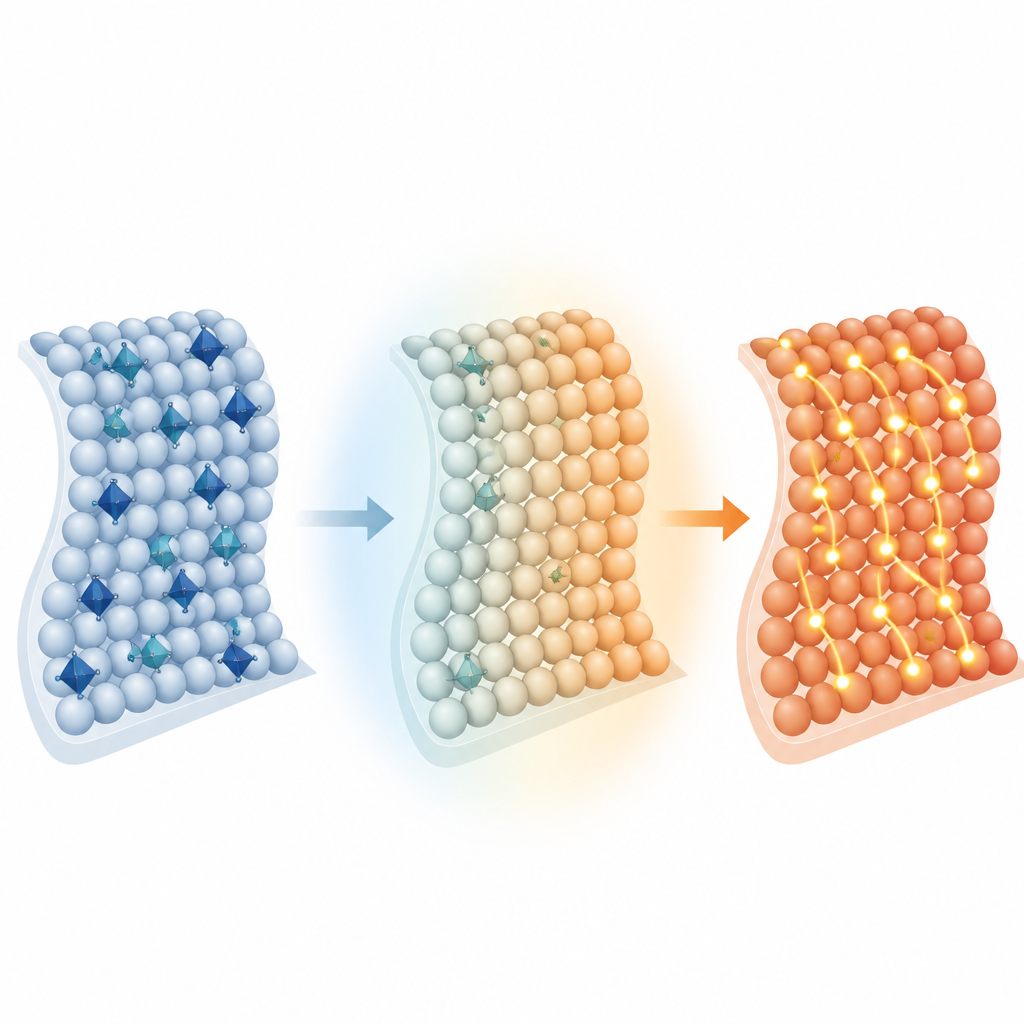
By slowly heating the composite films, the researchers discovered that the electrical conductivity and the voltage response move in opposite directions but in a helpful way. As the films are annealed at moderate temperatures, the conductivity drops by more than an order of magnitude, while the voltage response can grow five to seven times. The key lies in how the oxide clusters change their chemical state and how many holes or electrons they donate to the fullerene. Detailed measurements of the film structure, infrared response, and emitted gases showed that a mild chemical reduction takes place, accompanied by the release of carbon dioxide, without destroying the film or its flexible grain structure.
Reaching Record Efficiency in a Soft Film
From these tuned films, one composition in particular stood out. A fullerene film containing a small amount of oxide reached a power factor of about 1.1×10⁻³ watts per meter per kelvin squared at room temperature, even though its electrical conductivity remained very low. Because heat carried by electrons is then almost negligible, the overall efficiency indicator, called zT, was estimated to reach 0.81. For organic thermoelectric materials, this is, to the authors knowledge, the highest reported value at room temperature and approaches what is considered practical for real devices.
What This Means for Wearable Power
The study shows that instead of chasing ever higher electrical conductivity, it can be smarter to maximize performance in the low conductivity range by preserving a giant voltage response. Carefully chosen metal oxide nanoclusters act as a kind of adjustable knob that sets how charges move through the organic film when gently heated. This strategy offers a new route to soft, efficient thermoelectric layers that could be printed over large areas and built into comfortable wearable generators powered only by the warmth of the human body.
Citation: Nakaya, M., Yamamoto, S., Ogawa, S. et al. Novel strategy for boosting thermoelectric performance of organic materials with low electrical conductivity. Sci Rep 16, 15154 (2026). https://doi.org/10.1038/s41598-026-44966-8
Keywords: thermoelectric materials, organic electronics, fullerene, wearable energy harvesting, nanocomposites