Clear Sky Science · en
Piperacillin/tazobactam plus erythromycin improves clinical outcomes in AECOPD with bacterial lower respiratory tract infections: a retrospective cohort study
Why this matters for people with lung disease
For many people living with chronic obstructive pulmonary disease (COPD), sudden flare-ups that land them in the hospital are frightening and sometimes life-threatening. Doctors often reach for powerful antibiotics, but it has not been clear which combinations work best or how to tailor treatment to each patient. This study asks a simple but important question: can adding an older, inexpensive antibiotic to a standard drug improve recovery for these lung attacks, and can a computer tool help doctors decide who is most likely to benefit?
Two antibiotic strategies under the microscope
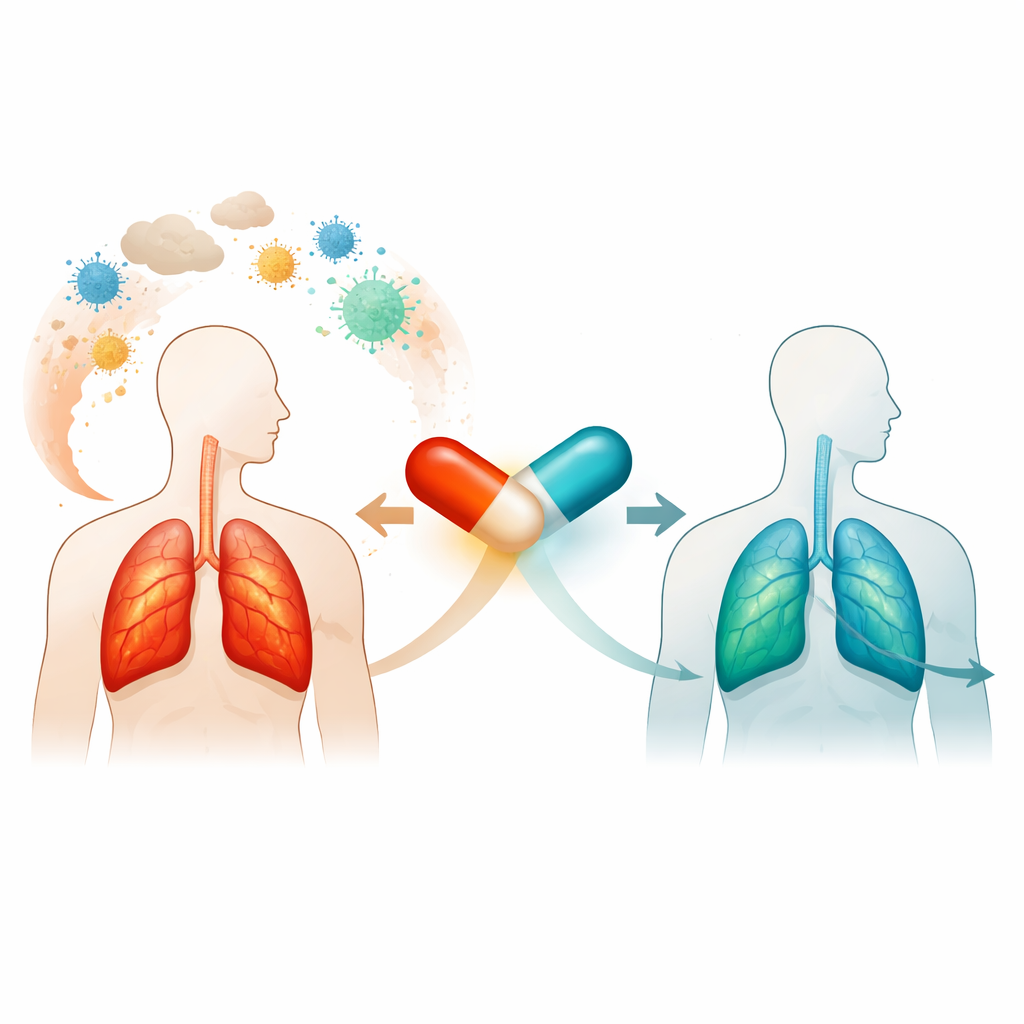
The researchers focused on patients hospitalized with moderate to severe COPD flare-ups caused by bacterial infections in the lower airways. All patients received a commonly used broad antibiotic called piperacillin/tazobactam, designed to target many typical lung bacteria. Some patients received only this drug, while others also received erythromycin, a long-used antibiotic that can also calm inflammation in the airways. Because doctors had made different choices in routine practice, the team could look back at real-world records and compare outcomes between the two strategies.
Who was studied and how success was measured
The team analyzed records from 658 patients treated at a large hospital in Shanghai between 2021 and 2023. All were at least 45 years old and had clear signs of a bacterial flare-up, such as worsening shortness of breath, more and thicker phlegm, raised infection markers in blood tests, and no evidence of viral or fungal infection. Patients were followed for at least 72 hours of antibiotic treatment. The researchers defined success broadly: improvement in fever, breathing, lab tests, and chest scans. If patients worsened, developed new serious infections, needed different antibiotics, or died during treatment, this was counted as treatment failure.
What the comparison revealed
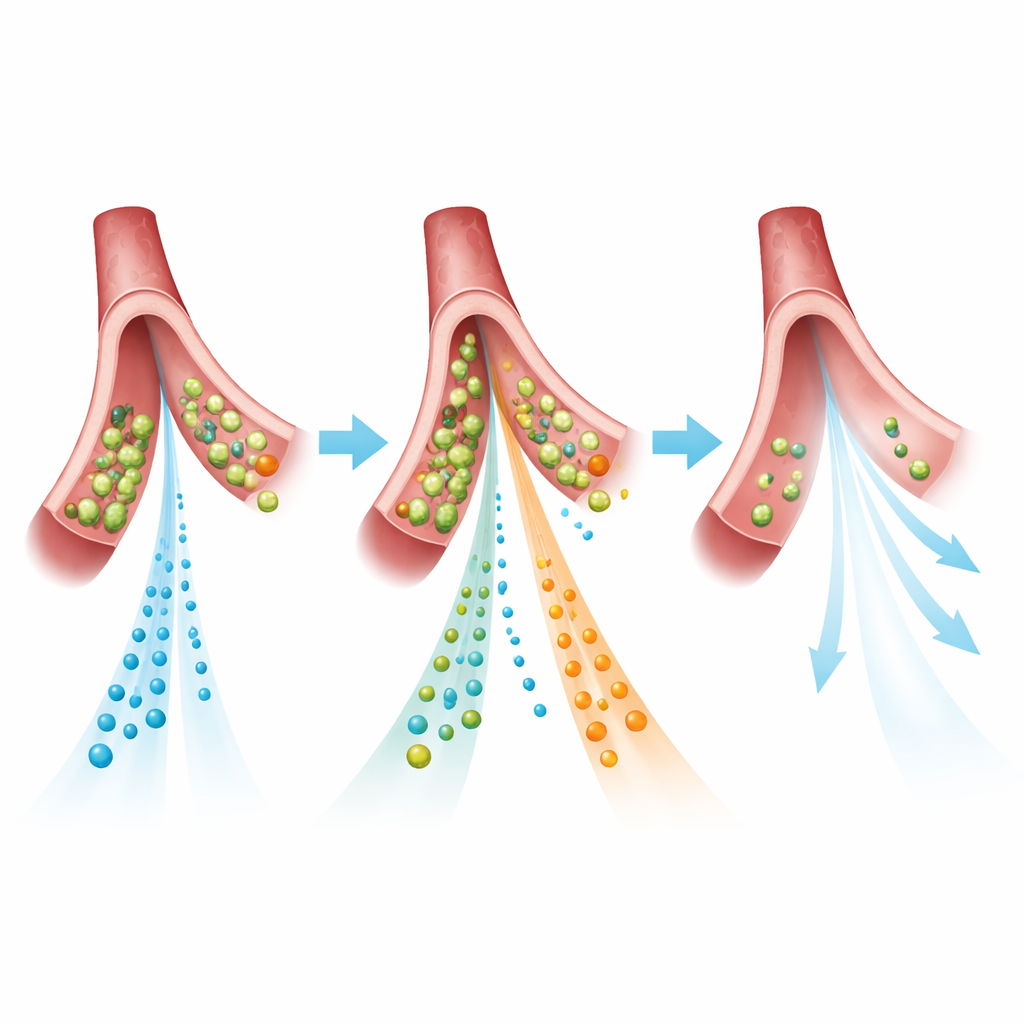
To make the comparison fair, the investigators used a statistical method that balances out differences in age, other illnesses, and lab results between treatment groups. After this adjustment, they found that adding erythromycin to the standard drug lowered the rate of treatment failure from about one in five patients to about one in seven. Put another way, the combination was linked to roughly one-third lower odds of things going badly during that early treatment window. Importantly, the study had enough patients to make this difference unlikely to be due to chance, although it still reflects experience at a single center.
A computer helper for bedside decisions
Beyond comparing drugs, the team built a machine-learning model—a computer program trained on past cases—to predict, for a given patient, the chance that treatment would fail with either single-drug or combination therapy. The model used 15 routinely available pieces of information, such as age, weight, kidney function, markers of inflammation, and signs of poor nutrition. It then estimated risk for both options and suggested whether adding erythromycin was likely to help. Tested on a separate group of patients, the tool correctly separated higher-risk from lower-risk cases at a level similar to many medical prediction scores and was placed online as a simple web application for doctors to explore.
What this means for patients and doctors
For people with COPD facing a serious flare-up from a bacterial infection, this study suggests that combining erythromycin with a standard broad antibiotic may improve the chances of early recovery, even when unusual bacteria are not involved. At the same time, it shows that not every patient is the same: simple blood tests and health details can help flag who is at higher risk of failing treatment. The computer tool built by the authors is an early step toward more personalized antibiotic choices, aiming to give the right amount of medicine to the right patient while avoiding unnecessary exposure. Larger, prospective studies will be needed to confirm these findings, but the work points toward a future where data-guided decisions could make lung attacks less dangerous and hospital stays shorter.
Citation: Yang, Y., Zhang, T., Zheng, X. et al. Piperacillin/tazobactam plus erythromycin improves clinical outcomes in AECOPD with bacterial lower respiratory tract infections: a retrospective cohort study. Sci Rep 16, 14102 (2026). https://doi.org/10.1038/s41598-026-44958-8
Keywords: COPD exacerbation, bacterial lung infection, antibiotic combination therapy, erythromycin, machine learning in medicine