Clear Sky Science · en
Nationwide trends in radiotherapy use among older patients with early-stage non-small cell lung cancer in Japan, 2013–2022
Why this matters for patients and families
Lung cancer is often seen as a disease of heavy smokers, but in modern Japan it is increasingly a disease of older adults who may have other health problems. For people in their seventies, eighties, or beyond, deciding between lung surgery and radiation can be daunting. This study looks at how doctors across Japan have actually been treating older patients with small, early lung tumors over the last decade, offering a real-world snapshot of how often surgery or radiotherapy is used and how that pattern is changing.
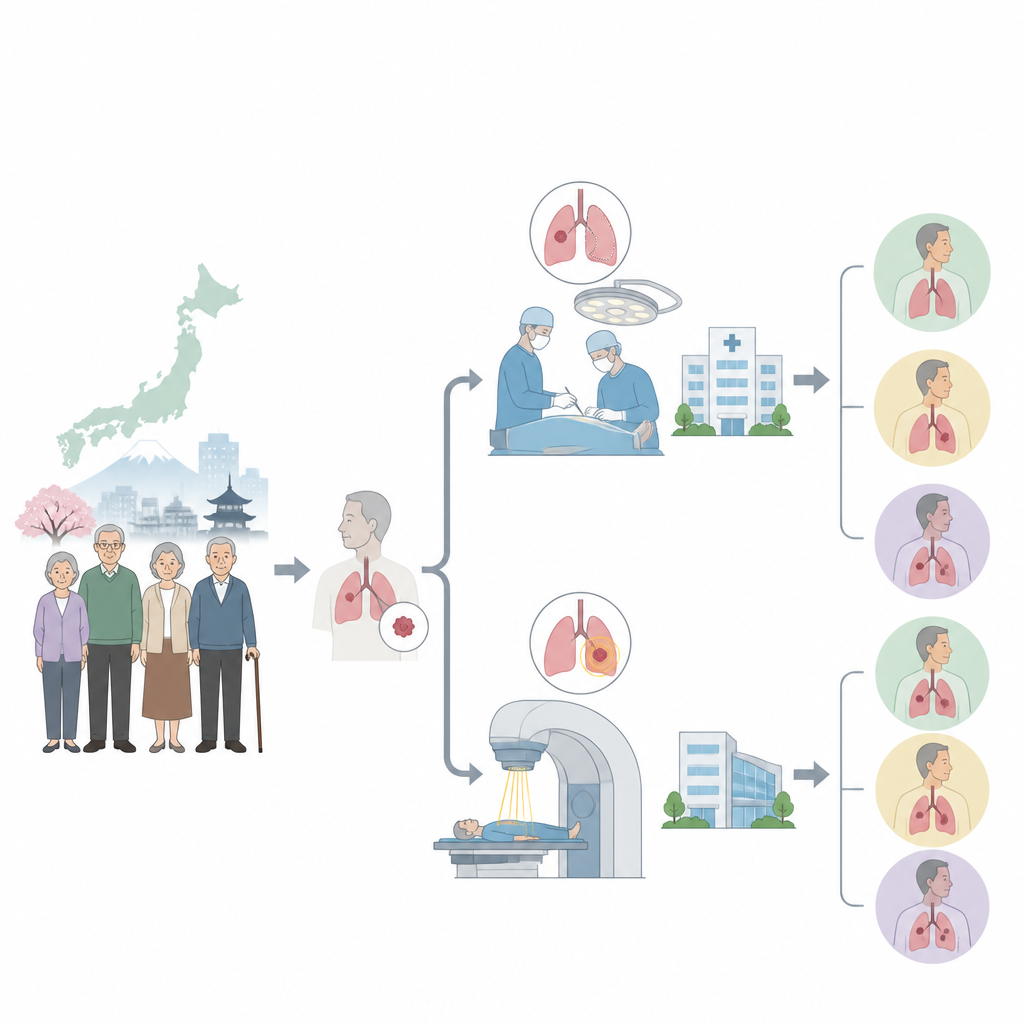
Who was studied and what was counted
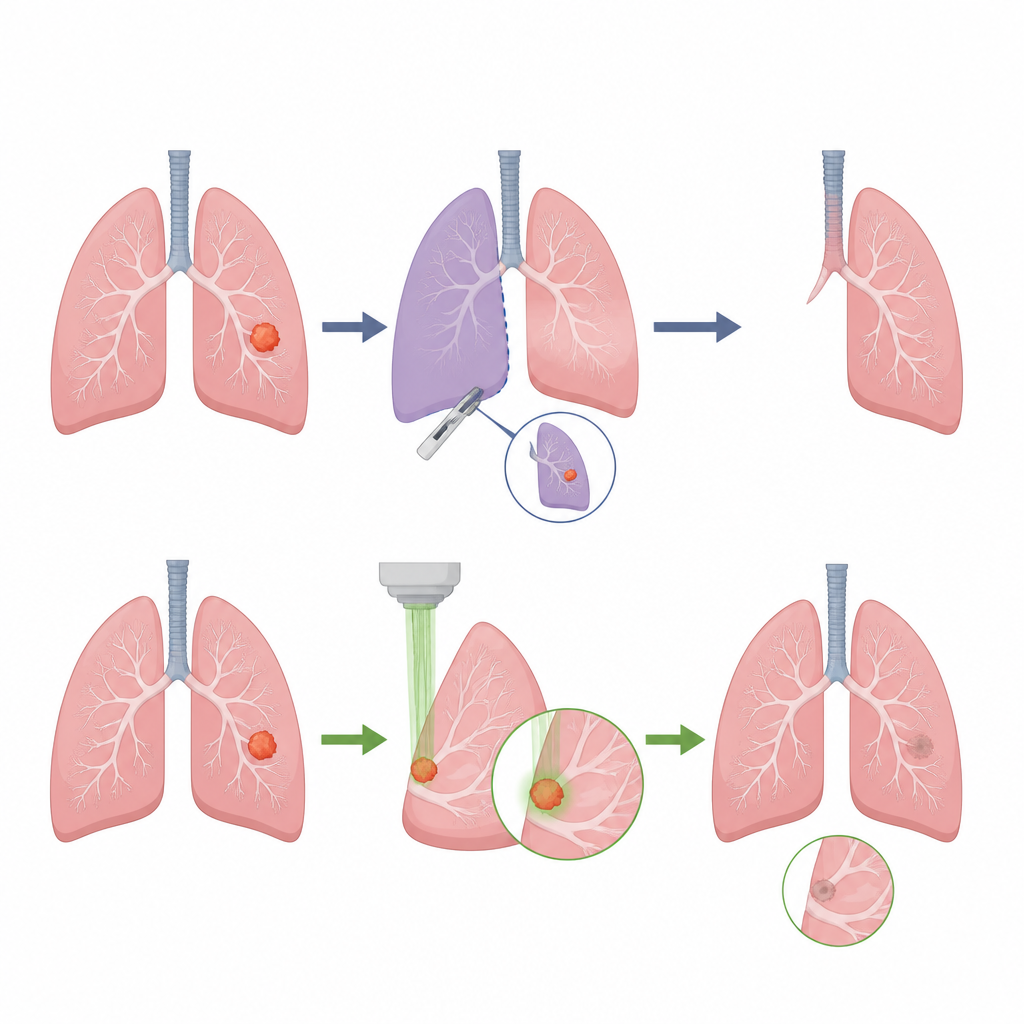
The researchers used a large national database that collects information from hospitals designated for cancer care across Japan. They focused on nearly 300,000 people aged 65 and older who were diagnosed between 2013 and 2022 with early-stage non-small cell lung cancer, a common form in which the tumor is still confined to the lung. For each person, the team recorded whether the first main treatment was surgery, radiotherapy, or another option such as drug treatment or careful observation. Because the database does not capture technical details, all forms of lung surgery were grouped together, and all forms of radiotherapy, including focused techniques such as stereotactic body radiotherapy, were analyzed as a single category.
How treatment choices have shifted over time
Over the 10-year period, surgery remained the dominant choice for older adults with early lung cancer. Eight in ten patients underwent an operation to remove the tumor, while about one in ten received radiotherapy as their main treatment. Radiotherapy use rose only slightly, from around 10 percent of patients in 2013 to almost 13 percent in 2022, even after taking into account changes in the age and sex of patients over time. In contrast, the proportion treated with surgery fell only a little. Japan’s universal health system already ensured that most patients received some form of active treatment at the start of the study window, leaving limited room for dramatic shifts from no treatment to radiotherapy.
Different patterns by age and hospital type
When the researchers looked more closely at age groups, a more nuanced picture emerged. Among people aged 65 to 74, radiotherapy use rose modestly, while surgery remained very common. For those aged 85 and older, radiotherapy use increased more noticeably, reaching more than one in three patients by 2022. Yet even in this oldest group, nearly one in three still underwent lung surgery, suggesting that Japanese surgeons and patients are willing to consider operations at very advanced ages if overall health seems good. The study also found that smaller and medium-sized hospitals showed clearer increases in radiotherapy use over time, while large, high-volume centers changed little. This likely reflects the gradual spread of high-precision radiation technology from major hubs to a broader network of institutions.
What might explain these choices
The modest rise in radiotherapy use stands in contrast to North American studies, where focused radiation has expanded rapidly for early lung cancer. The authors suggest several possible reasons. Cultural attitudes in Japan may favor surgery as the most definitive cancer treatment, and some patients and doctors may view radiotherapy with caution. At the same time, Japanese older adults are, on average, becoming physically fitter, and surgeons have adopted less invasive operations and smaller lung resections that carry lower risk. These advances may have made surgery possible for patients who might previously have been directed toward radiotherapy. Limited data on personal health factors in the registry mean that the study cannot determine exactly how frailty or other illnesses influenced individual treatment choices.
What this means for future care
For families and clinicians facing treatment decisions, this study shows that in Japan surgery is still the main approach for early lung cancer in older adults, with radiotherapy used as an important but secondary option. The continued high rate of surgery among patients aged 85 and above, alongside growing radiotherapy use, highlights ongoing uncertainty about which option best balances length and quality of life for the very old. The authors call for more detailed studies that link cancer registries, radiotherapy records, and health insurance data to compare outcomes of surgery and focused radiation in this population. Such evidence could help tailor care so that each older person with early lung cancer receives treatment that fits not only their tumor, but also their overall health and personal priorities.
Citation: Ikawa, T., Nakata, K., Kishimoto, K. et al. Nationwide trends in radiotherapy use among older patients with early-stage non-small cell lung cancer in Japan, 2013–2022. Sci Rep 16, 15583 (2026). https://doi.org/10.1038/s41598-026-44945-z
Keywords: lung cancer, radiotherapy, older patients, surgery, Japan