Clear Sky Science · en
Predicting household cooking fuel choice in sub-Saharan Africa using supervised machine learning analysis of DHS data from 28 countries
Why the way families cook matters
Across sub-Saharan Africa, most families still cook meals over smoky fires using wood, charcoal, or crop waste. This everyday routine has huge consequences: it harms people’s lungs, contributes to climate change, and reflects deep inequalities in income and access to basic services like electricity. The study summarized here asks a very practical question: given what we know about a household—its income, schooling, access to power, and where it lives—can we reliably predict whether it cooks with clean or polluting fuels? And if so, what does that tell us about how to speed up the shift to safer cooking for hundreds of millions of people?
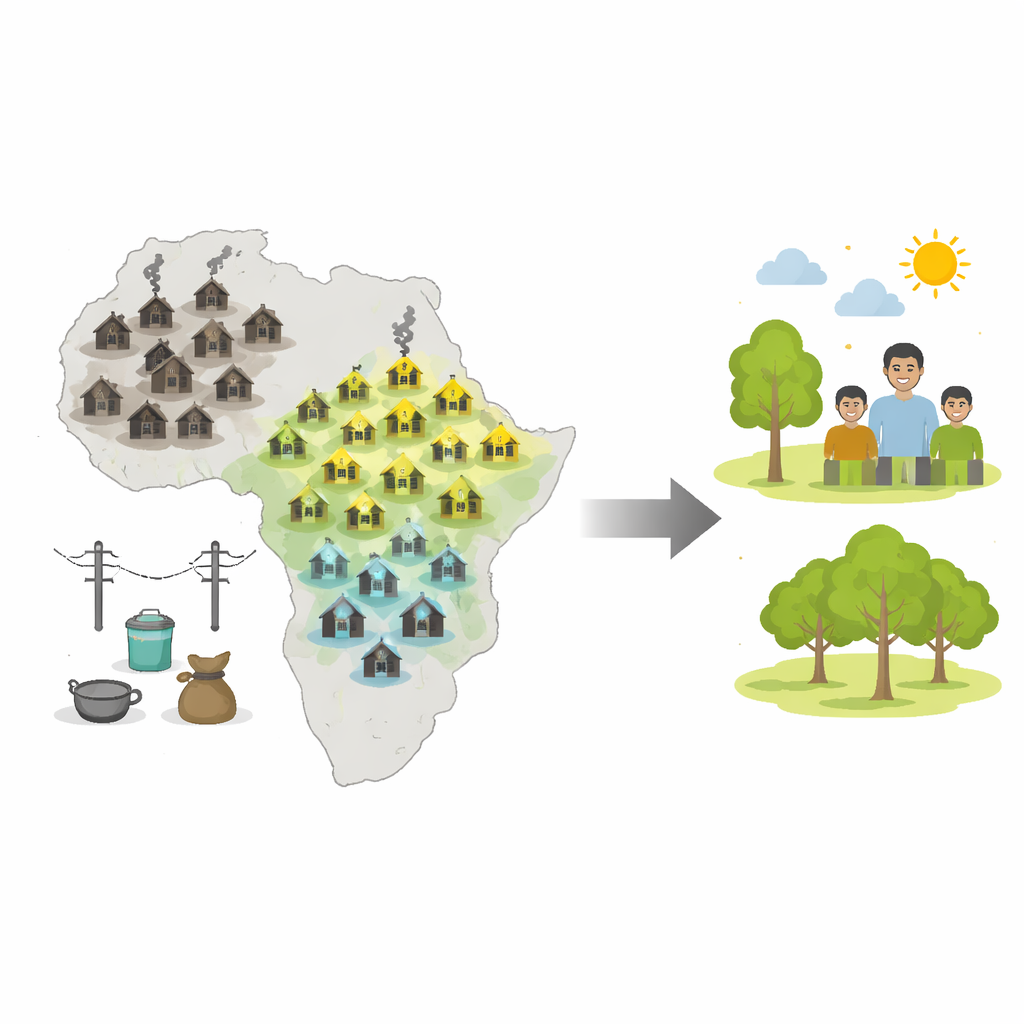
Looking at everyday life in 28 countries
The researchers drew on detailed household surveys from 28 countries across sub-Saharan Africa, covering more than 430,000 homes between 2015 and 2024. These surveys ask, among many other things, what fuel is mainly used for cooking. The team grouped electricity, liquefied petroleum gas (LPG), natural gas, and biogas as “clean” options, and fuels like kerosene, coal, charcoal, firewood, crop residues, and animal dung as “unclean.” They also included information on age and sex of the household head, family size, number of young children, schooling, wealth, whether the home has electricity, and whether it owns a radio or television. Together, these details paint a broad portrait of how families live, work, and access information and services.
Teaching computers to spot fuel patterns
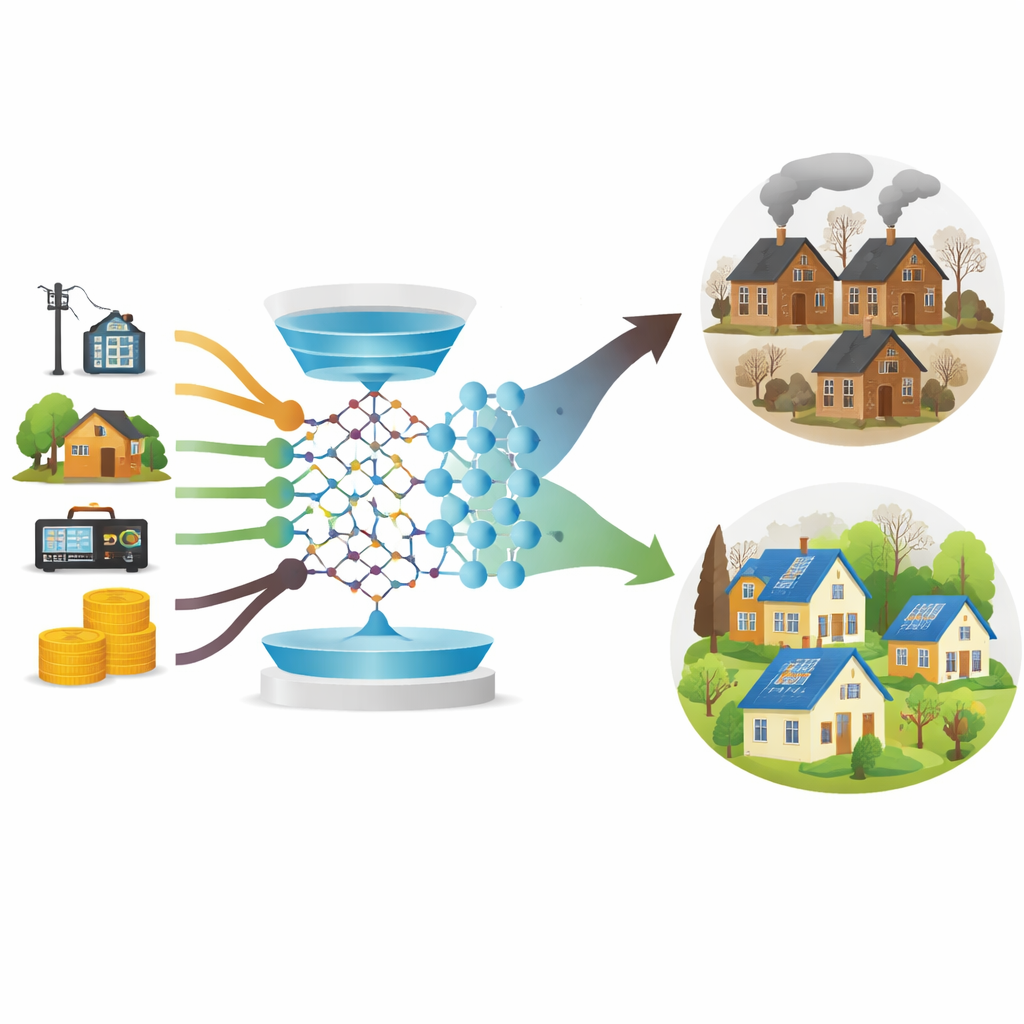
To uncover patterns too complex for traditional statistics, the authors used several supervised machine learning methods—computer models that learn from examples. They trained seven different models, including decision trees, random forests, artificial neural networks, and a powerful boosting method called XGBoost, on 80% of the data and tested them on the remaining 20%. Because homes using clean fuels were much rarer than those using polluting fuels, they balanced the data during training so the models would not simply learn to predict the majority choice. The models were judged on how often they were right, how well they identified clean-fuel users, and how clearly they separated clean from unclean choices. XGBoost came out on top, correctly predicting fuel type about four times out of five and showing excellent ability to distinguish between the two groups.
What matters most for cleaner cooking
Getting good predictions is useful, but policymakers also need to know what drives those predictions. To open the “black box,” the team used a technique called SHAP, which shows how much each factor pushes the model toward predicting clean or unclean fuels. The single strongest influence was whether a household had electricity. Homes without electricity were far more likely to rely on smoky fuels, especially when they were also poor. Other powerful signals of clean cooking were living in a city rather than the countryside, having more schooling, and owning a television, which often goes hand in hand with higher income and better access to information. Radio ownership, family size, number of young children, and where cooking takes place (indoors, in a separate hut, or outside) also played a role, but a smaller one.
Unequal progress across the region
Despite growing urbanization and power grids, the study finds that 84% of households across the 28 countries still cook with unclean fuels. In some countries—such as Burundi, Madagascar, Sierra Leone, Malawi, Liberia, and Guinea—more than 95% of homes depend on traditional biomass. Only a few places, notably South Africa and Gabon, have a majority of households using cleaner options. Within countries, the same divide appears again: richer, urban, and better educated families with electricity are far more likely to have moved to LPG or electric cooking, while poorer rural households continue to gather wood or buy charcoal. These patterns show that progress is possible but uneven, and closely tied to money, infrastructure, and information.
What this means for people and policy
For a non-specialist, the main message is clear: we now have a data-driven way to identify which communities are most at risk of breathing harmful cooking smoke, and why. The study shows that expanding reliable and affordable electricity, narrowing the gap between rural and urban areas, improving education, and raising household incomes are all central to cleaning up cooking. With accurate prediction tools, governments and aid groups can better target electrification projects, fuel subsidies, and awareness campaigns to the households that need them most. In simple terms, the research turns scattered survey answers into a practical map for helping millions of families trade smoky fires for safer, cleaner kitchens.
Citation: Demoze, L., Asnake, A.A., Gebrehana, A.K. et al. Predicting household cooking fuel choice in sub-Saharan Africa using supervised machine learning analysis of DHS data from 28 countries. Sci Rep 16, 14208 (2026). https://doi.org/10.1038/s41598-026-44937-z
Keywords: clean cooking, household energy, sub-Saharan Africa, machine learning, electricity access