Clear Sky Science · en
Zinc- and fluoride-containing bioactive glass enhances angiogenesis-mediated bone regeneration via M2d macrophage activation
Healing Broken Bones by Guiding the Body’s Own Defenders
When a bone is badly damaged, surgeons often need materials that help the body rebuild strong, living tissue. This study explores a new type of glass that dissolves in the body and quietly “coaches” immune cells to encourage blood vessels and bone to grow back. By tuning how this glass releases zinc and fluoride, the researchers show that it can steer the body’s natural repair system toward faster, more complete healing.
Why Blood Vessels Matter for New Bone
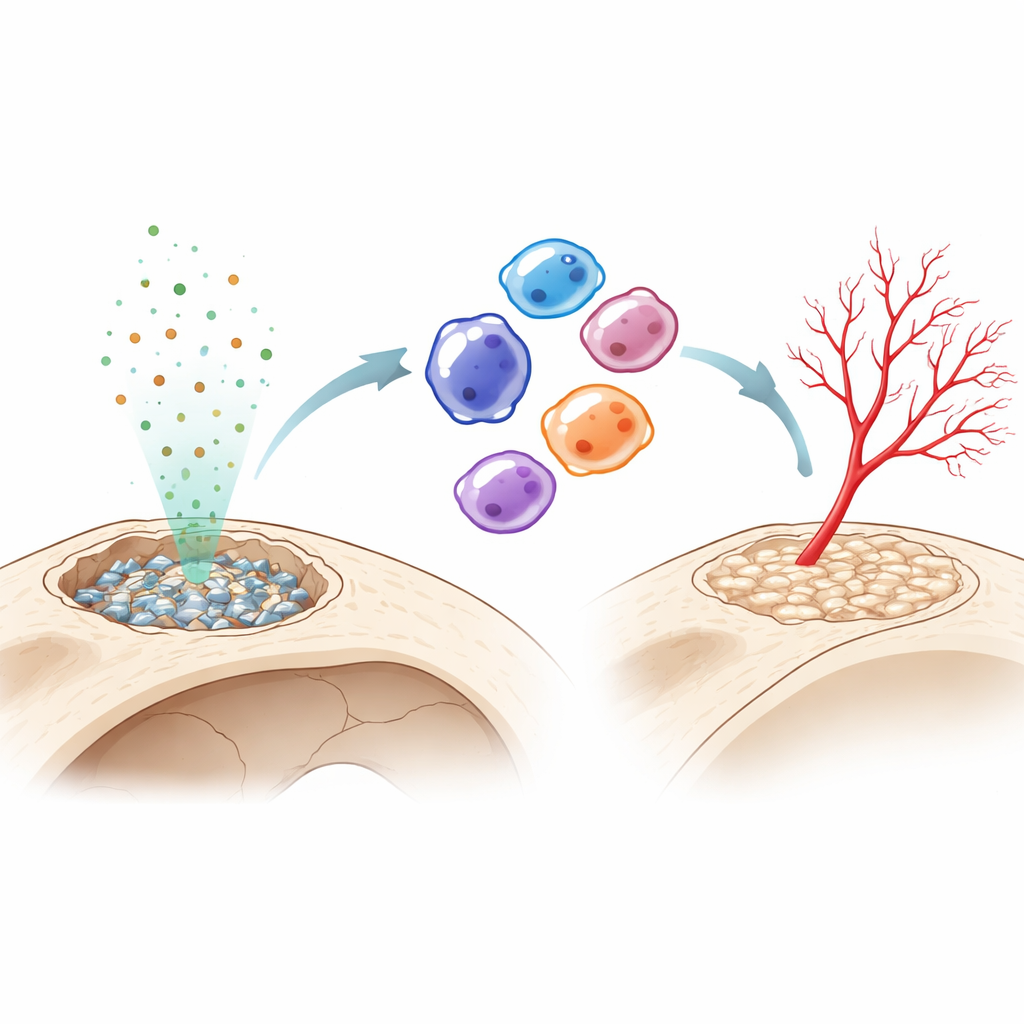
Bone repair is not just about filling a gap with hard material; it depends on a rich network of tiny blood vessels that deliver oxygen, nutrients, and signaling molecules. Early in healing, immune cells rush to the injury site and help decide whether the area becomes inflamed or starts to rebuild. Among these cells, a group of white blood cells called macrophages can act like either fighters or healers, depending on the cues they receive. One healing-focused subtype, known as M2d, is especially good at encouraging new vessel growth by releasing a powerful signal protein that attracts and supports blood vessel cells.
A Designer Glass That Talks to Immune Cells
The team created a new “bioactive glass” made with phosphate and enriched with zinc and fluoride, called ZFBG. Unlike a widely used older glass (BG45S5), this new material dissolves more gently and steadily in water-like conditions, releasing zinc, fluoride, calcium, and phosphorus ions over several weeks. Its particles shrink and lose weight more than the older glass, showing that it is more soluble without making the surrounding liquid dangerously alkaline. This controlled breakdown means the glass can act like a slow-release packet of helpful ions right where bone needs to regrow.
Turning Immune Cells into Repair Promoters
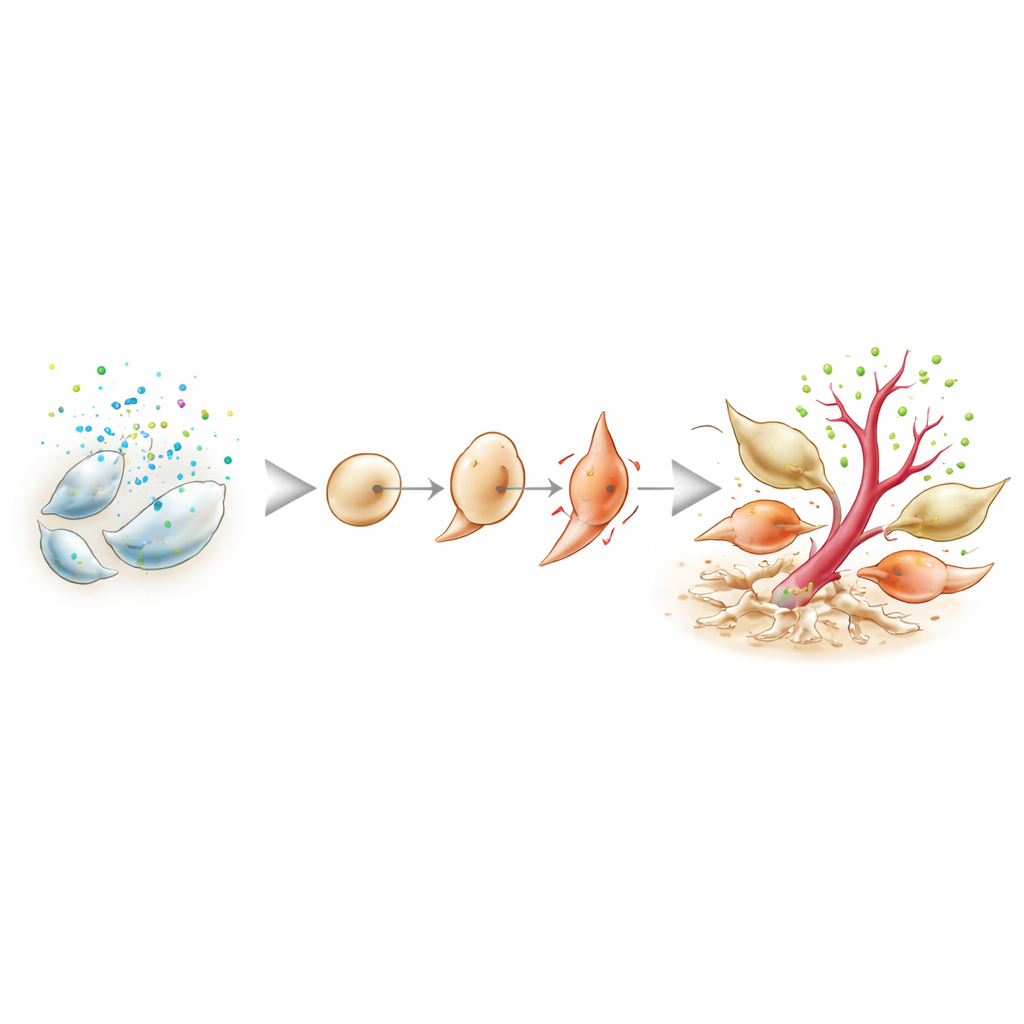
In cell culture tests, the researchers exposed mouse macrophages to ZFBG or to the older glass. With ZFBG, the cells took on a shape and gene pattern typical of healing-oriented macrophages and strongly boosted their production of the vessel-growing signal. The older glass instead nudged cells toward a more inflammatory state. When liquid collected from ZFBG-treated macrophages was added to human blood vessel cells, those cells migrated more quickly to close a scratch-like gap, a simple stand-in for vessel growth. Importantly, the dissolved glass itself did not push vessel cells to move, showing that the key step was how the ions reprogrammed macrophages, not a direct effect on blood vessels.
Helping Bone Regrow in Living Animals
To see whether these effects matter in the body, the scientists placed either ZFBG, the older glass, or a neutral gel into small circular defects drilled in mouse skull bones. After eight weeks, three-dimensional X-ray scans and tissue slices showed that ZFBG-filled defects contained much more new mineralized tissue and denser bone than those treated with the older glass. Early in healing, the ZFBG sites also had many more tiny blood vessels and a larger number of macrophages bearing markers of the M2d, vessel-promoting type. These helper cells clustered in the defect area, suggesting that the dissolving glass had reshaped the local immune environment to favor organized repair.
What This Could Mean for Future Bone Treatments
Taken together, the findings suggest that this zinc- and fluoride-releasing glass boosts bone regeneration not just by being a scaffold, but by deliberately engaging the immune system. By encouraging a specific healing-focused macrophage state that releases strong vessel-growing signals, the material promotes early blood vessel formation, which in turn supports robust new bone. In the long run, such immune-aware materials could lead to bone graft substitutes that heal faster and more reliably by working with, rather than against, the body’s own repair programs.
Citation: Otake, K., Kondo, T., Kakinuma, H. et al. Zinc- and fluoride-containing bioactive glass enhances angiogenesis-mediated bone regeneration via M2d macrophage activation. Sci Rep 16, 11351 (2026). https://doi.org/10.1038/s41598-026-44931-5
Keywords: bone regeneration, bioactive glass, angiogenesis, macrophages, zinc and fluoride