Clear Sky Science · en
A digital mindfulness intervention improves sleep efficiency and heart rate variability in healthy adults
Why a Short Daily Practice Could Change Your Nights
Many people struggle to fall asleep or stay asleep, yet may not want sleeping pills or lengthy therapy. This study asks a simple, practical question: can a brief mindfulness routine, done through a smartphone app and tracked with a popular sleep ring, measurably improve how well healthy adults sleep and how calmly their hearts beat? The findings suggest that just 10 days of guided practice can lead to more efficient sleep and a calmer nervous system—effects that largely linger weeks after the exercises stop.
A Simple Plan: Breathe, Listen, and Wear a Ring
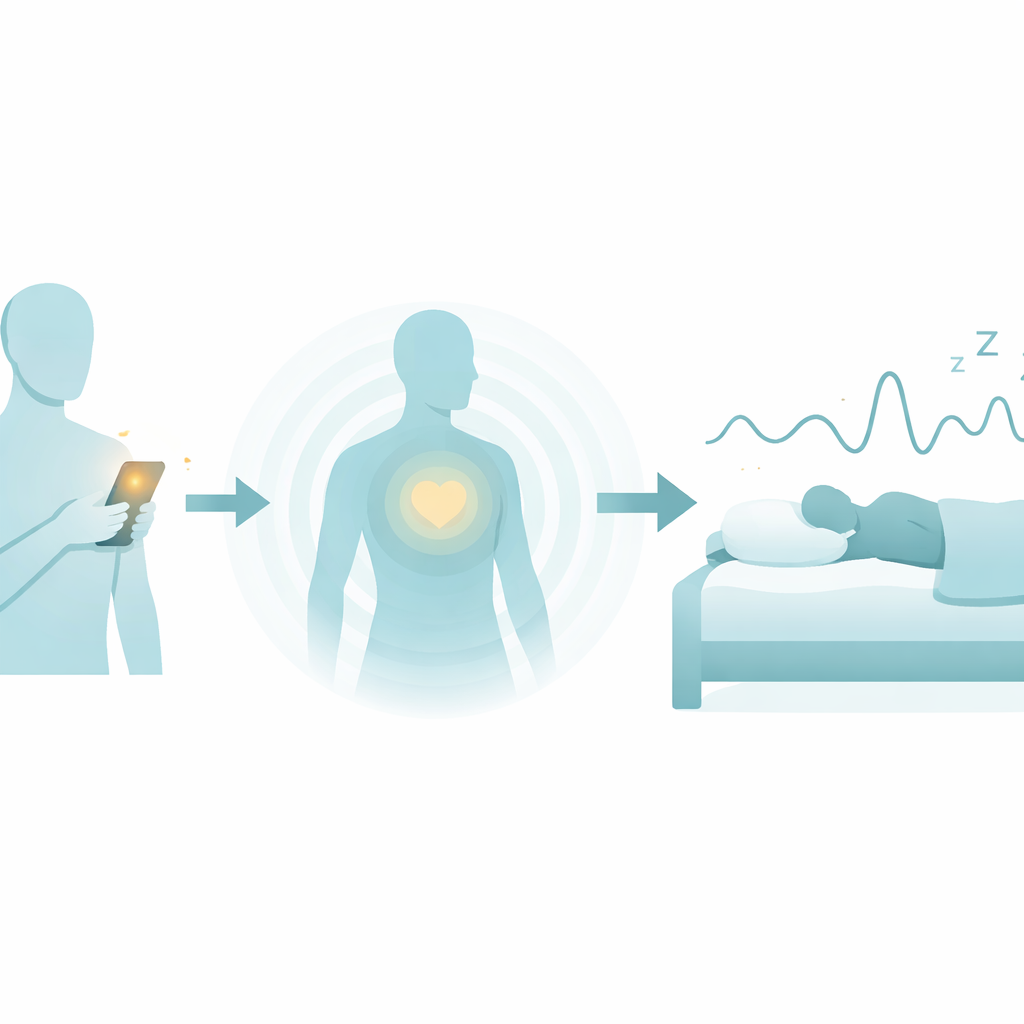
Researchers in Denmark and Spain recruited 81 healthy adults in their 20s to take part in a larger four-month study of stress and sleep. All participants wore an Ōura ring, a finger-worn device that tracks sleep stages, heart rate, and heart rate variability (HRV)—a beat-to-beat marker of how flexibly the heart responds to stress and rest. After at least two months of baseline tracking, volunteers were randomly assigned either to a mindfulness group or to a waitlist group that did not start any new practice during the 10-day test window. The mindfulness group used the Ōura app to complete a 10-minute audio session called “destress,” provided by Headspace, once a day for 10 days at a time of their choosing.
Measuring Real Sleep, Not Just Sleep Stories
Because people’s impressions of their own sleep can be unreliable, the team relied heavily on the ring’s objective measures. They focused on sleep efficiency (how much of the time in bed is actually spent asleep), total sleep time, time spent in light and deep sleep, and how long it took to fall asleep once in bed. They also tracked HRV and heart rate both at night and during the actual mindfulness sessions, and asked participants to fill out standard questionnaires on stress, burnout, sleep quality, and everyday mindfulness before the intervention, right after it, and again four weeks later.
Better Sleep and Calmer Hearts After Just Ten Days
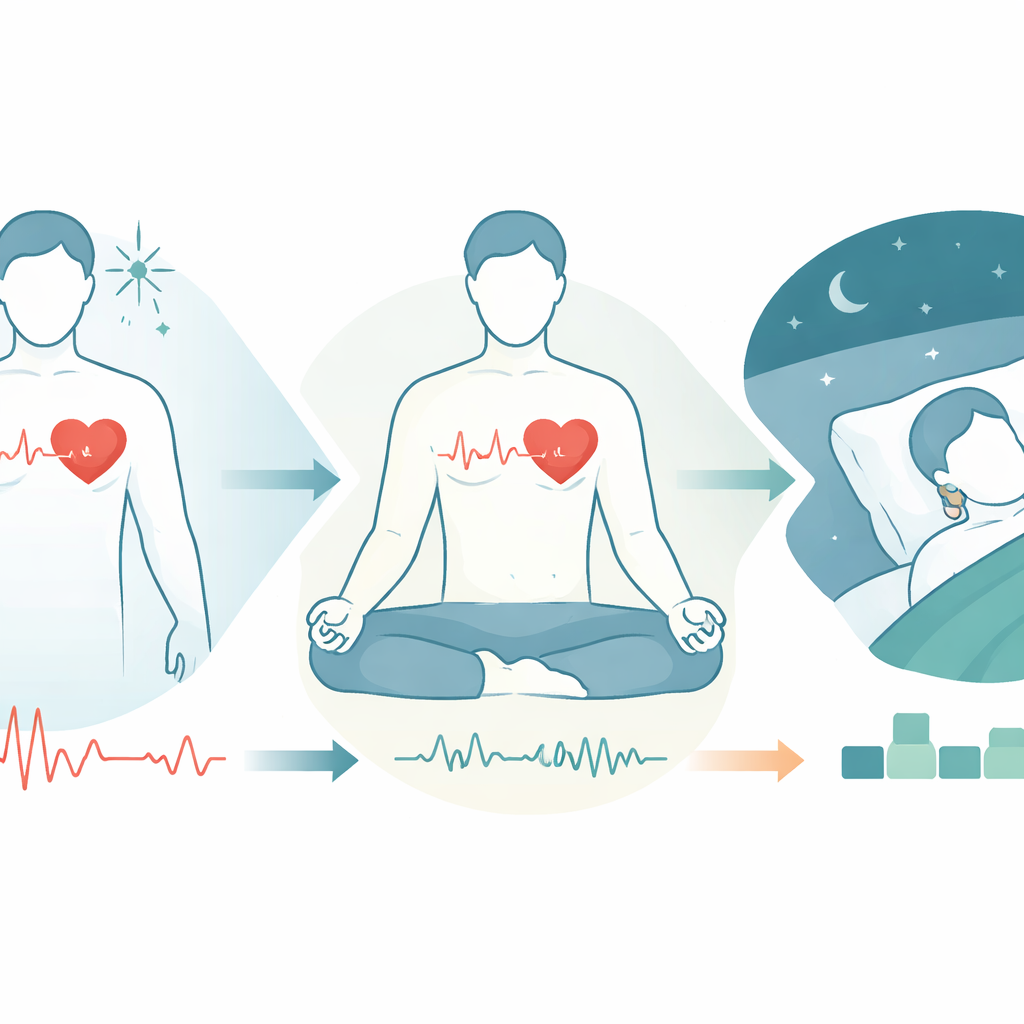
Compared with the waitlist group, people practicing mindfulness showed clear gains. Within 10 days, they were sleeping more efficiently, spending more minutes asleep overall, and drifting off faster. Time spent in light sleep increased and, at first, deep sleep also ticked up, though that particular gain faded by the one-month follow-up. Most of the other improvements—including better sleep efficiency and longer total sleep—were still present four weeks after the 10-day program had ended, even though participants were asked not to continue using the mindfulness content. During the mindfulness sessions themselves, the ring recorded a drop in heart rate and a rise in HRV, indicating that the body was shifting into a calmer, more restorative state while people listened and paid attention to their breathing.
Mixed Signals from How People Felt
The biological story was clearer than the psychological one. On paper-and-pencil questionnaires, the mindfulness group did not show strong changes in perceived stress or in their overall rating of sleep quality compared with the control group. Surprisingly, they briefly reported higher levels of personal burnout right after the 10-day period, though these scores moved back toward their starting levels by the four-week mark. The authors suggest that mindfulness can sharpen awareness of fatigue and strain that was already present, making people more likely to notice and report it. At the same time, scores on a standard mindfulness scale rose, indicating that participants felt more able to pay attention to the present moment without drifting into automatic pilot.
What This Means for Everyday Sleep Struggles
For healthy but busy adults, the study offers a hopeful message: a short, app-based mindfulness routine, practiced for just 10 minutes a day and tracked with a wearable, can measurably improve how effectively you sleep and how flexibly your heart responds to rest. These gains appear to last at least several weeks beyond the training itself. While the approach did not dramatically change how stressed or burned out people said they felt—and even briefly made some of them more aware of fatigue—it did change what their bodies were doing at night. As digital tools and wearables become part of daily life, this kind of easily delivered, data-informed practice could offer a low-risk way to support better sleep and a calmer nervous system without medication.
Citation: Kirk, U., Hovgaard, C.N., Persiani, M.T.L. et al. A digital mindfulness intervention improves sleep efficiency and heart rate variability in healthy adults. Sci Rep 16, 14348 (2026). https://doi.org/10.1038/s41598-026-44902-w
Keywords: mindfulness, sleep, wearables, heart rate variability, digital health