Clear Sky Science · en
Na+ induced improved fluorescence of carbon nanoparticles from human hair: an exclusive sensing platform for Ag+
Turning Salon Waste into a Useful Tool
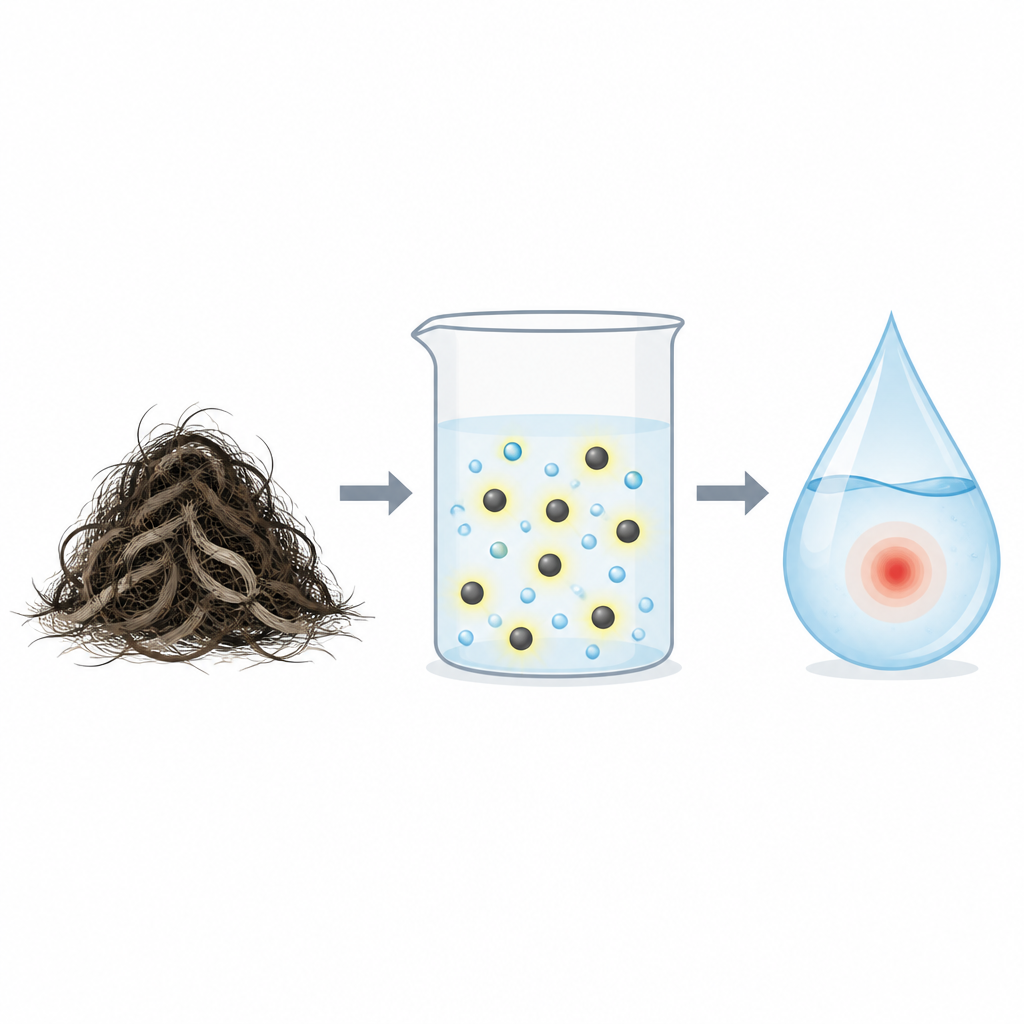
Every day, barbers and salons sweep up piles of human hair and throw them away. This study shows that those clippings can be turned into tiny glowing particles that help keep our water safer. By converting hair into light-emitting nanoparticles and using simple table-salt ingredients, the researchers built a cheap and eco-friendly way to track a harmful silver pollutant in water.
From Hair Strands to Glowing Specks
The team began with discarded human hair, a material rich in the protein keratin and normally treated as waste. They dissolved small amounts of hair in a strong alkaline solution and gently heated it in a closed tube. Under these conditions, the long protein chains in hair broke down and rearranged into carbon-based nanoparticles about 15 billionths of a meter across. These new particles naturally gave off a soft blue light when shined with ultraviolet light, thanks to chemical groups on their surface that could absorb and release energy as fluorescence.
Salt that Makes Light Shine Brighter
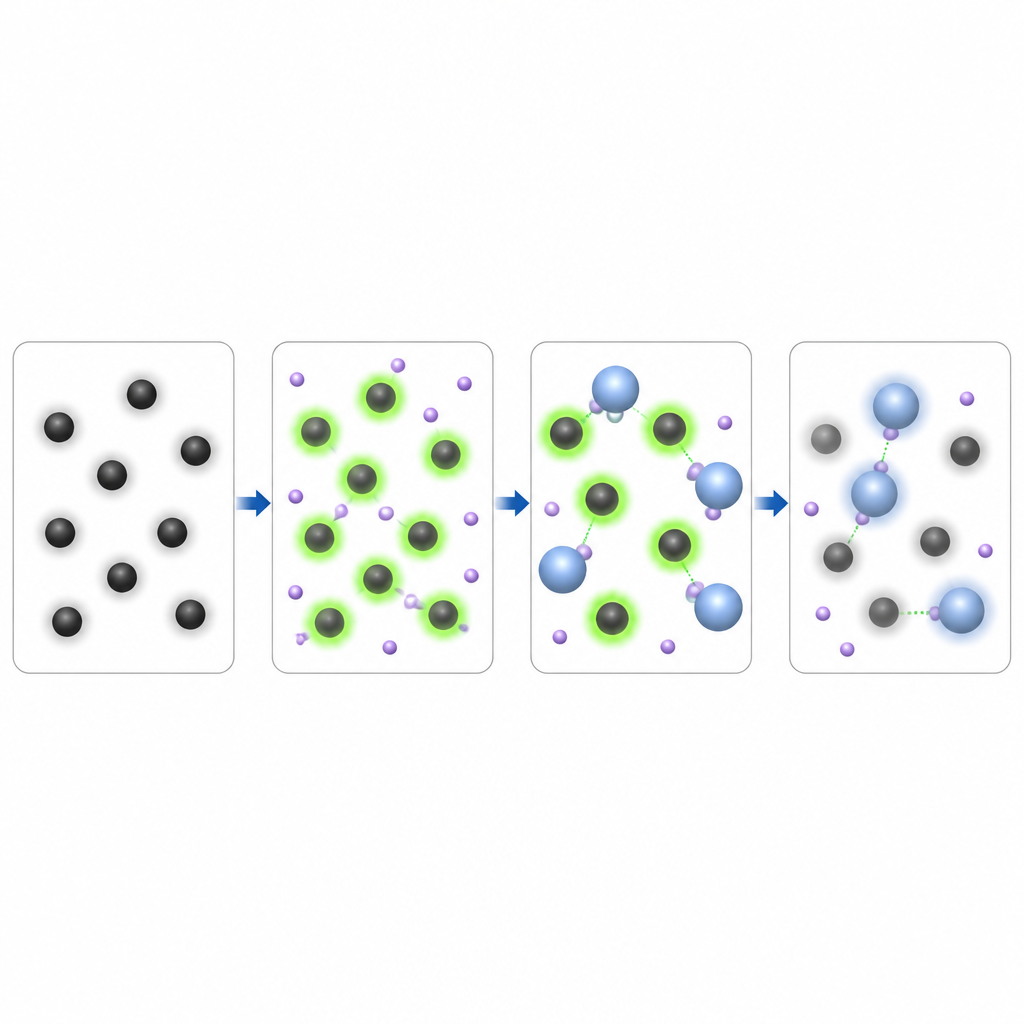
On its own, the glow from the hair-derived particles was modest. When the researchers added sodium chloride, the same basic ingredient as table salt, the light became more than eight times brighter. Tests with many other metal ions showed that this strong brightening was unique to sodium. The scientists linked this effect to how the charged sodium and chloride ions surround and pack the particles. In this confined environment, the particles move less and lose less energy as heat, so more of the absorbed energy comes back out as light. In practical terms, the brightness changes in a predictable way with sodium levels, which allowed the team to measure sodium over a defined concentration range.
Silver that Silences the Glow
Once the sodium-treated particles were shining strongly, the researchers explored what happened when they added different metal ions. Silver ions stood out: they almost completely turned off the fluorescence, while other metals had much smaller effects. Under the alkaline conditions, silver ions reacted to form tiny silver oxide particles in the same liquid that held the glowing carbon spheres. Detailed measurements showed that these silver oxide particles could accept electrons from the excited carbon particles, draining away their energy without light emission. This process, known as non-radiative energy transfer, explains why the glow fades when silver is present.
Testing Performance and Stability
To see if this glow-and-fade behavior could serve as a sensor, the team carefully measured how the light changed as they varied the amount of sodium or silver. They found a clear, linear response over useful ranges for both ions, along with detection limits suitable for environmental monitoring. Temperature tests showed that simply warming the samples reduced light output in a similar way with and without silver, meaning the silver effect itself is stable and does not depend on heat-driven motion. By comparing their results with earlier carbon-based sensors made from other plant or chemical sources, the authors showed that hair-derived particles perform competitively while being cheaper and more sustainable.
Closing the Loop for Cleaner Water
In summary, the work turns a common waste product, human hair, into a low-cost sensor for tracking sodium and especially silver ions in water. Sodium makes the hair-based nanoparticles glow more brightly, while silver, transformed into silver oxide inside the solution, steals that energy and darkens them. Because the method uses simple ingredients, avoids expensive instruments, and supports a circular economy by upcycling waste, it offers an accessible tool for monitoring water quality and reducing the impact of heavy metal pollution.
Citation: Sharma, P., Sahu, M. & Ganguly, M. Na+ induced improved fluorescence of carbon nanoparticles from human hair: an exclusive sensing platform for Ag+. Sci Rep 16, 16391 (2026). https://doi.org/10.1038/s41598-026-44901-x
Keywords: human hair nanoparticles, silver ion sensing, fluorescent carbon dots, sustainable water monitoring, circular economy