Clear Sky Science · en
Expression profiles of transcription factors and aquaporins suggest putative roles in rubber biosynthesis regulation and drought stress adaptation in guayule
Why a desert shrub matters for rubber and drought
Natural rubber is essential for tires, medical devices, and thousands of everyday products, yet the world depends on a single tropical tree for most of its supply. Guayule, a hardy shrub native to the deserts of the southwestern United States and northern Mexico, offers a home-grown alternative that thrives on little water. This study asks a practical question with global implications: how does guayule keep making rubber when water is scarce, and can we use that knowledge to breed better drought‑tolerant rubber crops?
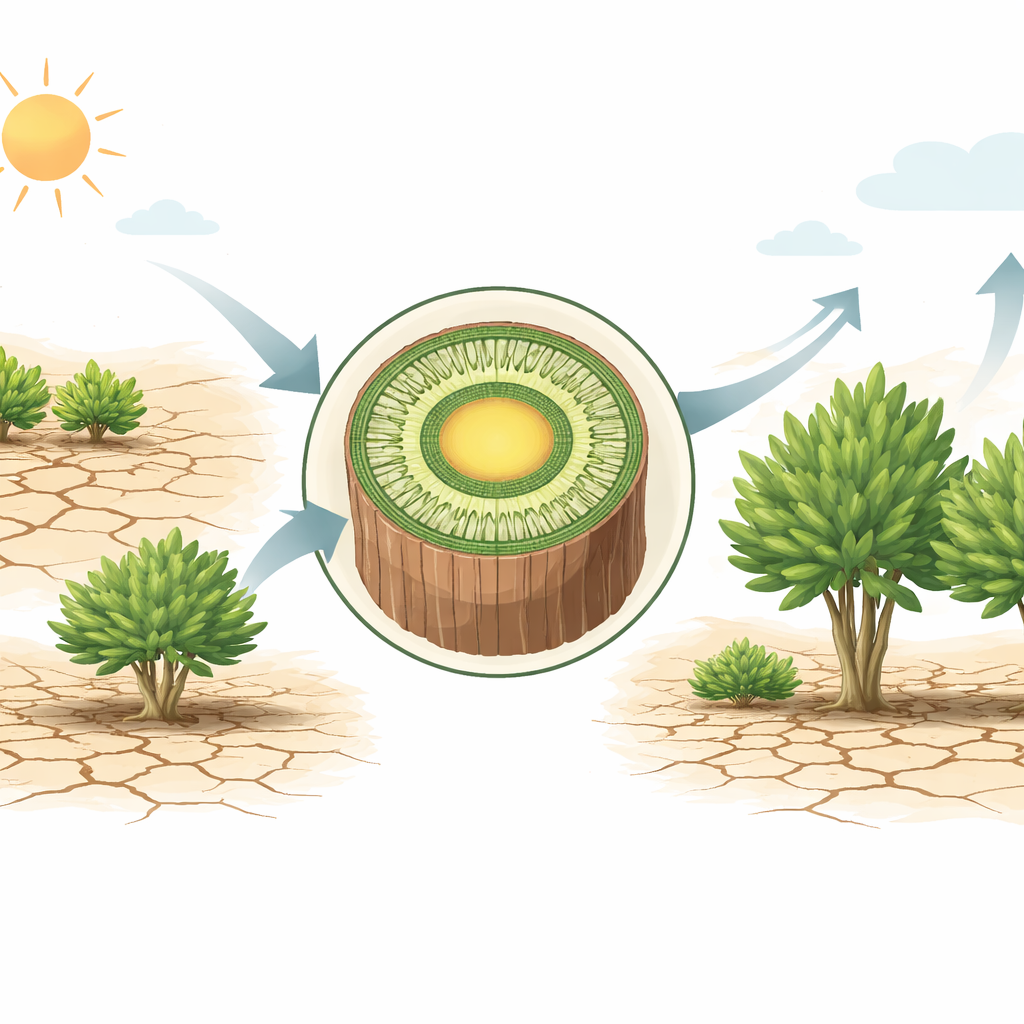
Two desert cousins, two ways to handle dryness
The researchers focused on two guayule cultivars, AZ‑4 from Arizona and CAL‑2 from California, chosen because farmers had noticed they react differently to reduced irrigation. In field trials, plants were grown either with regular watering or under sustained drought. The team measured rubber and resin content in the stems, along with a chemical marker of how efficiently plants use water. Both cultivars actually produced more rubber, relative to their biomass, under drought than under full irrigation. AZ‑4 consistently outperformed CAL‑2, with higher rubber and resin content and signs of better water‑use efficiency, suggesting it is particularly well adapted to harsh, dry conditions.
Reading the plant’s drought “control panel”
To understand what happens inside the plants, the authors sequenced RNA from stem bark tissue, capturing which genes were turned up or down under drought. They assembled a large catalog of guayule transcripts and compared expression patterns between watering treatments and between cultivars. Thousands of genes changed their activity in response to drought, and the two cultivars showed distinct patterns. AZ‑4 displayed broader shifts in gene expression, indicating a more dynamic reprogramming of metabolism and stress responses. CAL‑2 changed fewer genes, pointing to a strategy that relies on more targeted adjustments rather than wholesale rewiring.
Gene switches that link stress to rubber production
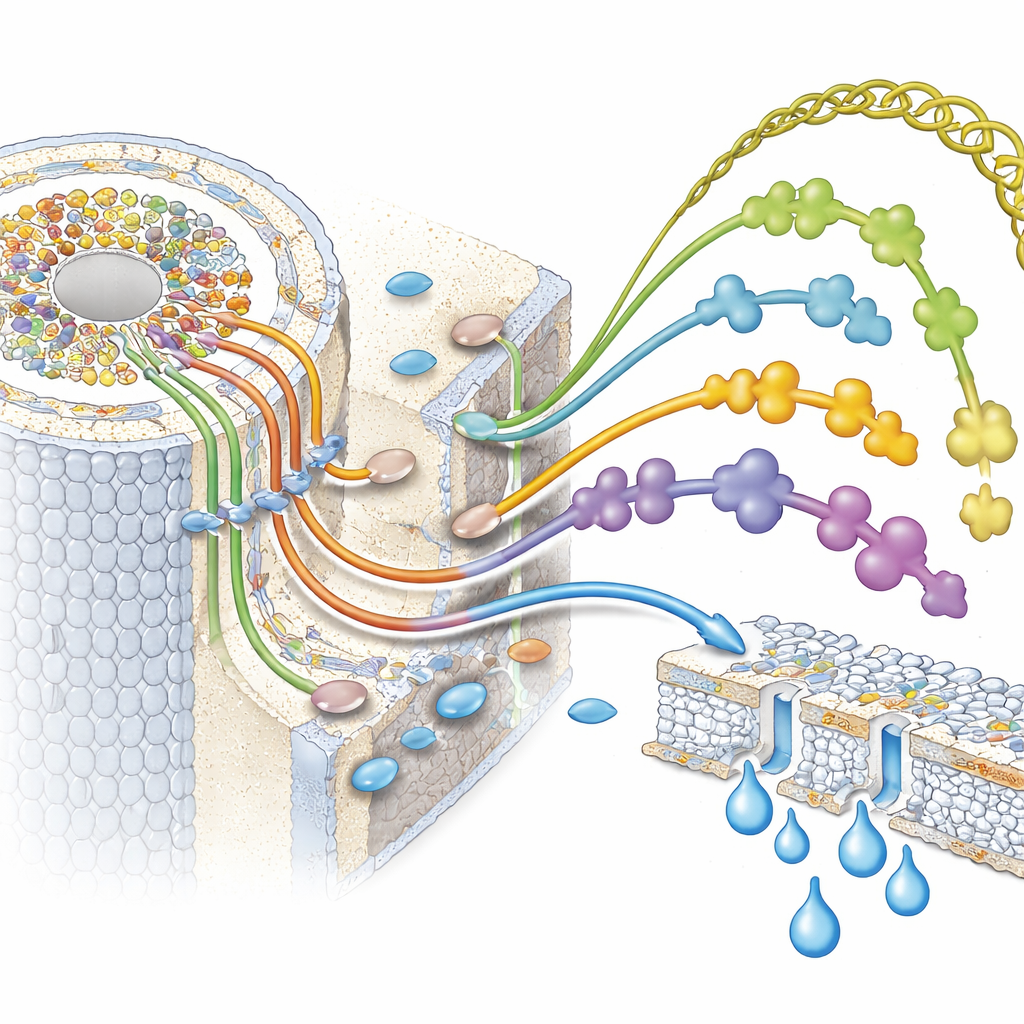
A central focus was on transcription factors—gene “switches” that control many other genes at once—and on aquaporins, tiny membrane channels that manage water movement in and out of cells. Six large transcription factor families emerged as key players. In both cultivars, families such as AP2/ERF, MYB, NAC, bHLH, bZIP, and WRKY coordinated two biochemical highways (known as the MVA and MEP pathways) that ultimately feed into terpenoid production, including natural rubber. Under drought, many of these switches dialed back parts of the rubber‑making machinery, presumably to conserve energy, while a shared subset remained active to keep essential production going. AZ‑4 tended to adjust more switches in both directions, while CAL‑2 made fewer but more tightly focused changes, especially in pathways linked to external defense compounds and pigments.
Fine‑tuning water flow inside the plant
The team also found that most aquaporin genes were turned down during drought in both cultivars, consistent with the idea that plants partially “close the plumbing” to reduce water loss. Yet a few select aquaporins showed strong increases in activity. In AZ‑4, particular PIP channels ramped up, which may help move tiny amounts of water or even signaling molecules like hydrogen peroxide to coordinate stress responses. In CAL‑2, a channel related to boron transport was boosted, potentially helping maintain cell wall strength when water is scarce. These contrasting patterns suggest that each cultivar uses a slightly different combination of water channels to balance conservation with the need to keep cells functioning and rubber biosynthesis supported.
What this means for future rubber crops
Taken together, the findings show that guayule does not simply survive drought—it actively reshapes its metabolism and water management while continuing to produce rubber. AZ‑4 leans on a flexible, broad regulatory response, whereas CAL‑2 follows a more stable, precision‑tuned strategy. Both rely on overlapping sets of gene switches and aquaporins to connect drought signals to rubber and terpenoid production. By pinpointing these molecular players, the study provides a roadmap for breeders and biotechnologists seeking cultivars that maintain or even enhance rubber yield under dry conditions. In the long run, such insights could help build a more resilient, diversified natural rubber supply tailored to arid landscapes.
Citation: Phan, H., Abdel-Haleem, H. Expression profiles of transcription factors and aquaporins suggest putative roles in rubber biosynthesis regulation and drought stress adaptation in guayule. Sci Rep 16, 11718 (2026). https://doi.org/10.1038/s41598-026-44868-9
Keywords: guayule, drought tolerance, natural rubber, transcription factors, aquaporins