Clear Sky Science · en
Field scale responses of soil enzymatic activities and microbial indicators to combined bioinoculant-fertilizer management in mustard (Brassica juncea L.)
Why Healthier Soils Matter for a Simple Oilseed
Mustard might seem like a humble crop, better known for its tangy condiment than for scientific breakthroughs. Yet in India and many other countries, Indian mustard is a vital source of cooking oil, protein, and farm income. This study asks a question that concerns anyone who eats: can we keep raising food production while using less chemical fertilizer, by enlisting helpful soil microbes to do part of the work?
Mustard Fields under Growing Pressure
Feeding a world population heading toward 9 billion people means farmers must grow more food on limited land, often under tougher climates. Indian mustard is an attractive crop in this context because it tolerates dry spells, grows quickly, and fits well into crop rotations with cereals. But like most high-yield crops, it is hungry for nutrients such as nitrogen, phosphorus, potassium, and sulphur. Farmers often respond by applying large doses of chemical fertilizers, which can boost yields but gradually damage soil structure, reduce microbial diversity, and leave salty residues. Scientists are therefore exploring ways to cut fertilizer use without sacrificing harvests, turning to living “bioinoculants” — beneficial microbes that help plants access and recycle nutrients locked in the soil.
Testing Fertilizers and Friendly Microbes in Real Fields
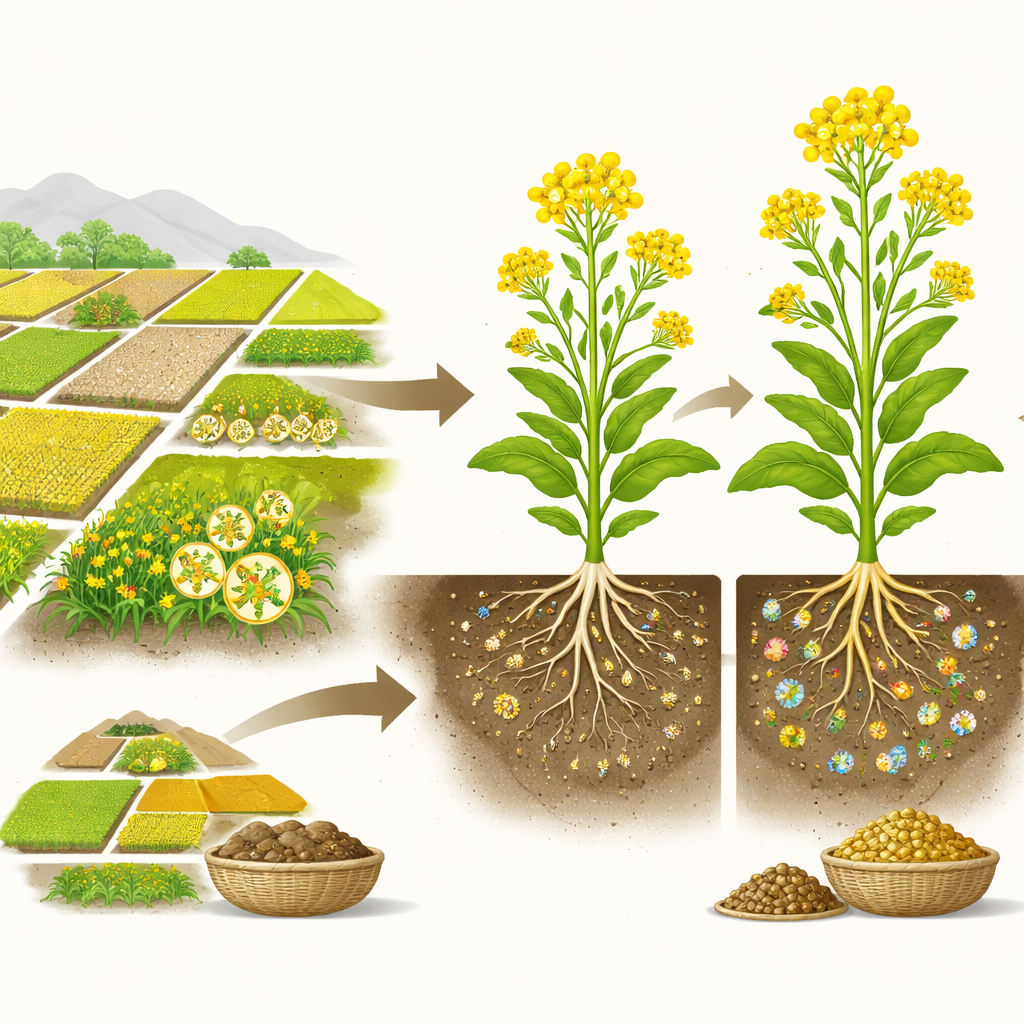
The researchers set up a two-year field experiment on alluvial soils in the Indo-Gangetic plains of northern India. They compared three fertilizer regimes: a full recommended dose, a reduced dose at three-quarters of that level, and no fertilizer. Within each of these, they added different microbial inoculants to mustard seeds, including bacteria that fix nitrogen, free up phosphorus or potassium, or solubilize zinc. One treatment used a mixed “consortia” of microbes that supply nitrogen, phosphorus, and potassium together, plus zinc-solubilizing bacteria. Across 54 plots, the team measured not only yield and plant growth but also soil microbial populations, key soil enzymes, nutrient levels, and a suite of indicators that reveal how actively the soil is cycling nutrients.
Soil Life as an Invisible Partner
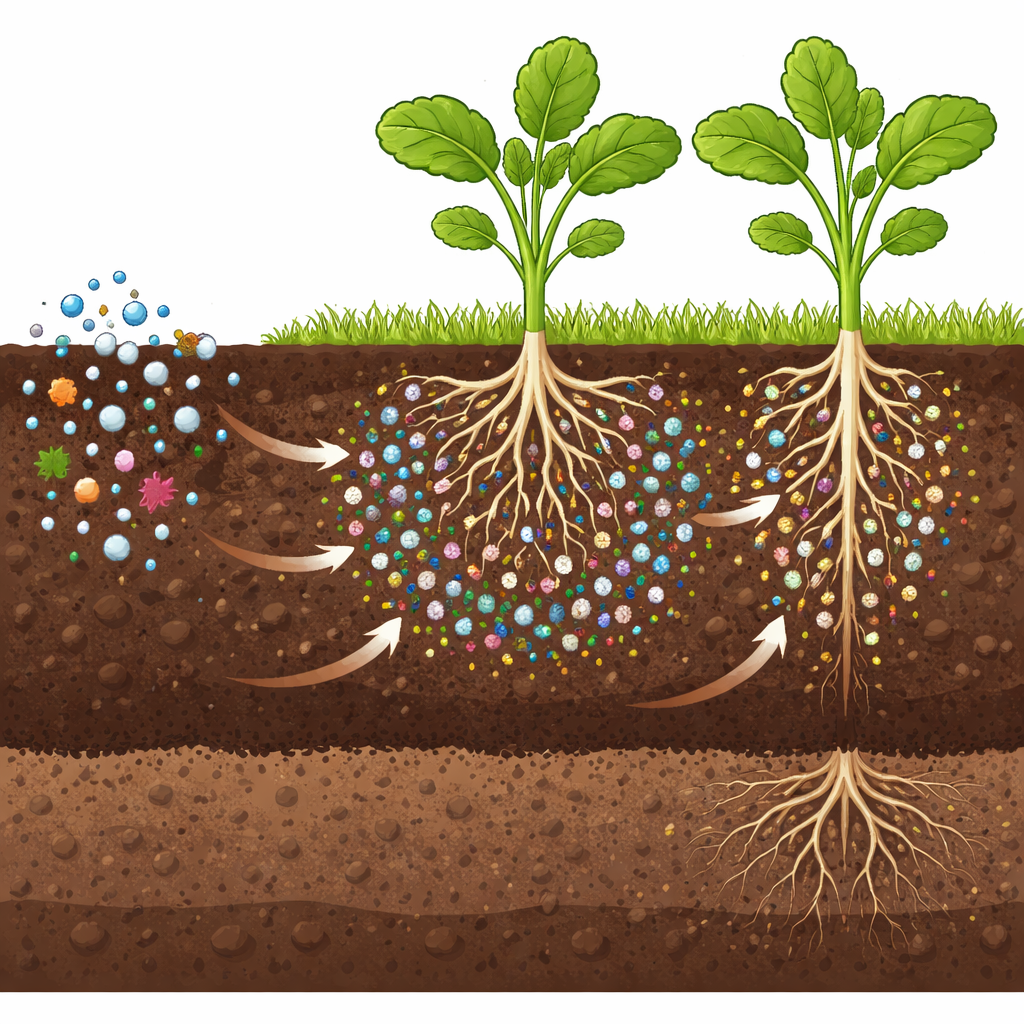
The full fertilizer dose unsurprisingly produced the highest seed and straw yields, along with the greatest number of seed pods and seeds per pod. But adding beneficial microbes changed what was happening beneath the surface. Plots treated with the mixed NPK consortia plus zinc-solubilizing bacteria consistently showed the largest populations of helpful microbes — bacteria, fungi, and actinomycetes — and the strongest activity of enzymes that drive soil processes. These enzymes included dehydrogenase (a broad indicator of microbial breathing and metabolism), urease (which helps release plant-available nitrogen from urea-like compounds), and alkaline phosphatase (which liberates phosphorus from organic matter). Soils under this combined treatment also held more available nitrogen, phosphorus, potassium, sulphur, organic carbon, and microbial biomass, all signs of a healthier, more active soil system.
Finding a Smarter Fertilizer Sweet Spot
Although using the full fertilizer dose alone gave the top yields, the reduced fertilizer rate — three-quarters of the recommendation — performed surprisingly well, especially when paired with the microbial consortia and zinc-solubilizing bacteria. In that combination, mustard yields were only slightly below the full-fertilizer treatment, yet soil biological indicators were very strong. Statistical analyses that looked at all variables together showed that yield, nutrient availability, microbial biomass, and enzyme activities tended to rise and fall in unison, forming a clear gradient from poor, unfertilized plots to rich, microbe-enhanced, fertilized plots. This suggests that the same underlying improvements in soil functioning are driving both better soil health and higher crop performance.
What This Means for Future Farming
To a non-specialist, the message is straightforward: pairing moderate amounts of chemical fertilizer with the right mix of beneficial microbes can keep mustard yields high while making the soil more alive and fertile. The study recommends, under the tested conditions, using about 75% of the usual fertilizer rate together with the NPK-microbe consortia and zinc-solubilizing bacteria as a promising, more sustainable option. Because the work was done in one region, with one variety and over two seasons, the authors caution that more trials are needed before making blanket recommendations. Still, the findings point toward a future in which tiny soil organisms become key allies, helping farmers grow ample food while easing the environmental burden of heavy fertilizer use.
Citation: Singh, R.K., Soltane, R., Baite, N.A. et al. Field scale responses of soil enzymatic activities and microbial indicators to combined bioinoculant-fertilizer management in mustard (Brassica juncea L.). Sci Rep 16, 12237 (2026). https://doi.org/10.1038/s41598-026-44840-7
Keywords: biofertilizers, mustard, soil microbes, nutrient management, sustainable agriculture