Clear Sky Science · en
LPS-induced endometrial cell-derived exosomes suppress probiotic Lactobacillus growth
Why this matters for pregnancy health
Preterm birth is a leading cause of illness and death in newborns, yet many cases have no clear warning sign. This study explores a hidden line of communication between the lining of the womb and the bacteria that live in the vagina, showing how inflammation inside the uterus may quietly weaken protective “good” bacteria and favor harmful ones that are linked to early labor.
The balance between helpful and harmful bacteria
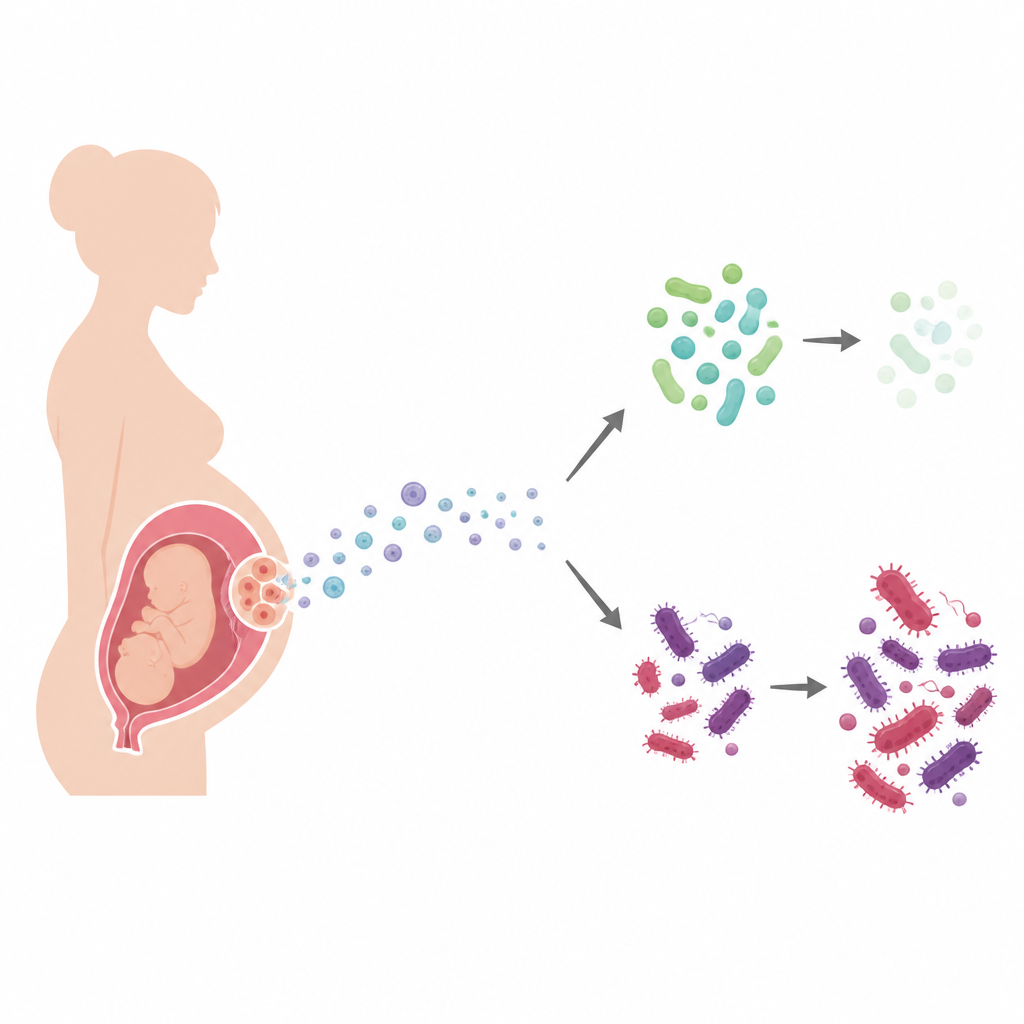
During a healthy pregnancy, the vagina is usually dominated by friendly Lactobacillus bacteria that help keep infections at bay. When this balance is lost and other species such as Gardnerella vaginalis gain ground, the risk of spontaneous preterm birth appears to rise. Earlier work has focused mostly on how bacteria and their products affect the mother. Here, the authors asked the opposite question: can the mother’s own uterine cells shape which microbes thrive in the vagina, especially during inflammation triggered by bacterial molecules such as lipopolysaccharide, or LPS?
Tiny message carriers from womb cells
The team used human endometrial cells grown in the lab and exposed them to LPS to mimic an inflammatory signal from invading bacteria. These cells release exosomes, which are tiny membrane bubbles packed with molecules such as RNA and proteins. The researchers collected exosomes from cells with and without LPS treatment and carefully measured their size, number, and molecular cargo. While the overall amount and appearance of the exosomes stayed similar, those from LPS-stimulated cells carried markedly more small RNAs, especially a group of regulatory snippets called microRNAs.
How exosomes reshape bacterial growth
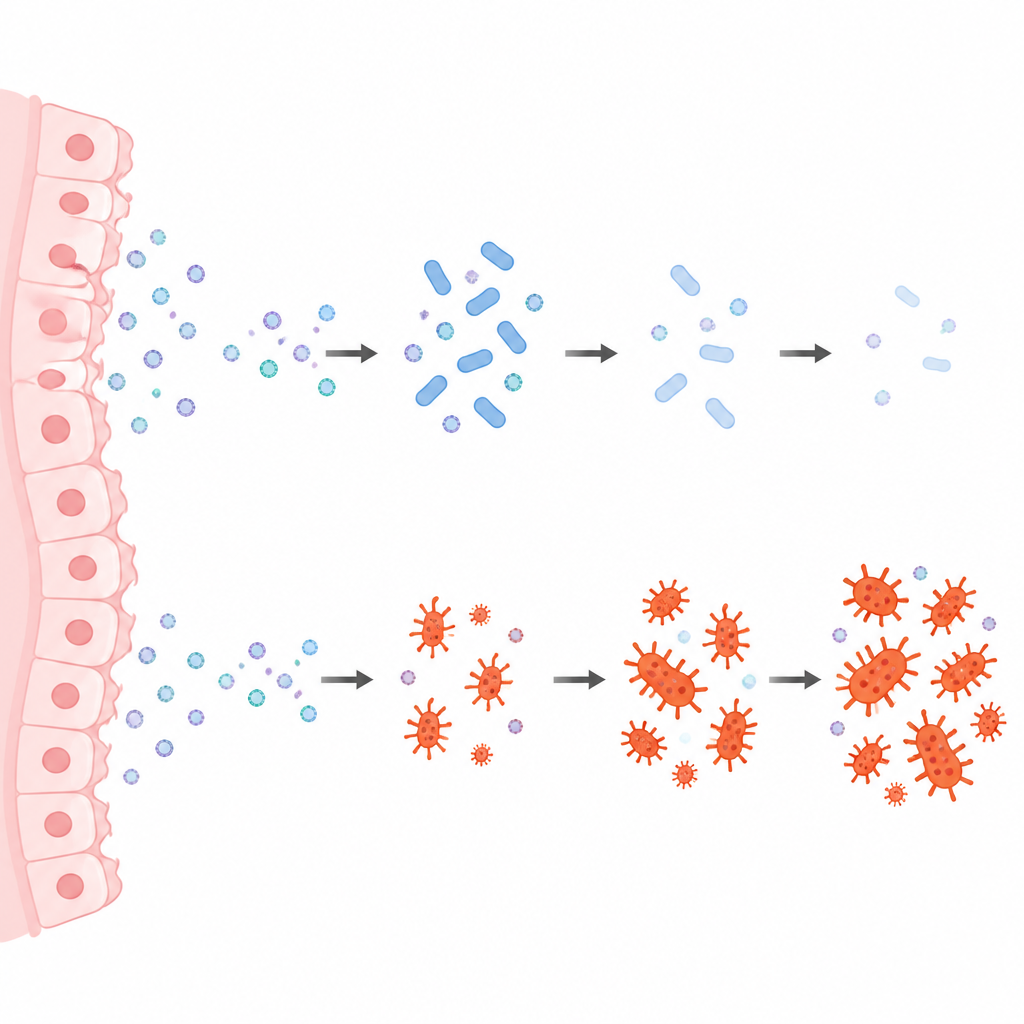
Next, the scientists tested how these exosomes affected several key Lactobacillus strains commonly found in the vagina. They first confirmed that the bacteria could take up the exosomes, using fluorescent dyes and confocal microscopy. When Lactobacillus cultures were grown with exosomes from healthy, unstimulated cells, their growth was unchanged or slightly improved. In sharp contrast, exosomes from LPS-treated cells slowed the growth of all four Lactobacillus species tested. In a mixed culture designed to mimic the vaginal community, including Gardnerella and Lactobacillus together, exosomes from healthy cells reinforced the dominance of Lactobacillus and reduced Gardnerella levels, while exosomes from inflamed cells tipped the balance the other way, allowing Gardnerella to expand.
MicroRNA signals that silence friendly microbes
To uncover which molecules inside the exosomes were responsible, the authors sequenced the small RNAs they contained. They found that two microRNAs, miR-181d-5p and miR-181c, were strongly enriched after LPS treatment. Synthetic versions of these microRNAs were then added directly to Lactobacillus cultures. Remarkably, both microRNAs alone significantly inhibited the growth of each Lactobacillus strain, suggesting that these human regulatory molecules can act across biological kingdoms, directly dampening the rise of beneficial bacteria.
What this could mean for preventing early birth
These findings reveal a previously unrecognized pathway by which inflammation inside the uterus can send out microscopic messages that weaken protective vaginal bacteria and promote potentially harmful ones. In simple terms, when the womb senses bacterial danger, it may release exosomes loaded with specific microRNAs that unintentionally drive the vaginal ecosystem toward imbalance. Such dysbiosis could contribute to a greater risk of spontaneous preterm birth. In the future, tracking these exosomal microRNAs in body fluids, or designing treatments that restore a Lactobacillus-rich community and adjust these signals, may offer new ways to support reproductive health and reduce the chances of babies being born too soon.
Citation: Wang, LM., Shi, YC., Lee, BH. et al. LPS-induced endometrial cell-derived exosomes suppress probiotic Lactobacillus growth. Sci Rep 16, 15301 (2026). https://doi.org/10.1038/s41598-026-44830-9
Keywords: preterm birth, vaginal microbiota, Lactobacillus, exosomes, microRNA