Clear Sky Science · en
Investigation of additively manufactured PEEK spur gears reinforced with graphene and natural fibers using hybrid AI techniques
Gears for a cleaner energy future
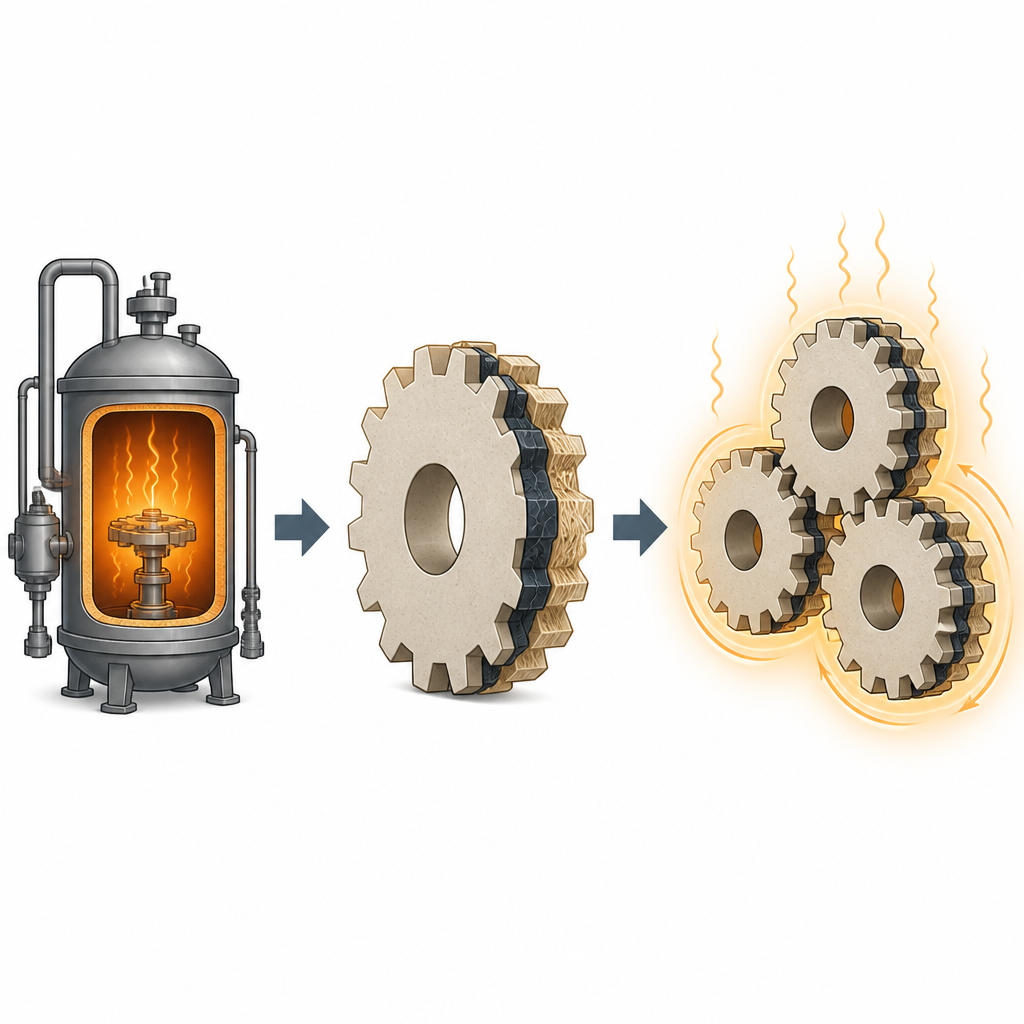
As industries search for cleaner ways to make hydrogen, the machines that keep these systems running must survive intense heat and long hours of operation. This study looks at how to 3D print small but vital parts called spur gears from a high performance plastic strengthened with tiny flakes of graphene and plant based flax fibers, and how smart computer models can help tune their recipe for harsh conditions.
Building a better plastic gear
The work centers on gears used inside high temperature hydrogen production reactors, where metal parts can corrode or become too heavy. The researchers chose a tough engineering plastic known as PEEK as the main material because it tolerates high heat and chemicals. They then reinforced it with two additions: graphene nanoplatelets, which are extremely thin carbon flakes that boost stiffness and heat resistance, and short flax fibers, which come from plants and add low weight and some strength while improving sustainability. By carefully adjusting how much of each ingredient they mixed in, they aimed to create gears that could carry load, hold their shape in heat, and still be practical to manufacture.
Printing and testing the new materials
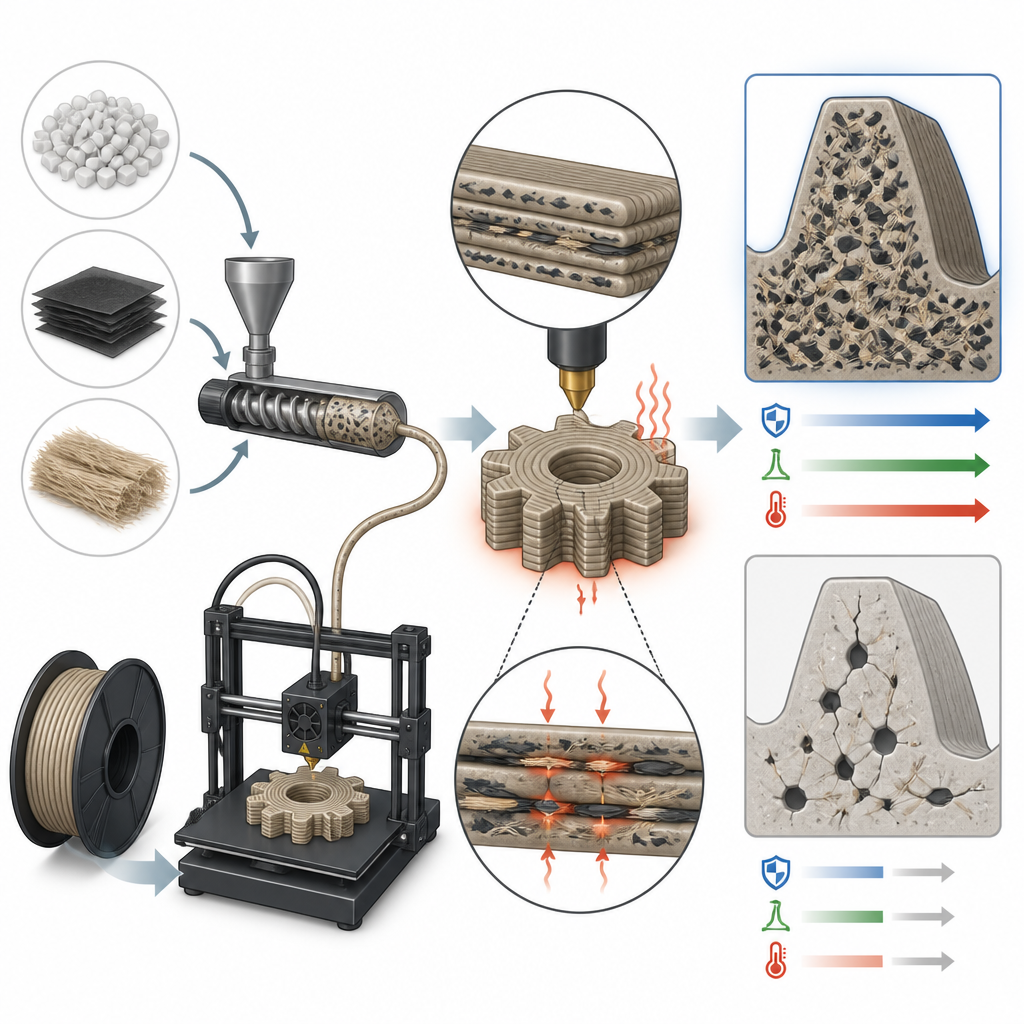
To turn these mixtures into real parts, the team used a common 3D printing method that feeds solid filament through a hot nozzle. They dried and blended PEEK, graphene, and flax, extruded the blend into filaments, and then printed both standard test bars and actual spur gears at high temperatures with fully solid interiors. The printed samples were tested for how much pulling and bending they could withstand, how stiff they were, how far they could stretch before breaking, and how well they held up when heated. In parallel, the gears were inspected for warping and surface quality, confirming that the hybrid materials could be printed into precise, defect free shapes under controlled conditions.
What the tests revealed inside and out
Measurements showed a clear pattern: adding more graphene and flax steadily increased strength, stiffness, and thermal stability, but reduced how much the material could stretch before breaking. Among five main recipes, one blend containing 3 percent graphene and 12.5 percent flax offered the best overall balance of properties. It combined high tensile and bending strength, a relatively high elastic modulus, and improved heat resistance while still keeping some ductility. Microscopy images of broken samples backed this up: this recipe showed evenly spread graphene, strong bonding between fibers and plastic, and few voids or clumps, all signs of efficient load sharing inside the material. At higher reinforcement levels, defects and agglomerates appeared, which can act as weak points.
Letting data guide the recipe
Because many factors interact at once, such as reinforcement levels, printing temperature, and print speed, the team combined experiments with statistical tools and artificial intelligence to search for the best settings. They first used a structured design of experiments to map how changes in these inputs affected the five key properties. Then they trained machine learning models, including a hybrid of gradient boosted trees and a recurrent neural network, on this experimental data. These models learned to predict material performance more accurately than traditional equation based fits, and were coupled with an optimization algorithm that searched for combinations that raised strength, stiffness, and heat stability while keeping ductility within an acceptable range.
From lab materials to working gears
Using this data driven approach, the study identified conditions with relatively high graphene content and moderate flax content, along with hotter and slightly faster printing, that offered improved mechanical and thermal performance compared to a typical starting point. The optimized recipes and printing settings produced PEEK based composite gears that are stronger, stiffer, and more heat resistant than the base plastic, and that can be shaped reliably by 3D printing. While these results show strong potential for gears in hydrogen reactors and similar hot environments, the authors stress that further tests under real service conditions, including wear, fatigue, creep, and direct hydrogen exposure, are still needed before the materials can be used in working plants.
Why this work matters
For a lay reader, the key message is that combining advanced plastics, plant fibers, and tiny carbon flakes with smart AI based design can yield lighter, more durable gears that may one day help hydrogen systems run more efficiently. The study does not claim that these gears are ready for full industrial service, but it demonstrates that 3D printed hybrid materials can be tuned to handle high temperatures and mechanical loads, and that modern modeling tools can speed the search for the right recipe.
Citation: Palaniappan, M., Kumar, P.M., Premalatha, M. et al. Investigation of additively manufactured PEEK spur gears reinforced with graphene and natural fibers using hybrid AI techniques. Sci Rep 16, 15140 (2026). https://doi.org/10.1038/s41598-026-44823-8
Keywords: PEEK gears, graphene composites, 3D printing, hydrogen reactors, materials optimization