Clear Sky Science · en
Ambrisentan attenuates cisplatin-related mitochondrial dysfunction in the heart via regulation of p53 and NF-κB signaling
Why a cancer heart connection matters
Cancer drugs can save lives, but some of them quietly strain the heart. Cisplatin, a widely used chemotherapy, is known to damage the tiny power stations inside heart cells, raising the risk of long term heart problems. This study asks a hopeful question for patients and doctors alike: can an existing blood vessel drug called ambrisentan shield heart cells from this hidden cost of cancer treatment? 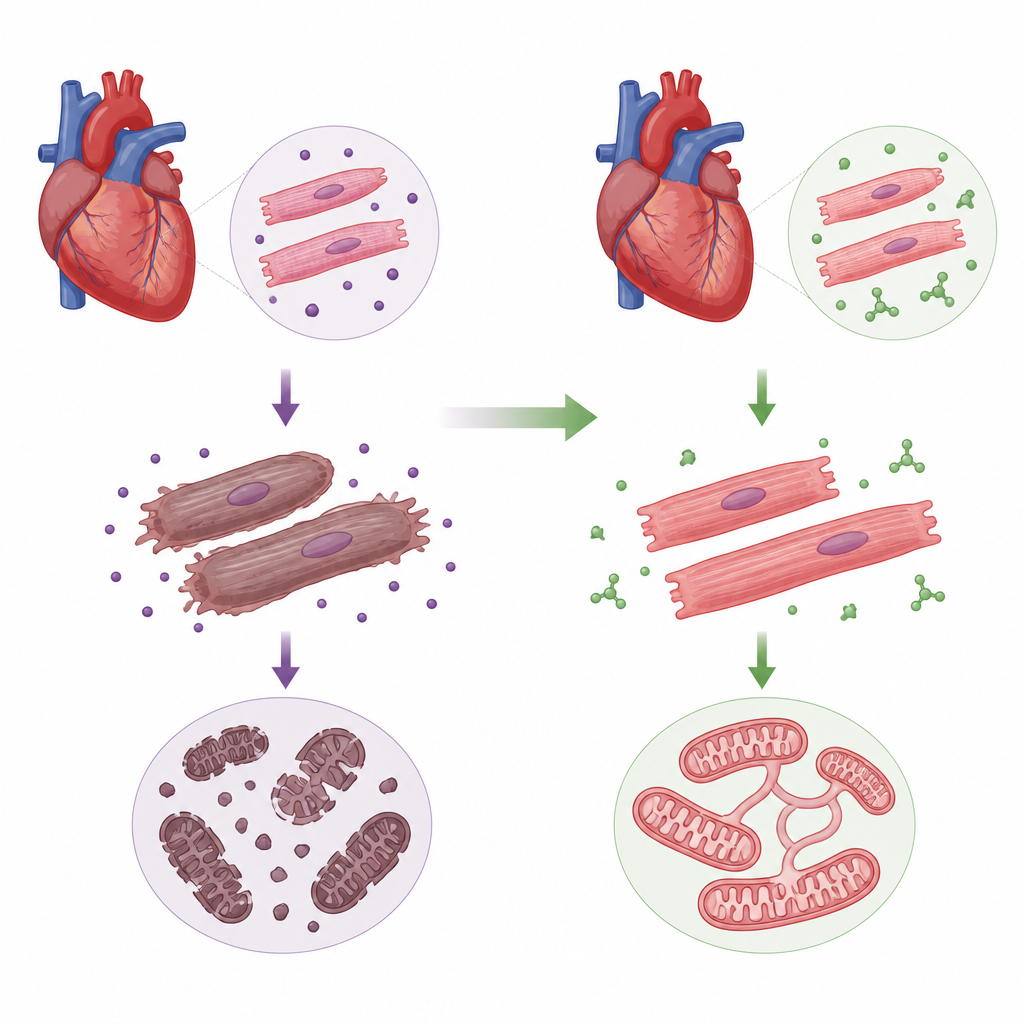
How chemotherapy strains the heart’s power supply
The heart relies on mitochondria, small structures that produce the energy needed for every heartbeat. Cisplatin can upset this energy system by making mitochondria leaky, fragmented, and overloaded with harmful molecules called reactive oxygen species. That stress switches on death programs in the cell and stirs up inflammation, setting the stage for weaker heart function. Two key control switches in this process are proteins called p53 and NF kappa B, which together drive cell death and inflammatory signals when cells are under attack.
A blood vessel drug with a new role
Ambrisentan is already used to treat pulmonary arterial hypertension by blocking a receptor for endothelin 1, a natural substance that tightens blood vessels and can harm heart tissue. Earlier work suggested that drugs of this type can ease oxidative stress and support healthier mitochondria in the heart and kidneys. The authors wondered whether ambrisentan could counter the damaging effects of cisplatin in heart like cells grown in the lab, and whether it does so by calming down the p53 and NF kappa B switches that push cells toward injury.
Protecting heart cells in the lab
In rat heart cell lines exposed to cisplatin, the researchers saw more cell death, higher levels of inflammatory messengers, and surges in harmful oxygen containing molecules inside and around mitochondria. Mitochondria became short and round instead of long and tube like, and their ability to support energy production dropped. When the cells were pretreated with ambrisentan, many of these changes were reversed. There was less activation of cell death enzymes, more of the survival protein Bcl 2, fewer inflammatory signals like TNF alpha and IL6, and lower oxidative stress. Mitochondria regained a more connected, tubular shape and produced energy more efficiently through both their main power pathway and backup glycolysis.
Uncovering the control switches
To pinpoint how this protection works, the team used separate drugs that either block or boost p53 and NF kappa B. When these switches were inhibited, the beneficial effects of ambrisentan on survival, inflammation, oxidative stress, and energy metabolism became even stronger. When the switches were forced into a more active state, ambrisentan could no longer fully protect the cells and in some cases the damage worsened. The data also showed that ambrisentan brought back the activity of other survival pathways, such as Akt and Erk, and reset many genes that control how mitochondria fuse, divide, and renew themselves. 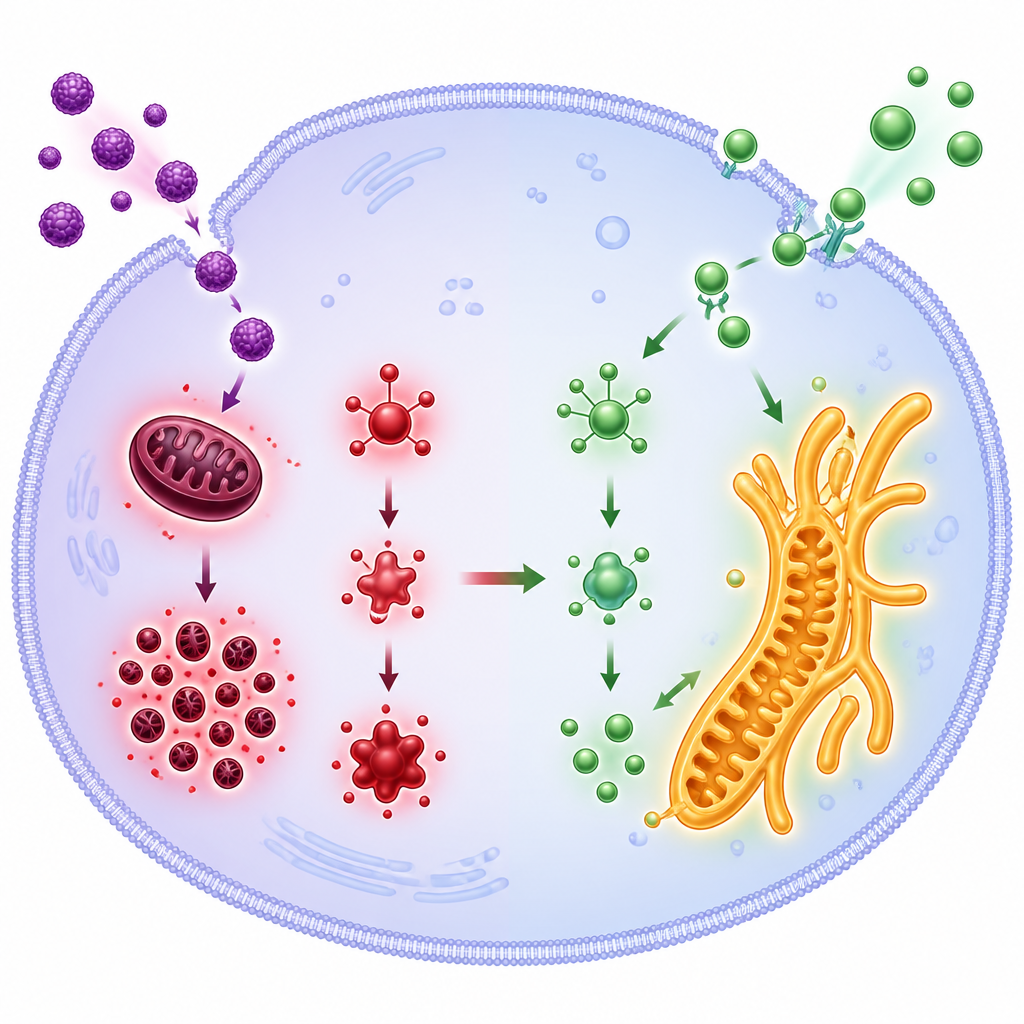
What this could mean for patients
For people receiving cisplatin, the findings suggest that a drug already in use for other heart related conditions might one day help guard the heart’s energy machinery during chemotherapy. In plain terms, ambrisentan helped heart like cells stay alive, less inflamed, and better powered under treatment stress by calming harmful signals controlled by p53 and NF kappa B and by keeping mitochondria in a healthier shape. While this work was done in cells, and needs to be tested in human heart tissue and animal models, it points to a possible future where protecting the heart becomes a built in part of cancer care rather than an afterthought.
Citation: Khine, H.E.E., Mangmool, S. & Parichatikanond, W. Ambrisentan attenuates cisplatin-related mitochondrial dysfunction in the heart via regulation of p53 and NF-κB signaling. Sci Rep 16, 14850 (2026). https://doi.org/10.1038/s41598-026-44822-9
Keywords: cardiotoxicity, cisplatin, ambrisentan, mitochondrial dysfunction, heart failure