Clear Sky Science · en
Distinct difference of pancreatic tissue-specific microbiome in autoimmune pancreatitis and pancreatic ductal adenocarcinoma
Why tiny tenants in the pancreas matter
Doctors often struggle to tell apart two very different problems in the pancreas: a rare immune driven inflammation and a common, deadly cancer. Scans and blood tests can be unclear, yet choosing the right treatment quickly is vital. This study asks whether the hidden community of bacteria living in pancreatic tissue itself can offer new clues, by comparing patients with autoimmune pancreatitis and those with pancreatic cancer.
Two diseases that look alike but act differently
Autoimmune pancreatitis is a chronic inflammation in which the body’s own defenses attack the pancreas, but it usually responds well to steroid drugs. Pancreatic ductal adenocarcinoma, in contrast, is an aggressive cancer that often appears similar on imaging and can even share some blood test features. Because current tools like CT, MRI, tissue sampling, and blood markers are imperfect, some patients face delays or uncertainty about whether they have an inflammatory disease that can be calmed or a cancer that needs urgent treatment.
A close look at bacteria inside the pancreas
To explore a new angle, researchers collected tiny pieces of pancreatic tissue from 17 people with type 1 autoimmune pancreatitis and 24 with pancreatic cancer using endoscopic ultrasound guided needles. They extracted DNA from these samples and sequenced a standard bacterial gene to identify which microbes were present. This allowed them to measure the richness and variety of bacteria in each tissue sample and to compare the overall structure of the microbial communities between the two diseases. 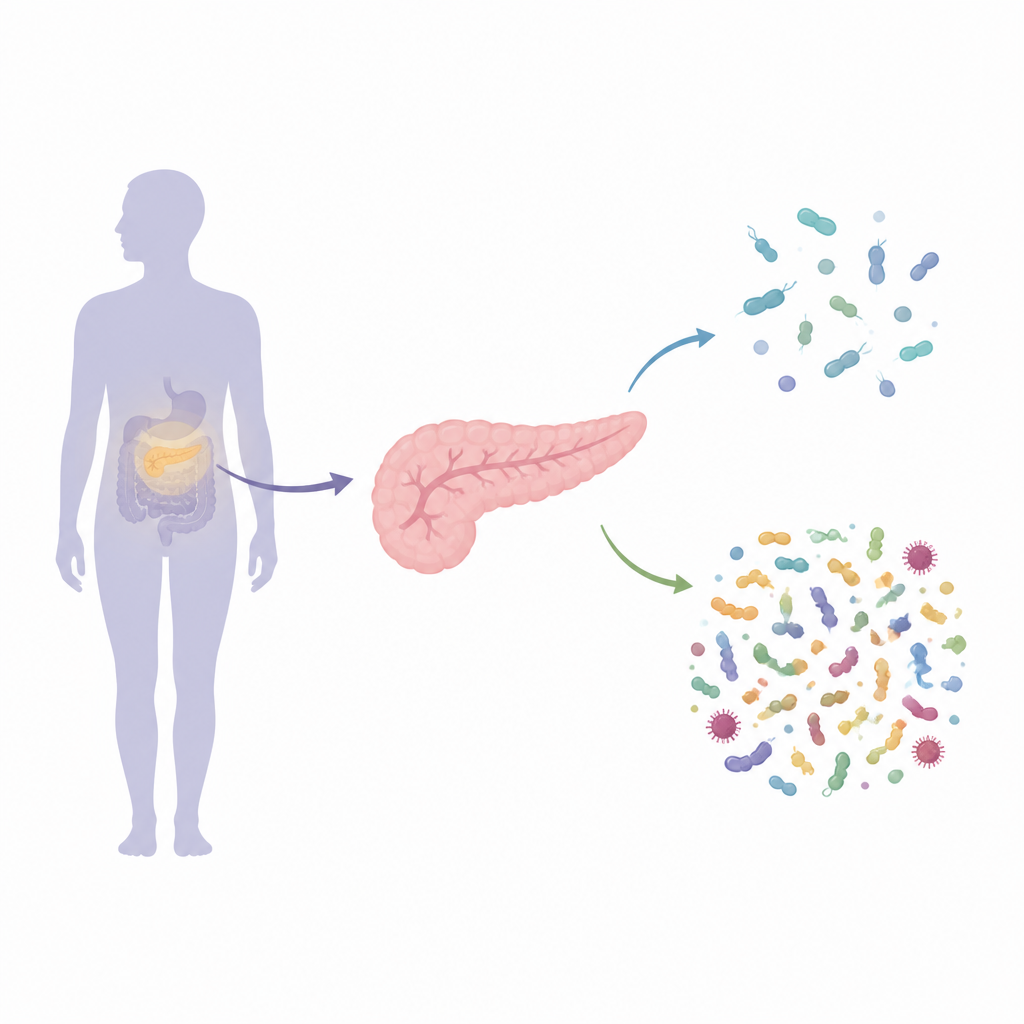
Distinct bacterial patterns separate inflammation from cancer
The pancreatic cancer samples clearly differed from the autoimmune pancreatitis samples. Cancer tissues showed higher bacterial diversity by several measures, meaning they harbored a broader mix of microbes. At the genus level, 16 types of bacteria differed between the two groups. One type, Staphylococcus, was more common in autoimmune pancreatitis, while the other 15 were more abundant in cancer. When the researchers looked at how these bacteria related to each other, they found a network of co existing microbes that tended to cluster in cancer tissue, hinting at a community effect rather than a single culprit organism.
A simple microbial index with strong separating power
To turn these patterns into a usable signal, the team built a “bacterial index” that combined all 16 key genera by comparing the number of bacteria increased in cancer with the amount of Staphylococcus. This index sharply separated most cancer samples from autoimmune pancreatitis samples and showed strong performance in a standard accuracy test, with an area under the curve of 0.91. Importantly, the index was largely independent of usual clinical features such as age, tumor stage, or blood markers, suggesting it might add new information rather than simply echoing known risk factors. 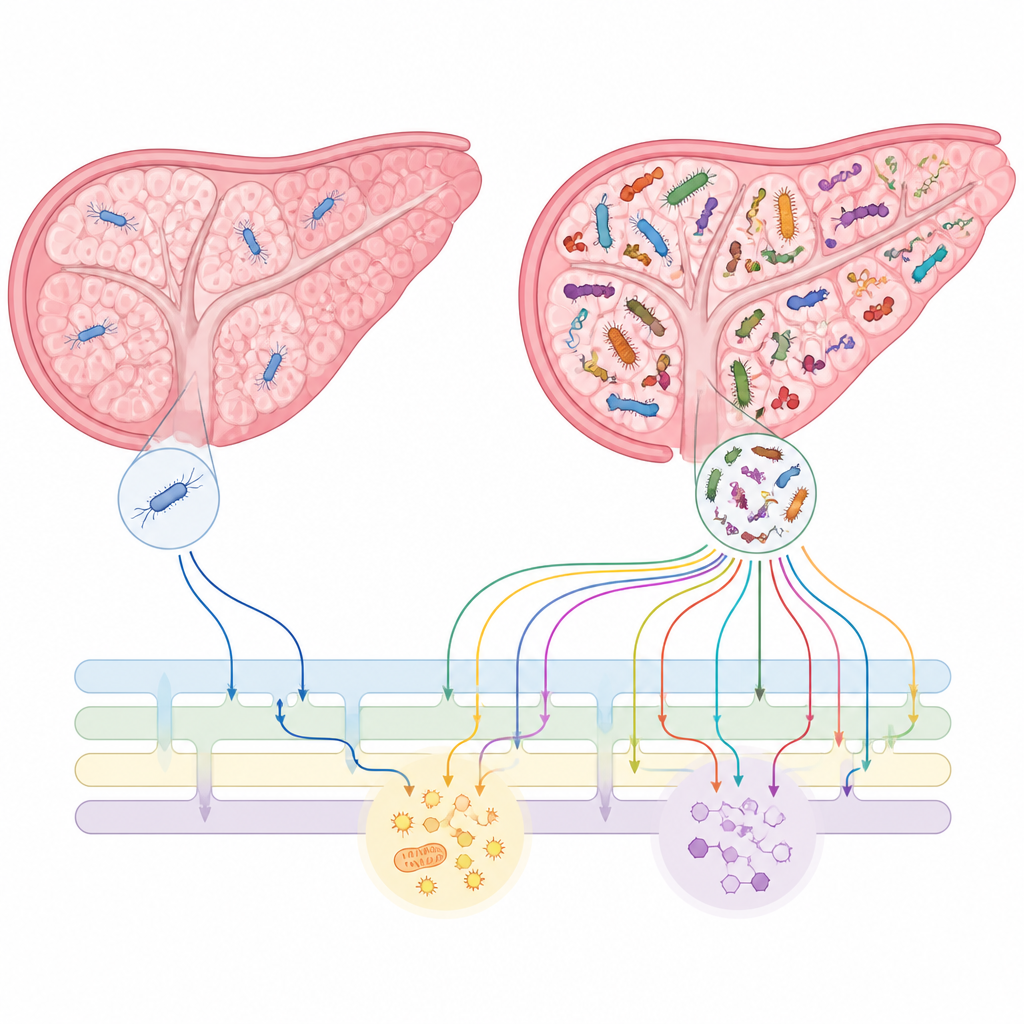
What the microbes might be doing
Beyond who is present, the predicted functions of these microbes also differed. Higher values of the bacterial index, which tracked with cancer linked bacteria, were tied to pathways like the pentose phosphate route and several types of adenosine related metabolism, as well as gondoate biosynthesis. These chemical routes are important for managing oxidative stress, building DNA, and shaping fatty acids, all processes connected to how cancers grow and survive. While these predictions still need to be confirmed by measuring real metabolites, they hint that the pancreatic microbiome in cancer may help create a chemical environment that favors tumor development.
New diagnostic clues, but more work ahead
For non specialists, the take home message is that the bacteria living inside pancreatic tissue differ in clear ways between autoimmune inflammation and cancer. By reading the combined pattern of these microbes, doctors may eventually gain an extra tool to help distinguish between two diseases that often look alike. This research is early and involves a modest number of patients from one region, and it shows associations rather than proof of cause and effect. Even so, it opens the door to using the pancreatic microbiome as part of a diagnostic toolkit that could guide more accurate and timely treatment choices.
Citation: Nakamaru, K., Ito, T., Shimogama, T. et al. Distinct difference of pancreatic tissue-specific microbiome in autoimmune pancreatitis and pancreatic ductal adenocarcinoma. Sci Rep 16, 15944 (2026). https://doi.org/10.1038/s41598-026-44821-w
Keywords: pancreatic microbiome, autoimmune pancreatitis, pancreatic cancer, tissue bacteria, microbiome biomarkers