Clear Sky Science · en
Explainable machine learning of PROGRESS-Plus social factors predicts cognitive trajectories after traumatic brain injury
Why Social Surroundings Matter After a Head Injury
When someone suffers a traumatic brain injury, doctors usually focus on the damage to the brain itself. But a person’s life outside the hospital—their age, education, living environment, and broader social conditions—can also shape how their thinking and memory change over time. This study asks a timely question: can advanced computer tools uncover how social factors influence long-term thinking abilities after a head injury, and use that knowledge to improve predictions of who will struggle and who will recover?
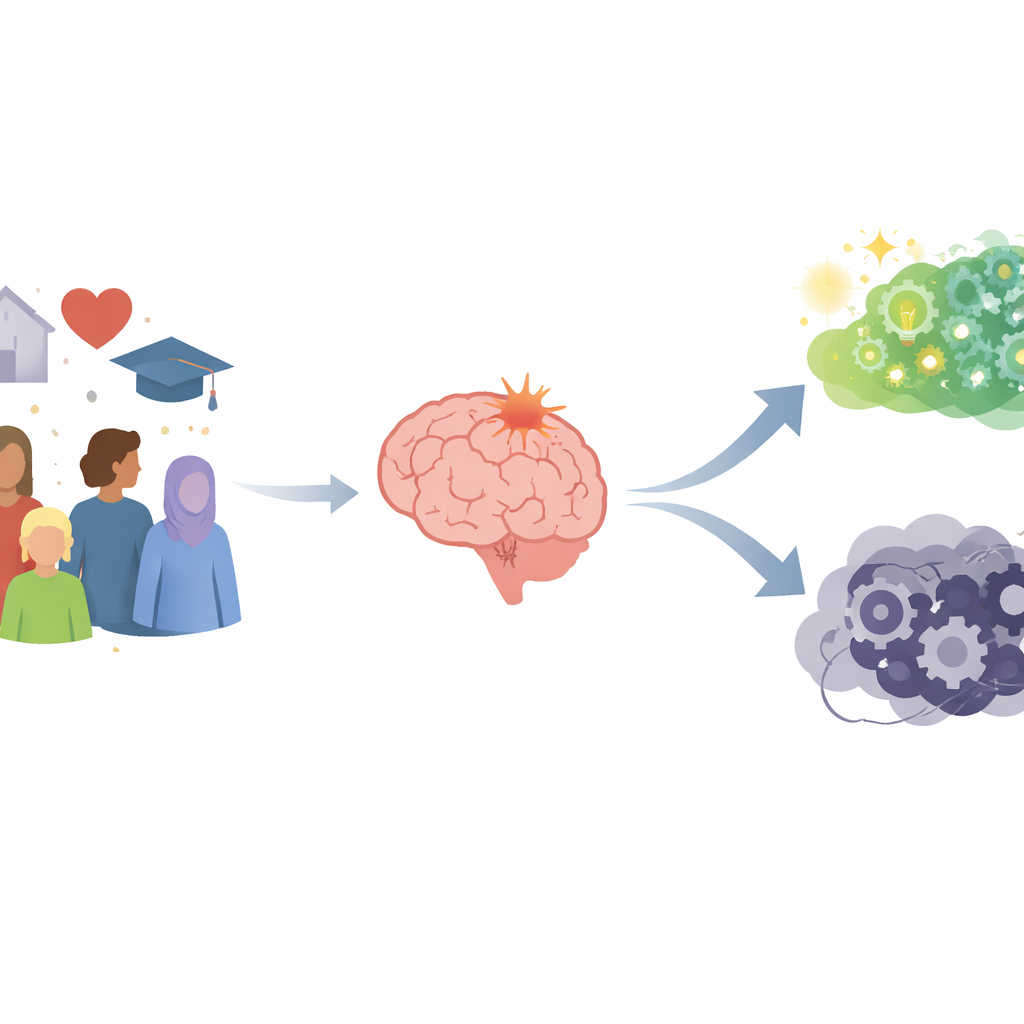
Looking Across Many Studies for Hidden Patterns
Instead of running a new clinical trial, the researchers gathered data from 30 previously published studies that had followed 2,364 adults with traumatic brain injury over months or years. These people had injuries ranging from mild concussions to moderate and severe brain trauma. From each study, the team pulled out simple, comparable numbers: average age, years of education, how much ages and education levels varied within each group, how many months had passed between injury and testing, and how long participants were followed. They also drew on global indices that describe each country’s level of human development and gender equality, using these as broad indicators of social conditions.
Turning Social Clues Into Predictive Signals
To make sense of this complex mix of personal and societal information, the team used several machine learning methods—computer programs that learn patterns from data rather than relying on fixed formulas. These programs were trained to predict how quickly thinking skills changed per month, both overall and within specific areas like memory and planning. Crucially, the researchers used "explainable" approaches that not only make predictions but also show which inputs mattered most, so that results could inform real-world practice instead of remaining a black box.
Time, Age, and Place Shape Recovery Paths
The models consistently pointed to a small set of powerful influences. Measures of time—how long after injury the first thinking test was done and how much time passed between the first and last tests—strongly shaped whether scores improved, stayed the same, or declined. Age was another major player: both the average age and how wide the age range was within each group were closely linked to changes in thinking. Education also mattered, especially how much education levels differed among participants. On top of these personal factors, country-level indicators such as gender inequality and overall human development emerged as important. These broad measures seemed to capture features of the social environment—opportunities, resources, and constraints—that subtly guided recovery, particularly in people with milder injuries whose outcomes are more sensitive to their surroundings.
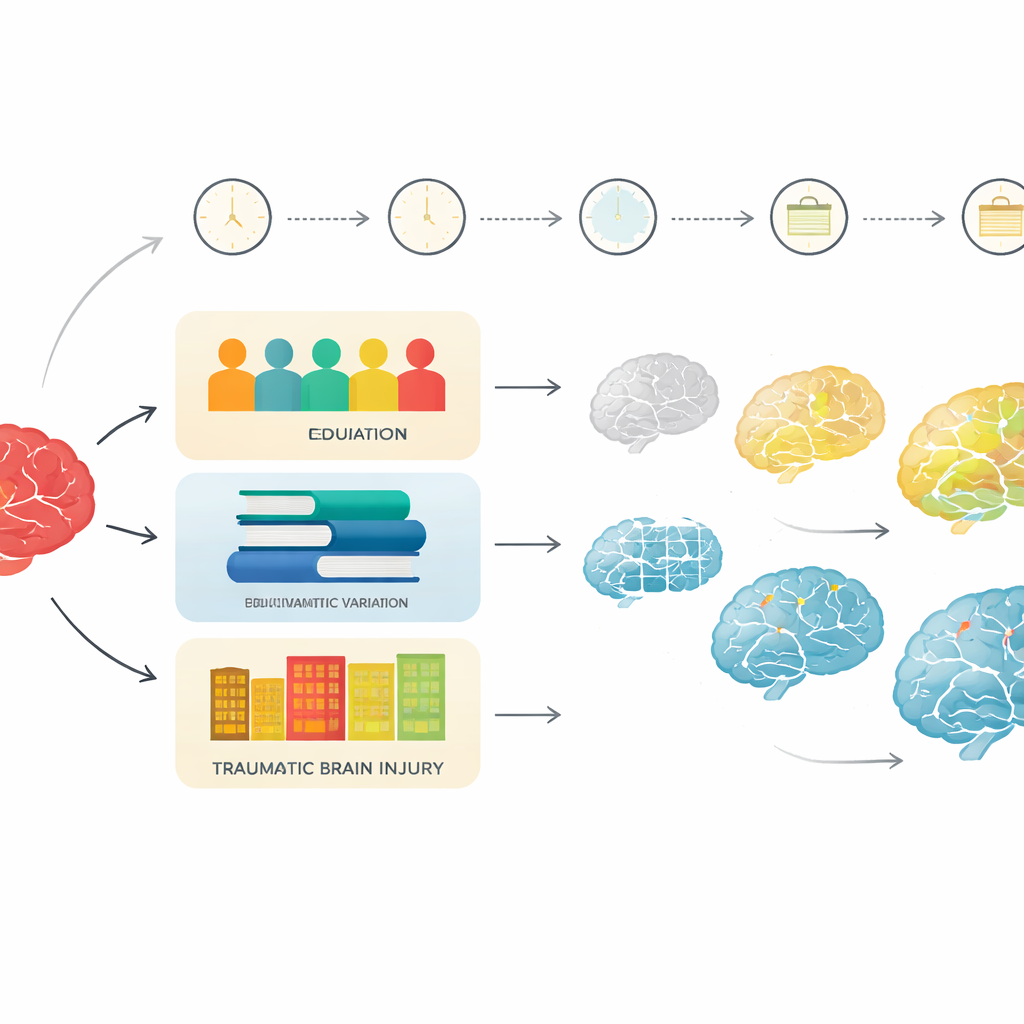
Checking the Strength of the Computer’s Insights
The authors tested their models in several ways to make sure the patterns they saw were not flukes. They repeated the analyses using only specific thinking skills, such as memory and executive function, and found that the same key factors—time, age, variation in education, and country-level conditions—kept reappearing. They also used cross-validation, a standard technique that tests how well a model’s insights hold up on different slices of the data. Across these checks, the story stayed stable: social and timing factors carried real predictive weight. At the same time, the exercise revealed what was missing from much of the existing research, including sparse reporting of race, income, occupation, and social support, which limited how fully these influences could be studied.
What This Means for Patients, Clinicians, and Policy
For people living with the effects of a brain injury, this work reinforces that recovery is not just about what happened inside the skull on the day of the accident. It is also about when and how follow-up care is delivered, how old they are, the educational and social advantages or disadvantages they bring with them, and the broader conditions of the society in which they live. By showing that these factors can be quantified and used to forecast changes in thinking over time, the study opens the door to more tailored, equitable prognoses. It also highlights a clear next step: future research and health systems must routinely track and report social factors if we want prediction tools—and the decisions based on them—to work fairly for everyone.
Citation: Xu, J., Shaikh, U., Tylinski Sant’Ana, T. et al. Explainable machine learning of PROGRESS-Plus social factors predicts cognitive trajectories after traumatic brain injury. Sci Rep 16, 10629 (2026). https://doi.org/10.1038/s41598-026-44818-5
Keywords: traumatic brain injury, cognitive recovery, social determinants, machine learning, prognosis