Clear Sky Science · en
The mechanisms and spatiotemporal patterns of the digital economy’s effect on China’s pollution reduction and carbon efficiency
Why Digital Technology Matters for Cleaner Air
As smartphones, cloud servers, and online services weave into every part of daily life, they are also quietly reshaping how energy is used and how much pollution we produce. This study asks a timely question: as China’s digital economy grows, does it actually help clean the air and cut climate‑warming emissions—or does all that extra data processing simply add more smoke to the sky? By tracking changes across nearly all of China’s provinces over a decade, the authors show how bits and bytes can become powerful tools for both pollution control and carbon savings.
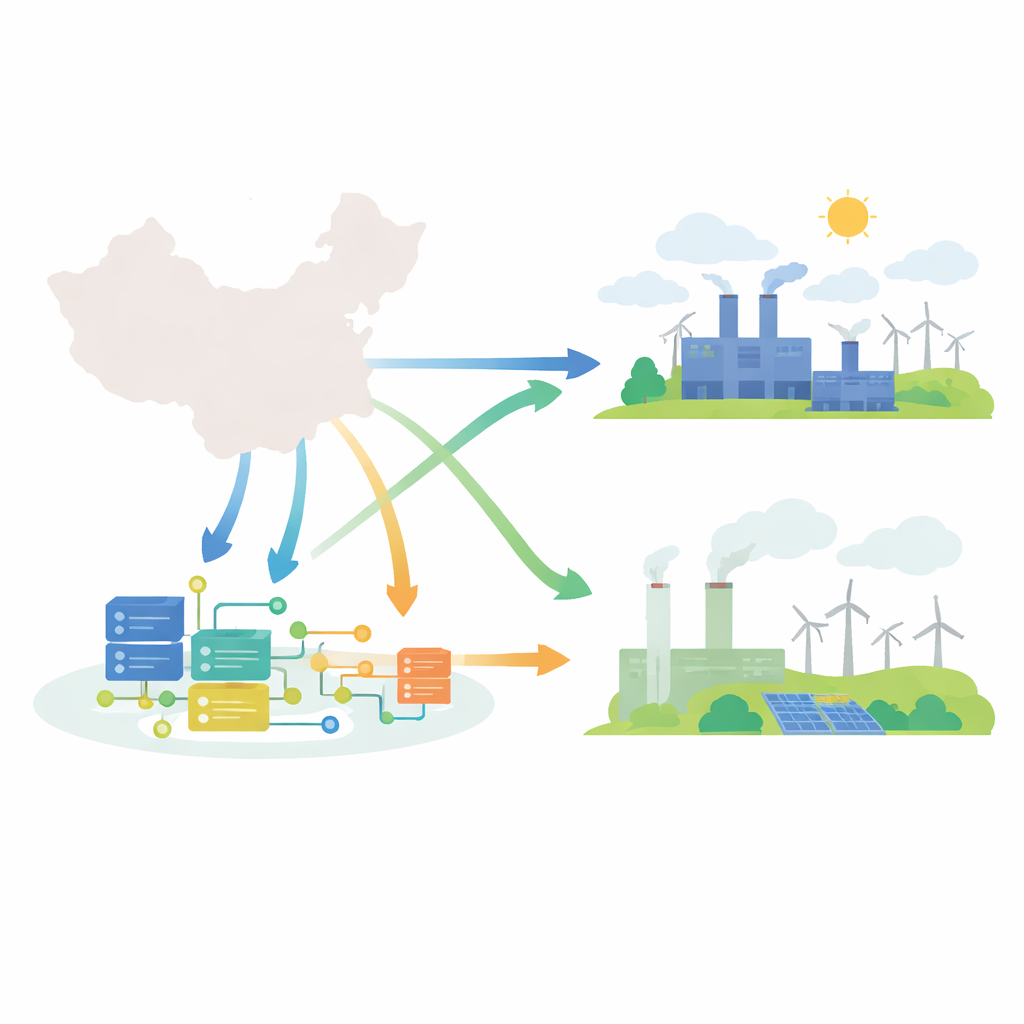
From Online Growth to Environmental Change
The researchers look at the period from 2011 to 2020, when China’s online infrastructure and digital services expanded at remarkable speed. They build a broad index of the “digital economy” that includes not just internet lines and mobile base stations, but also e‑commerce activity, digital finance, software and IT services, and online media. At the same time, they measure how dirty the air is and how carbon‑intensive the economy remains by calculating how much pollution and carbon dioxide are emitted for each unit of economic output in every province. This approach allows them to compare regions that differ greatly in population, wealth, and industrial structure on a common footing.
How Digital Tools Cut Smoke and Carbon
The findings are clear: provinces that become more digital tend to emit less pollution and less carbon for the same amount of economic activity. According to the authors’ statistical models, a given increase in digital development is linked to sizable drops in both pollutant intensity and carbon intensity. The reasons are practical and familiar. Digital platforms encourage paperless trade, online meetings, and remote services, all of which reduce travel and material use. Data‑driven management helps factories run more efficiently, wasting less fuel and raw materials. Although data centers and networks do consume large amounts of electricity, the net balance over this period is firmly in favor of cleaner outcomes rather than higher emissions.
Innovation and Industry Upgrading as Hidden Engines
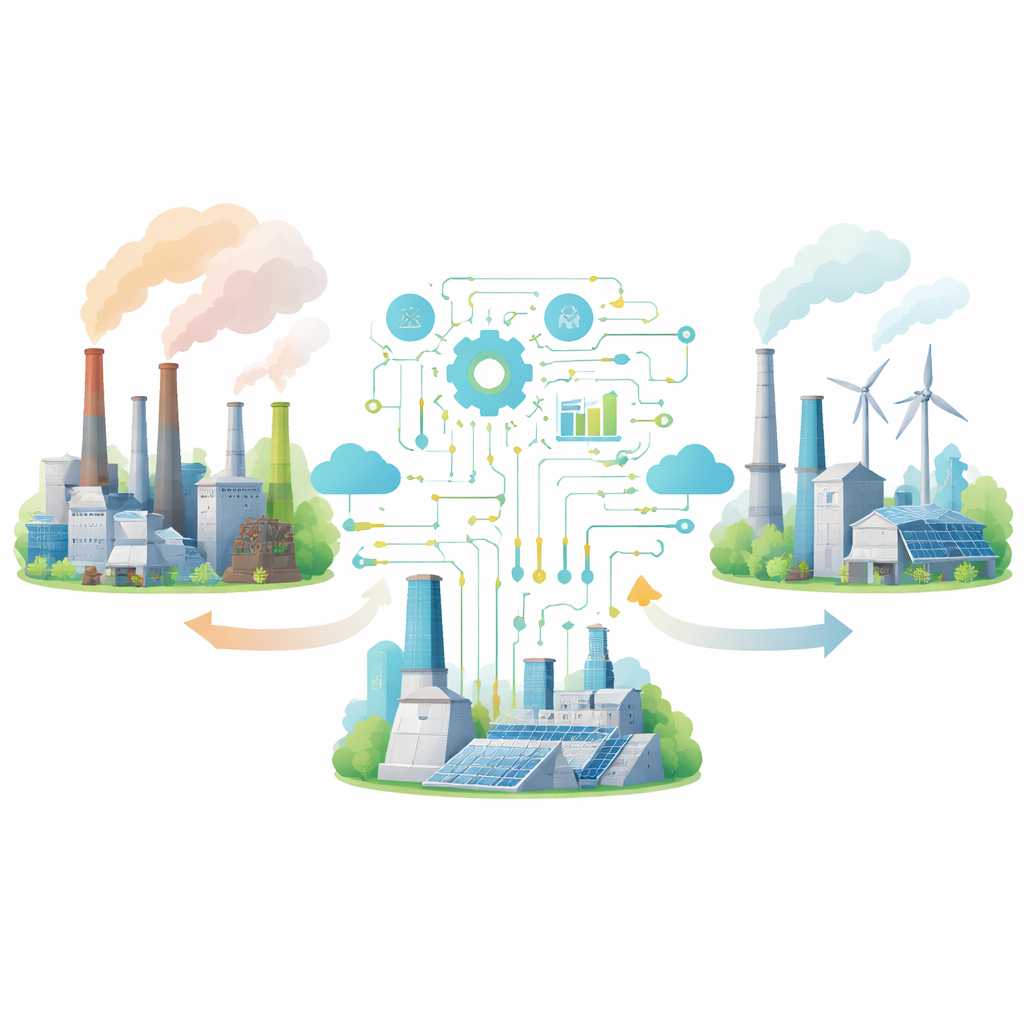
To understand how these gains are achieved, the study peeks under the hood of the economy and examines two key “middle steps”: shifts in the industrial mix and the pace of technological innovation. The results show that digital progress nudges regions away from older, heavy industries and toward more advanced, less resource‑hungry sectors. This industrial reshaping explains part of the drop in emissions, but not the majority. The larger role is played by innovation itself. In provinces where digital finance, online platforms, and better connectivity make it easier for firms to experiment and upgrade, cleaner technologies and smarter equipment spread faster. The authors estimate that innovation driven by digital development accounts for a substantial share of the improvements in both air quality and carbon efficiency.
Different Regions, Different Digital Payoffs
China is far from uniform, and the environmental payoffs of digital growth are not evenly spread. Using a method that lets the strength of relationships vary across space and time, the study maps how the digital economy’s impact differs among provinces. Northeastern and eastern regions—traditionally home to heavy industry—see especially strong reductions in conventional air pollution as they apply digital tools to modernize factories and energy systems. Western provinces, which are only beginning to scale up their digital sectors, show particularly large gains in terms of carbon intensity, helped in part by new low‑carbon data centers powered by cleaner energy. Over the decade, the alignment between cutting smokestack pollutants and reducing carbon emissions improves, meaning that advances in one area increasingly go hand in hand with progress in the other.
What This Means for the Road Ahead
For non‑specialists, the message is straightforward: building out digital infrastructure and services does more than boost online shopping or entertainment—it can be a powerful climate and clean‑air strategy when paired with smart policies. The study shows that digital tools work best when they foster innovation and help industries upgrade, rather than simply making old, polluting activities run slightly faster. It also highlights the need for region‑specific approaches, since the gains are largest where heavy industry is being modernized or where new digital hubs are powered with cleaner energy. Overall, the work suggests that if guided carefully, the same networks that move information across China can also move the country toward bluer skies and a lower‑carbon future.
Citation: Xin, B., Ren, S., Lv, L. et al. The mechanisms and spatiotemporal patterns of the digital economy’s effect on China’s pollution reduction and carbon efficiency. Sci Rep 16, 14613 (2026). https://doi.org/10.1038/s41598-026-44813-w
Keywords: digital economy, air pollution, carbon emissions, green innovation, China climate policy