Clear Sky Science · en
Effect of polyacrylamide concentration on runoff redistribution and sediment yield control from karst spoil heaps under simulated rainfall
Why rain on mine piles matters
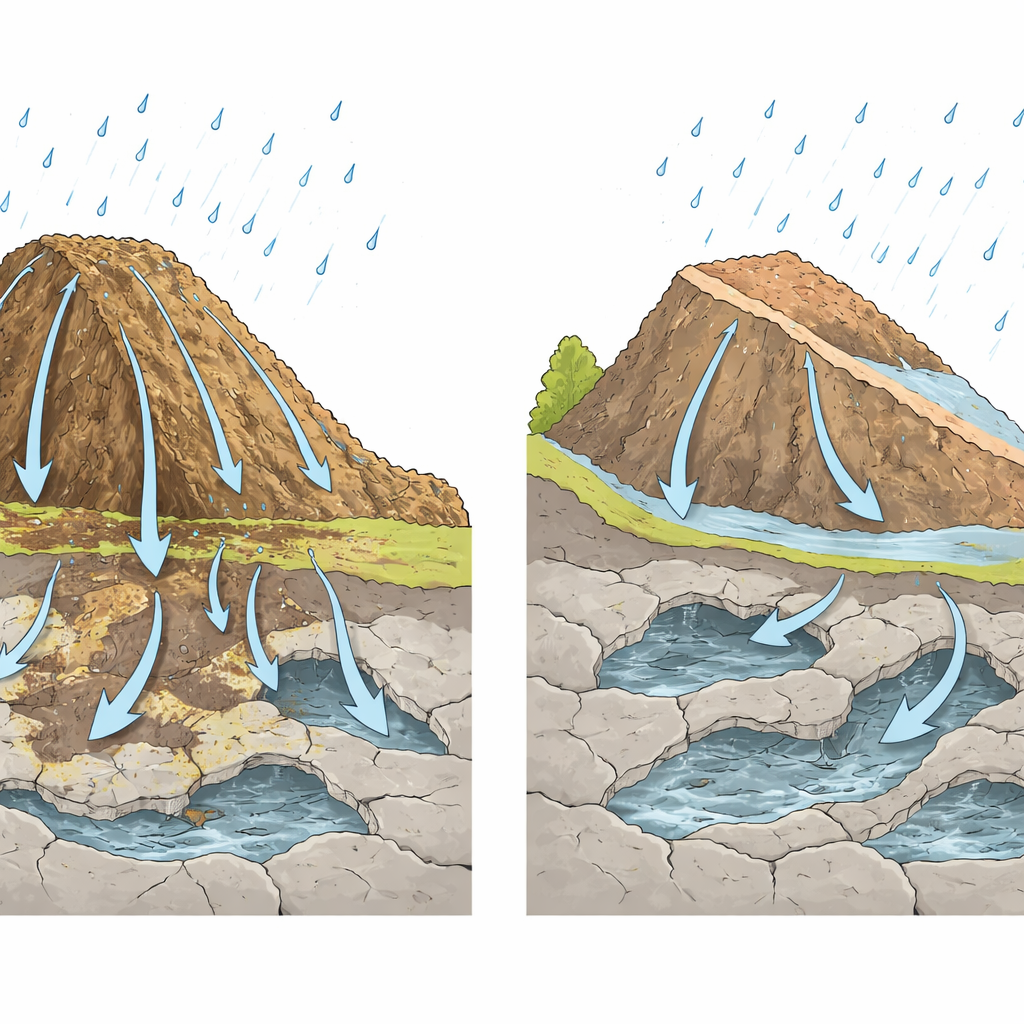
Across many coal‑mining regions, huge piles of loose rock and soil are left behind after digging—known as spoil heaps. When heavy rain hits these bare, crumbly slopes, muddy water can rush off the surface while dirty water also seeps down into hidden cracks in the rock below. In karst regions, where the bedrock is riddled with caves and channels, this seeping water can quickly carry pollutants into underground rivers and drinking‑water supplies. This study explores whether adding a common soil‑conditioning polymer, polyacrylamide (PAM), to the surface of these piles can both slow erosion and cut the risk of underground contamination.
A mining landscape full of hidden holes
The research focused on an open‑pit coal mine in Guizhou Province in southwest China, a classic karst landscape made of soluble carbonate rocks. Here, mining has created large spoil heaps made from waste rock and coal gangue. Because this material is loose, nutrient‑poor, and mostly bare of vegetation, it erodes easily during the region’s intense summer rains. In karst terrain, rainfall doesn’t just run off downslope; it also plunges into cracks and conduits in the bedrock, quickly joining underground streams. That makes it especially important to limit both surface erosion and downward leakage of polluted water from these artificial hills.
Testing a helper for tired soils
To investigate, the scientists recreated a slice of spoil heap in a laboratory rainfall hall. They filled a steel trough with a 30‑centimeter‑thick mixture representative of the mine waste and yellow soil from the site, then tilted it to a steep 30‑degree slope. The trough’s base was drilled with slots to mimic natural rock fissures, and three separate collectors captured water and sediment running off the surface, moving through the shallow subsurface, and leaking out from below. Above this model slope, a rainfall simulator produced controlled storms matching strong local downpours. The team sprayed the soil surface with PAM solutions of three different strengths—low (1‰), medium (3‰), and high (5‰)—and compared them with an untreated control under the same 90‑minute rainstorms.
How the polymer reshapes the water’s path
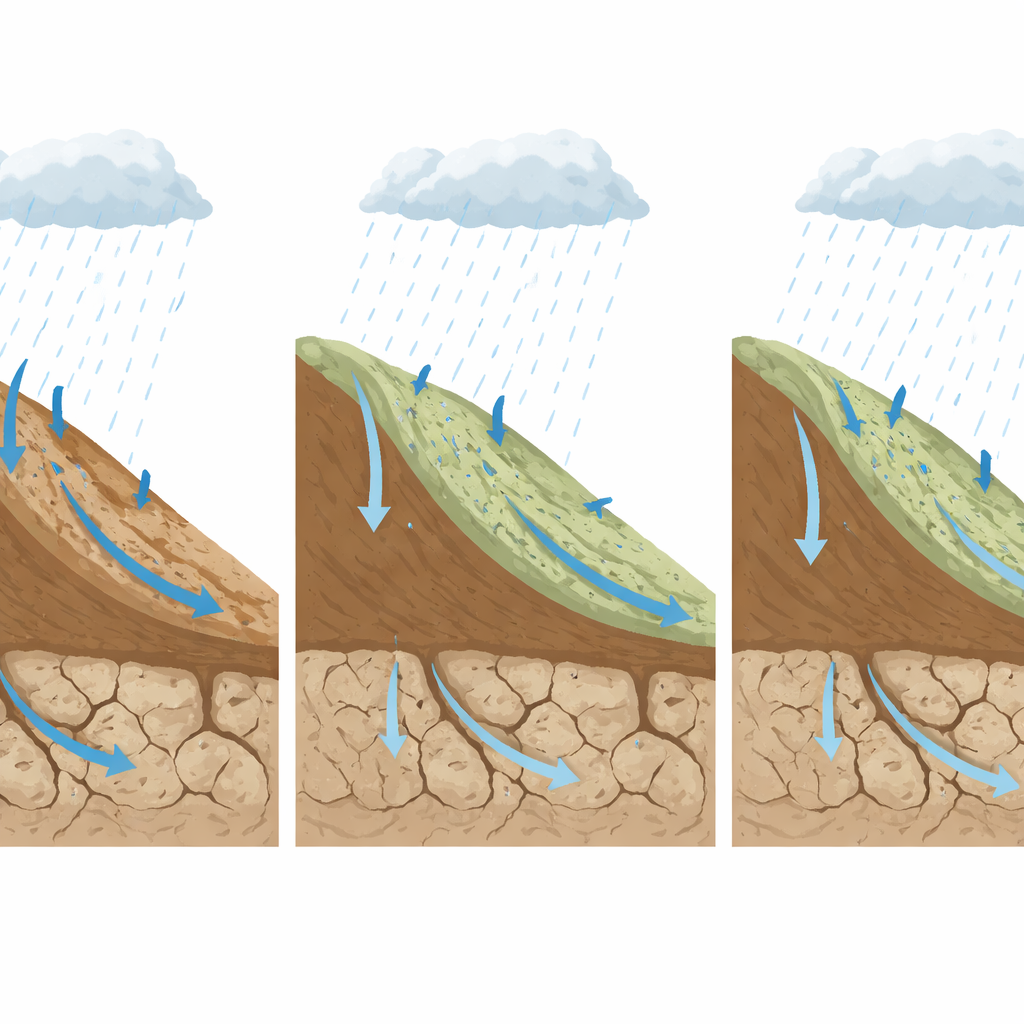
PAM is a long‑chain molecule that swells in water and binds soil particles into clumps, forming a thin, glue‑like skin at the surface. In the experiments, all PAM treatments changed how rainwater moved through the slope. With no PAM, a large share of the water quickly infiltrated and emerged as subsurface and underground flow, carrying fine particles downward. Once PAM was added, more water stayed at the surface and flowed off as shallow runoff, while flows from deeper layers shrank sharply, especially at the highest concentration. On average, surface runoff volumes rose by more than 17%, and underground runoff could drop from nearly half of the total in the untreated case to less than one‑tenth under strong PAM treatment. Flow measurements showed that the polymer increased the water’s internal resistance and reduced its erosive power, even though surface water moved more turbulently.
Less mud on the move, but a trade‑off
Alongside these shifts in water pathways, PAM greatly cut the amount of sediment leaving the slope. Compared with the untreated soil, the polymer reduced sediment carried by surface water by roughly one‑third and cut underground sediment loss by nearly half. Higher concentrations generally meant less erosion. However, there was a catch: the strongest PAM treatment, while best at preventing underground leakage, also blocked more water from soaking into the soil. That could leave the spoil heaps too dry for young plants to establish, slowing the very vegetation cover that would provide long‑term protection. The medium PAM concentration offered a better balance: it substantially reduced erosion and deep leakage, while still allowing enough water to infiltrate to support roots.
Finding a sweet spot for safer mine clean‑up
For mine managers working in fragile karst regions, the study’s message is practical. Spraying a moderate dose of PAM onto newly built spoil heaps can quickly curb erosion, steer less polluted water into underground channels, and make the slopes more stable—without starving future vegetation of the moisture it needs. The authors suggest that a mid‑range application, around 3‰ for the material they tested, is an effective starting point. They also emphasize the need for long‑term field monitoring to confirm that PAM and its breakdown products remain environmentally safe. Used with care and in combination with planting efforts, this simple polymer could become a useful tool in turning unstable waste piles into safer, greener hills.
Citation: Zhu, X., Yang, H. & Yan, Y. Effect of polyacrylamide concentration on runoff redistribution and sediment yield control from karst spoil heaps under simulated rainfall. Sci Rep 16, 14441 (2026). https://doi.org/10.1038/s41598-026-44802-z
Keywords: karst soil erosion, polyacrylamide, coal mine spoil heaps, runoff and sediment, groundwater protection