Clear Sky Science · en
Promising biocontrol effects of a native hemiparasitic plant against a non-native C4 grass
A Natural Ally Against Invasive Grasses
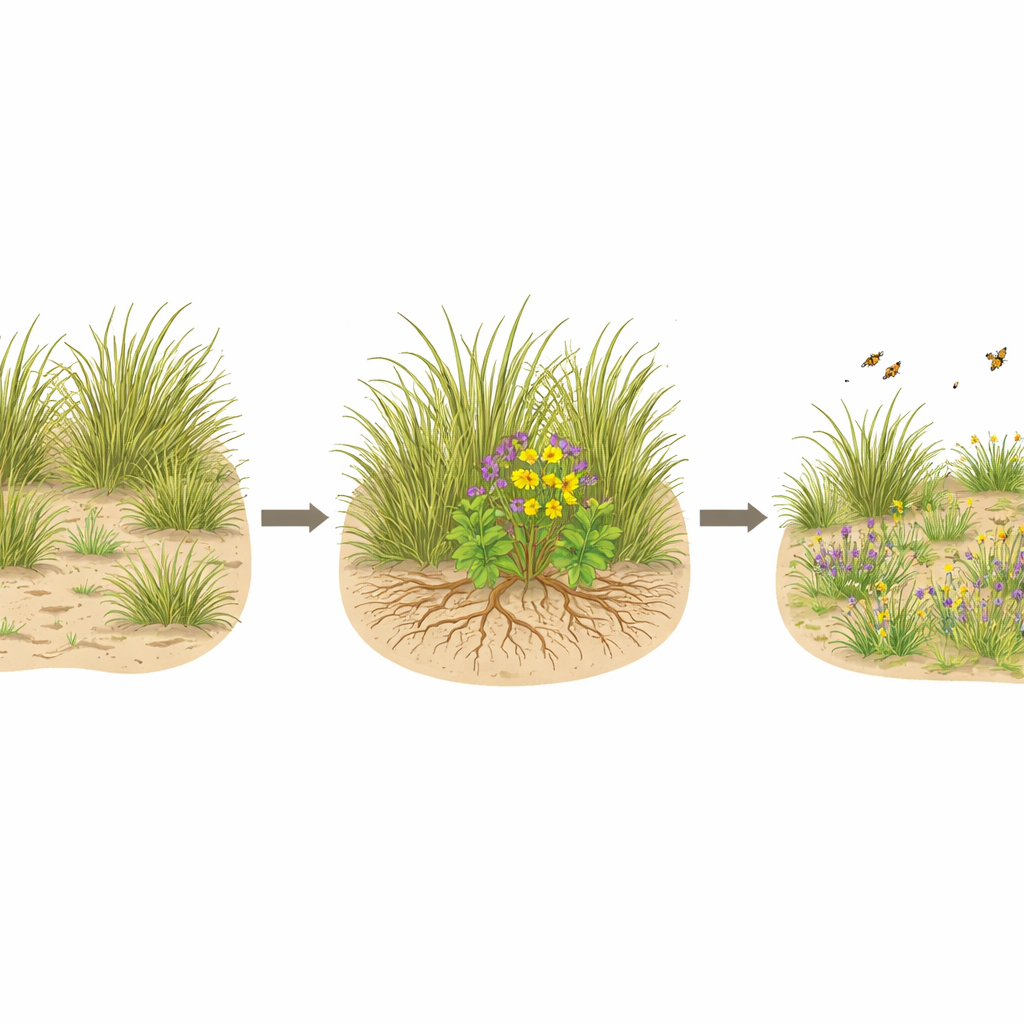
Across the world, fast-spreading plants are reshaping grasslands, pushing out native species and the insects and animals that depend on them. This study explores an unusual ally in the fight against such invaders: a native wildflower that lives partly as a parasite on other plants. By tapping into the roots of an invasive North American grass that has recently exploded across Hungarian sand grasslands, the wildflower may help thin the invader’s dense stands and open the door for native species to return.
The Problem of a Tough New Grass
The invader in question, sand dropseed (Sporobolus cryptandrus), is a hardy bunchgrass from North America. In Hungary’s dry sandy steppes, it grows into dense clumps with tough leaves that grazers avoid, and its deep roots and efficient water use give it a strong edge over local plants in hotter, drier summers. Once it settles, its seeds quickly build up in the soil and can dominate for years, making it extremely hard to remove. Traditional control methods, such as herbicides or repeated mowing, either damage native species, risk soil erosion, or allow the invader to bounce back from its seed bank.
A Parasite that Targets Strong Neighbors
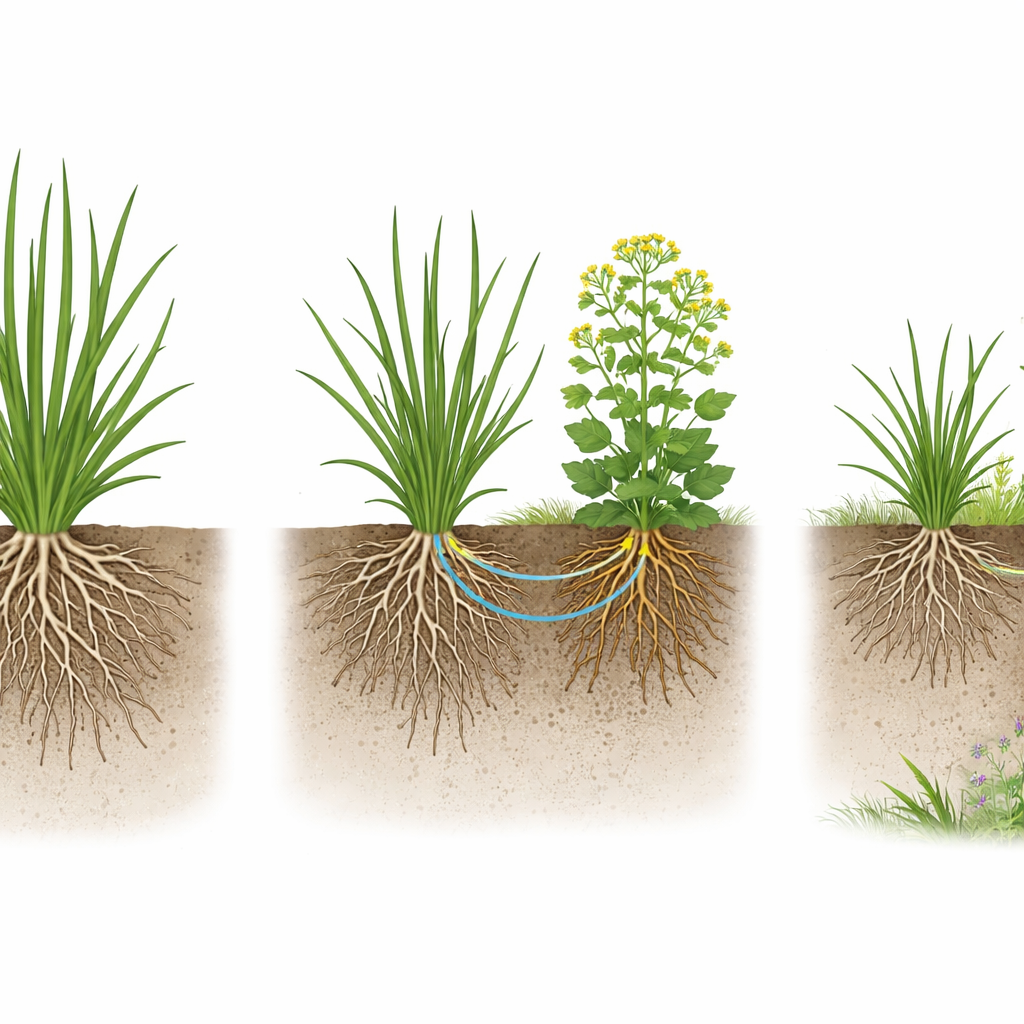
The researchers tested whether a common native wildflower, Odontites luteus, could act as a form of biological control. Odontites is a hemiparasite: it can photosynthesize on its own, but it also taps into the roots of nearby plants to steal water and nutrients. In the dry sandy steppes, it usually lives on native cool-season grasses, including Festuca vaginata. Because its growing season and preferred habitat overlap with those of sand dropseed, the team asked whether Odontites would also attach to this newcomer and weaken it enough to blunt its dominance.
Testing the Partnership in Outdoor Beds
To find out, the scientists created dozens of one-square-meter outdoor beds filled with local sandy soil. They sowed beds with sand dropseed, the native Festuca, or both together, and later added Odontites seeds to selected beds. Over two growing seasons they carefully weeded and watered the plots, then measured how much plant material each species produced and examined leaf chemistry to gauge photosynthetic activity and stress. This design let them compare how the parasite affected the invasive grass versus the native grass, and how all three species interacted when grown together.
How the Wildflower Weakened Its Hosts
Odontites grew well whenever either grass was present, showing that it considered both suitable hosts. It cut the biomass of sand dropseed by nearly half, very similar to its impact on Festuca. Yet the two hosts reacted differently internally. The invasive grass showed only a modest rise in one stress marker and no real drop in photosynthetic pigments, suggesting it could tolerate the resource drain fairly well. Festuca, in contrast, suffered clear metabolic strain: its photosynthetic machinery declined and several stress indicators rose sharply, signaling cell damage and oxidative stress. When the two grasses grew together, sand dropseed strongly suppressed Festuca even without the parasite. Adding Odontites did not push Festuca down much further, implying that the parasite may preferentially tap the more vigorous sand dropseed or that weakening the invader partly offsets the direct pressure on the native grass.
What This Means for Restoring Grasslands
The findings suggest that sowing Odontites into sand dropseed stands will not wipe out the invader or fully restore original plant communities, but it can substantially thin the invader’s biomass. In heavily infested areas, this thinning could create gaps where some native species, especially those less attractive or more resistant to the parasite, can re-establish. Even where native plants do not return quickly, Odontites itself adds value by providing late-summer flowers for pollinating insects, an ecological role missing in grass-dominated stands. The authors conclude that this native hemiparasitic wildflower is a promising, though imperfect, biological tool: it can help shift grasslands away from near-monocultures of an invasive grass and nudge them toward more diverse and functional ecosystems, but it must be used carefully and tested further in real-world settings.
Citation: Tölgyesi, C., Hábenczyus, A.A., Molnár, F. et al. Promising biocontrol effects of a native hemiparasitic plant against a non-native C4 grass. Sci Rep 16, 14341 (2026). https://doi.org/10.1038/s41598-026-44801-0
Keywords: invasive grasses, biological control, hemiparasitic plants, grassland restoration, sand dropseed