Clear Sky Science · en
Integrated bioactivity assessment of Syzygium aromaticum bud extract from Sudan shows antimicrobial and antioxidant potential
Why a kitchen spice matters for health
Clove buds are best known for flavoring food and freshening breath, but they also carry a long history in traditional medicine. As antibiotic resistance rises and chronic diseases linked to “oxidative stress” burden health systems worldwide, scientists are hunting for safe, plant based substances that can both curb germs and neutralize harmful molecules. This study takes a close, standardized look at clove buds from Sudan to see how powerful their germ fighting and antioxidant powers really are, and how safe they appear in early tests.
From market stall to lab bench
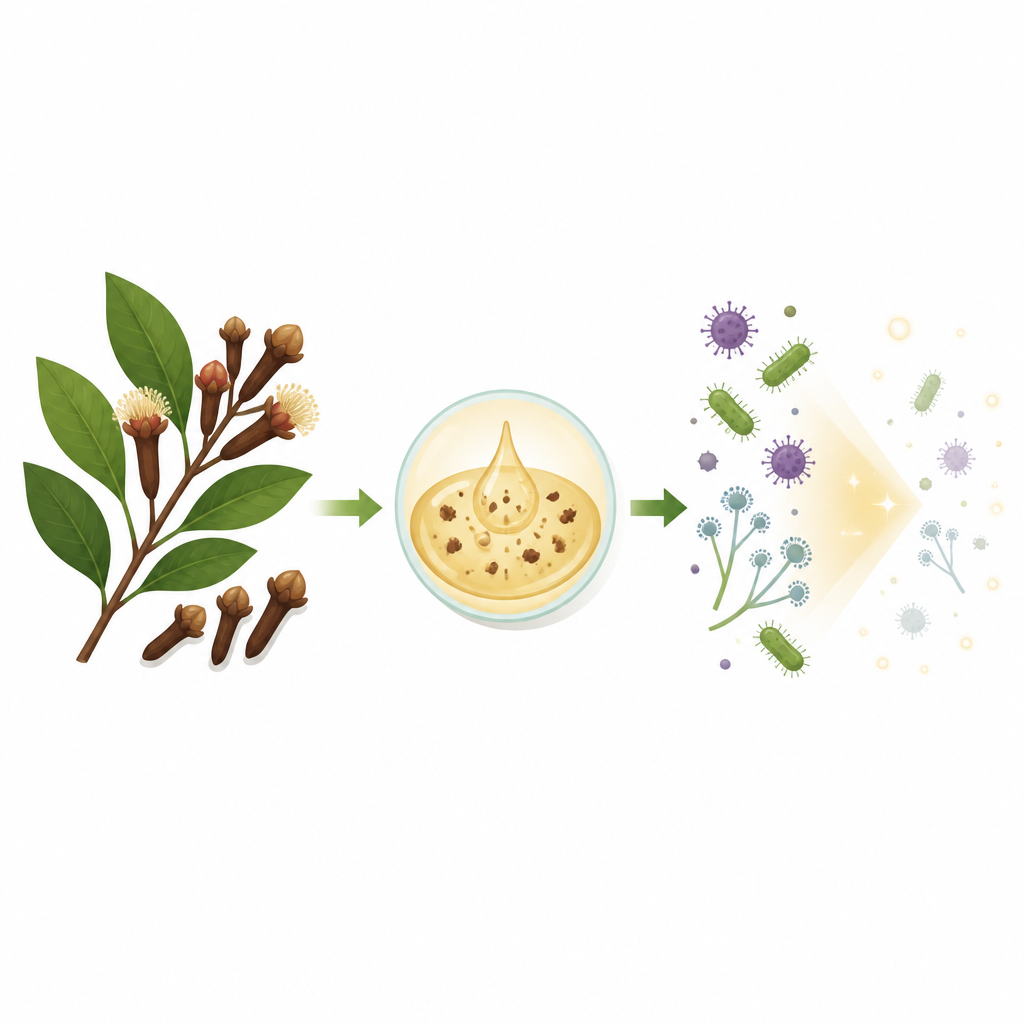
The researchers bought dried clove buds from a local Sudanese market, ground them to a fine powder, and soaked them in a mix of ethanol and water to pull out their active components. This produced a concentrated brown, slightly sticky extract with a relatively high yield, meaning a good amount of plant material was transformed into soluble compounds. Chemical tests showed that the extract was rich in families of molecules often linked to health benefits, especially flavonoids and other phenolic compounds, along with tannins, saponins, sterols, and alkaloids. These groups are frequently associated with natural defense roles in plants, and with antimicrobial and antioxidant effects in laboratory studies.
Putting clove to the germ test
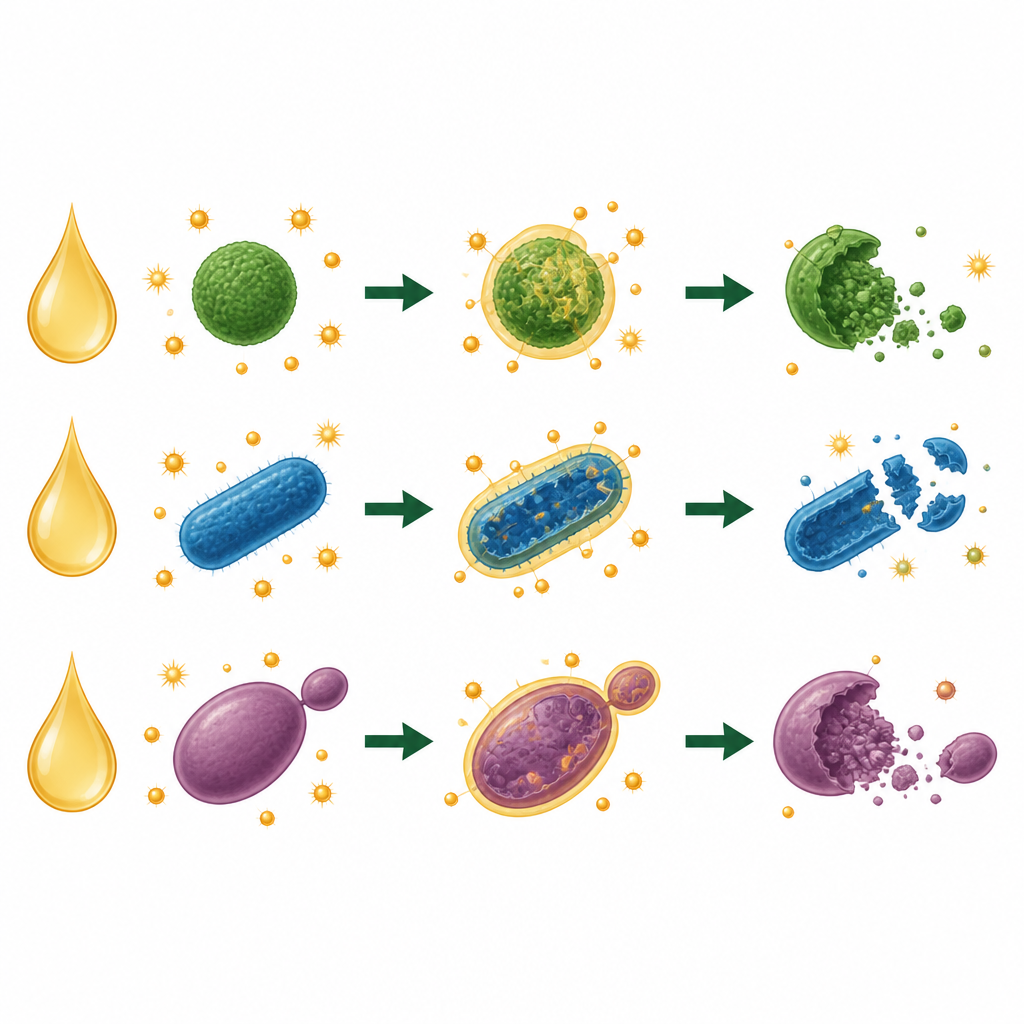
To see how well this clove extract could stop microbes, the team exposed it to a standard set of disease related organisms: two common Gram positive bacteria, two Gram negative bacteria, and a yeast that can cause human infections. At a moderate test dose, the extract produced clear zones where microbes failed to grow, showing activity against all tested species. In several cases, its performance compared well with, or even surpassed, that of one of the reference antibiotics, especially against Escherichia coli. When the scientists measured the minimum amounts needed to halt growth and then to kill the microbes, the values suggested that the extract acts in a “cidal” way, meaning it does not just slow microbes down but can actually eliminate them at higher concentrations.
Fighting harmful molecules as well
Microbes are only half of the story. Many chronic diseases are linked to unstable molecules called free radicals, which can damage cells if they are not neutralized. Using a standard test that tracks the fading of a purple dye in the presence of antioxidants, the researchers found that the clove extract was highly effective at mopping up these radicals. In fact, the amount of extract needed to cut the signal in half was far lower than that of propyl gallate, a widely used synthetic antioxidant. This strong activity lines up with the high levels of flavonoids and related phenolic compounds measured in the extract, which are known to donate electrons and stabilize reactive molecules.
Early look at safety
No potential treatment is useful if it is too toxic, so the team ran a simple screening test using brine shrimp larvae, a standard first step in natural product research. They exposed the tiny creatures to rising doses of the clove extract and compared the results with a powerful cancer drug. The clove extract only reached the point where half of the larvae died at a much higher concentration than the drug, placing it in the “slightly toxic” range by this method. When the researchers compared this threshold with the levels needed to slow or kill microbes, they saw that the active doses were lower than the doses that caused broad toxicity in the shrimp, hinting at a workable safety margin, though human cell tests are still needed.
What this means for everyday life
In simple terms, this study shows that a carefully prepared extract from Sudanese clove buds can both hinder a range of harmful microbes and strongly neutralize damaging reactive molecules, while showing only modest toxicity in an early screening assay. The work does not mean clove extract is ready to be used as a medicine on its own, nor does it replace antibiotics, but it does provide a solid, quantitative foundation for exploring clove based ingredients as natural preservatives, helpers alongside existing treatments, or components of products aimed at protecting tissues from infection and oxidative stress. Further research will need to isolate the most active ingredients, clarify exactly how they work, and confirm safety in human cells and, eventually, in clinical settings.
Citation: Kabbashi, A.S., Shuaib, M.J.A., Shailabi, T.I. et al. Integrated bioactivity assessment of Syzygium aromaticum bud extract from Sudan shows antimicrobial and antioxidant potential. Sci Rep 16, 15562 (2026). https://doi.org/10.1038/s41598-026-44797-7
Keywords: clove extract, antimicrobial activity, antioxidant capacity, natural products, Syzygium aromaticum