Clear Sky Science · en
Resting-state fMRI using hidden Markov models reveals abnormal dynamic brain functional states in asthma
Why breathing troubles involve the brain
Asthma is usually thought of as a disease of the lungs, but anyone living with it knows that the experience is also deeply tied to sensation, attention, and emotion. This study asks a deceptively simple question: when people with asthma are resting quietly in a scanner, does their brain fall into different patterns of activity than those of people without asthma, and could these patterns help explain how they notice and manage their symptoms?
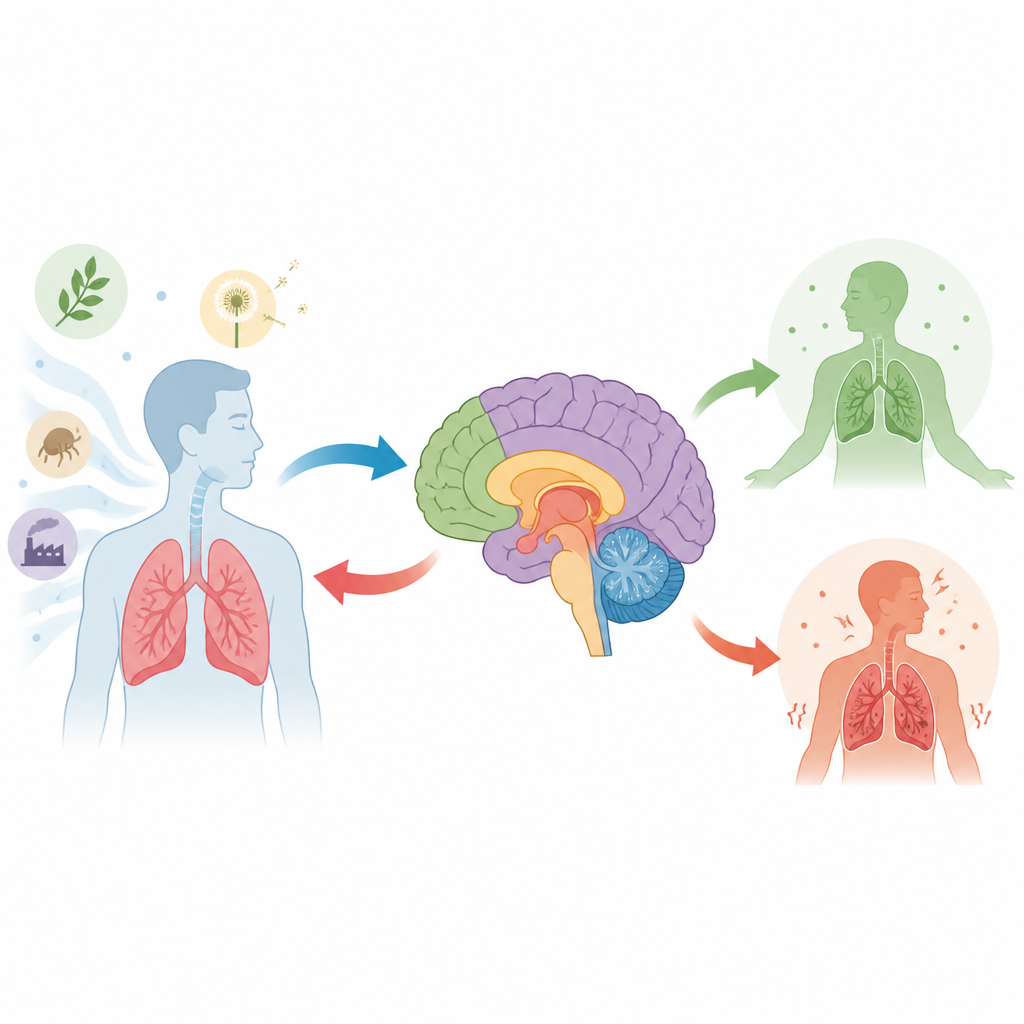
Peeking at the resting brain
The researchers used resting brain scans, where volunteers lie still with their eyes closed, to capture natural patterns of activity across many brain regions at once. They studied 60 adults with stable asthma and 60 healthy peers who were matched in age, sex, and education. Instead of averaging brain activity over the entire scan, they used a statistical tool called a hidden Markov model to break the data into a set of recurring “states” that the brain switches between over seconds. This approach lets scientists ask not only which networks are linked, but also how long the brain stays in each state and how often it jumps from one state to another.
Finding the brain’s recurring activity states
The analysis identified nine distinct functional states, each reflecting a different pattern of communication among well known brain networks such as those involved in movement, attention, self reflection, and sensing the outside world. One state in particular stood out. In this state, brain regions that handle body sensations and top down attention were especially active together. Compared with healthy volunteers, people with asthma spent more total time in this state and stayed in it for longer stretches before switching away. Other states, including some that mix sensory and emotional processing, also showed altered connection strengths and switching patterns in the asthma group.
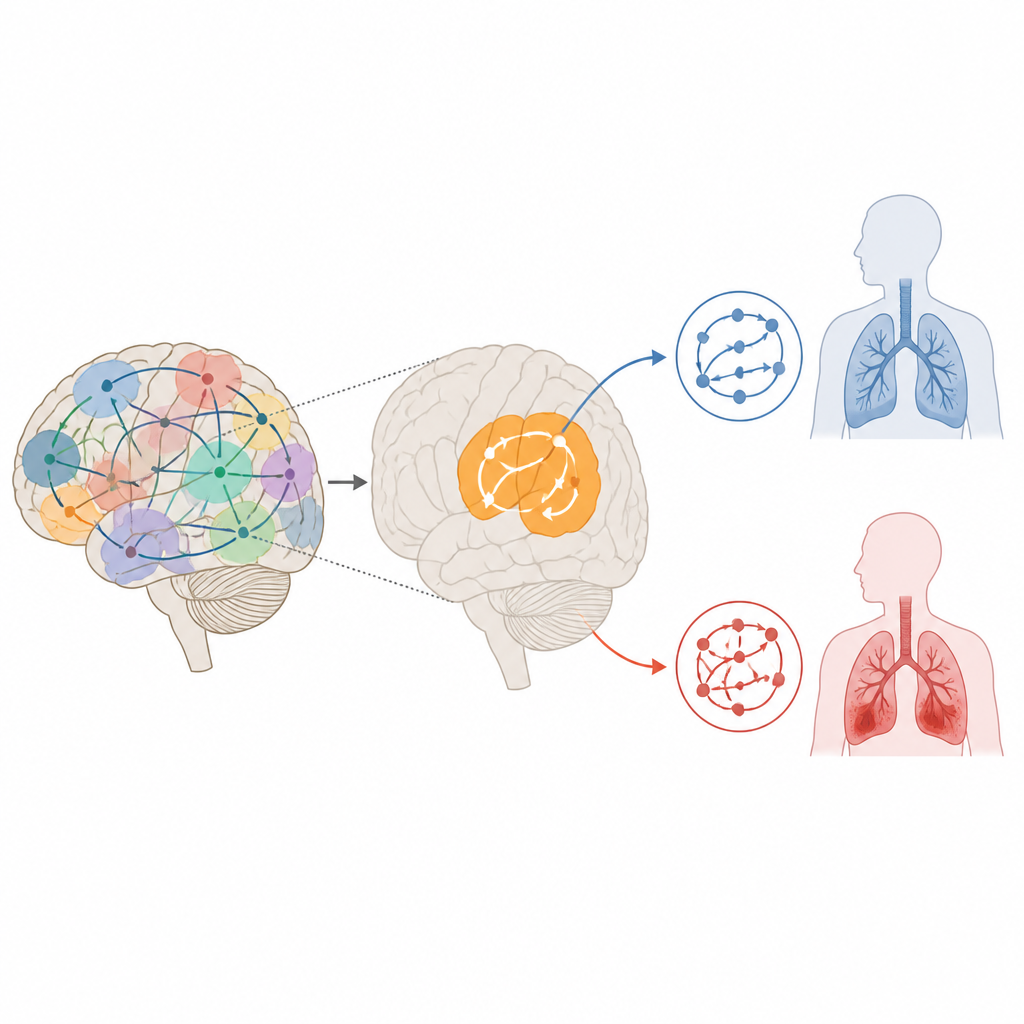
When attention keeps returning to the body
The authors suggest that the sensory focused state may reflect a mode in which the brain closely monitors breathing related signals such as chest tightness or changes in airflow. In asthma, repeated bouts of breathlessness could train the brain to prioritize this monitoring mode, leading to what the authors describe as a “sticking” in sensory heavy states. They also found that once the brain of a person with asthma enters certain sensory states, it tends to linger there and is less likely to transition through intermediate states that might support flexible thinking and emotional regulation. This pattern hints at a landscape where brain activity is pulled toward configurations that anticipate possible breathing problems.
Possible links to how well asthma feels controlled
The study explored how these brain dynamics relate to everyday symptoms. Within the asthma group, people whose brains spent more time in the sensory monitoring state tended to report slightly better asthma control on a standard questionnaire, although this trend did not survive strict statistical correction. No clear links emerged between brain state measures and lung function tests like how much air could be forcefully exhaled. This mismatch suggests that the brain’s shifting patterns may be more closely tied to how patients experience and manage their condition than to the raw mechanics of airflow measured in the clinic.
What these findings may mean for people with asthma
Overall, the work supports the idea that asthma is not only a lung disease but also involves changes in how the brain organizes sensation and attention over time. People with asthma appear to spend more time in brain states tuned to bodily signals and show less flexible switching among states. While the observed brain symptom links are preliminary and do not prove cause and effect, these dynamic patterns could eventually help explain why some individuals feel more burdened by their asthma than others with similar lung function. Future studies may test whether treatments that target attention or body awareness can reshape these brain states and, in turn, improve the lived experience of asthma.
Citation: Xu, C., Wei, X. Resting-state fMRI using hidden Markov models reveals abnormal dynamic brain functional states in asthma. Sci Rep 16, 15315 (2026). https://doi.org/10.1038/s41598-026-44794-w
Keywords: asthma, brain networks, resting state fMRI, dynamic connectivity, symptom perception