Clear Sky Science · en
Phylogenetic relationship based on DNA barcodes and comparative analysis of phytochemical contents among Rhynchostylis orchids in Thailand
Why these orchids matter
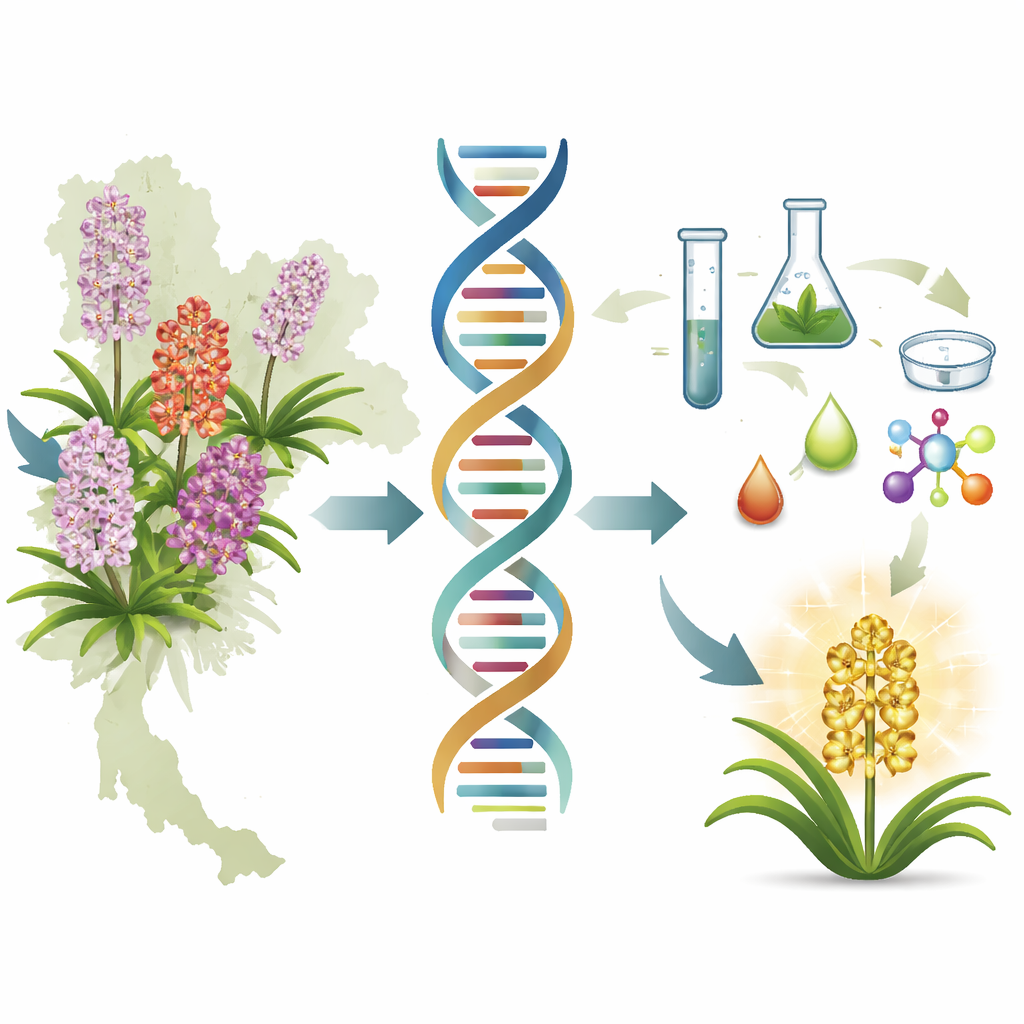
Foxtail orchids, with their cascading, fragrant blooms, are more than just showpieces in tropical gardens. In Thailand, they support a major flower industry and also harbor natural chemicals with potential health benefits. Yet even experts struggle to tell some look‑alike species apart, especially when flowering is brief and plants are heavily hybridized. This study shows how combining DNA tools with chemical analysis can untangle that confusion and spotlight orchid types with especially strong antioxidant properties.
Orchids that are hard to tell apart
Thailand is home to hundreds of orchid species, including the small but important Rhynchostylis group, commonly called foxtail orchids. Several species and many cultivated forms share very similar leaves, roots, and flower spikes. Their appearance also shifts with changing light, temperature, and growing conditions. Because these plants bloom only once or twice a year, and for a short time, growers and regulators often have to guess which species they are looking at. That guesswork matters: different species carry different commercial value, medicinal potential, and conservation status.
Reading orchid identity from DNA
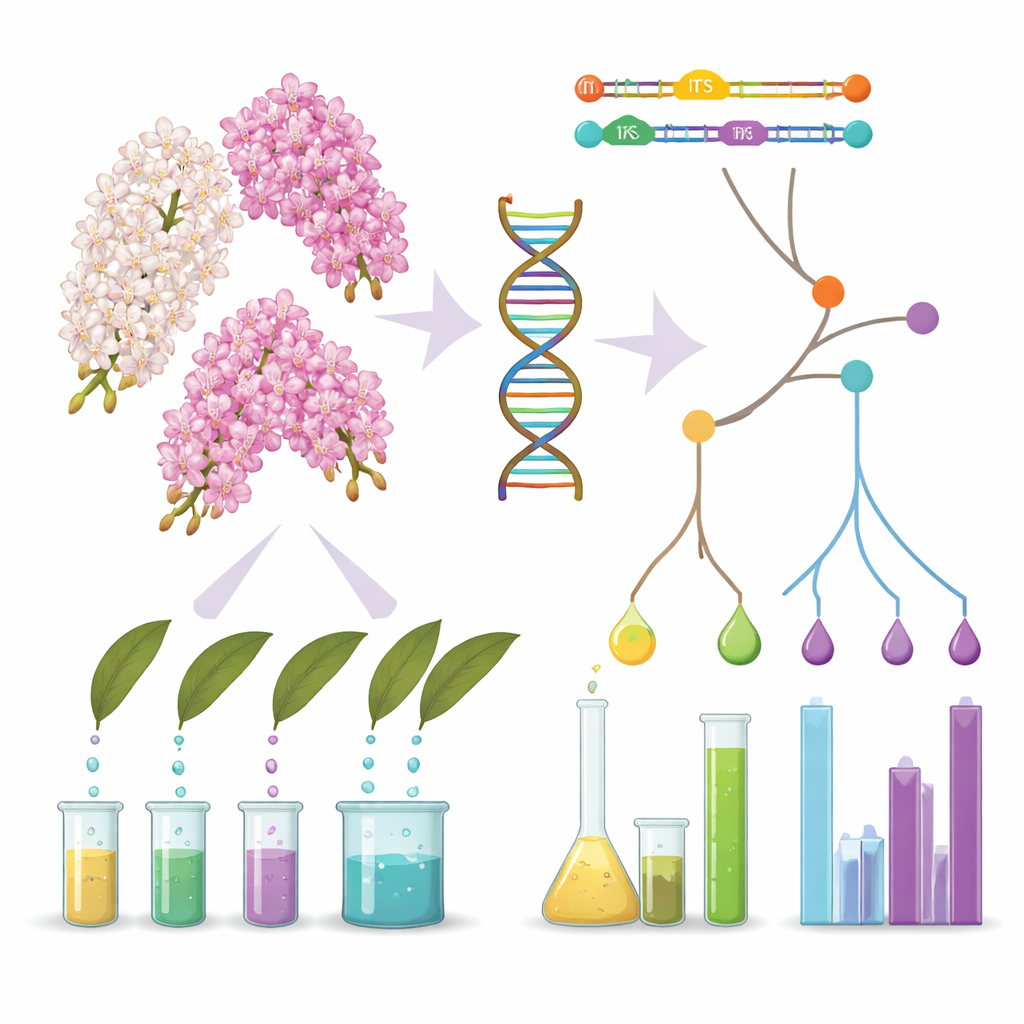
To get past the limits of looks alone, the researchers turned to DNA barcoding—using short, standard stretches of genetic material as ID tags. They collected leaves from nine Rhynchostylis accessions in northeastern Thailand, covering three species and several popular varieties and hybrids, plus one close relative from a different genus as a comparison. From each sample they sequenced two regions of the genome, known as ITS (from the nucleus) and matK (from the chloroplast. By comparing these sequences with online databases and building family trees, they could see which plants were truly distinct species and which were just different forms of the same lineage.
Family trees behind the flowers
The DNA data showed clear patterns. Both genetic markers cleanly separated two species—Rhynchostylis retusa and Rhynchostylis coelestis—from the cluster built around Rhynchostylis gigantea, the most widely cultivated foxtail orchid in Thailand. Within that R. gigantea complex, wild and cultivated forms were closely related, but the nuclear ITS region was better at teasing apart subtle differences among varieties and hybrids. The chloroplast matK region grouped some cultivated forms together in ways that hint at hybrid origin and shared breeding history. Taken together, the two markers offered complementary views that, when combined with flower traits, sharpened species boundaries that had long been blurred.
Hidden chemistry in orchid leaves
The team also wanted to know whether these genetic differences lined up with differences in useful plant chemicals. They prepared ethanol extracts from orchid leaves and measured three things: total phenolic content, total flavonoid content, and antioxidant activity using a standard free‑radical test. All three measures varied widely among the samples. One cultivated form, R. gigantea ‘Chang Phlai’, consistently stood out, with the richest levels of phenolic and flavonoid compounds and the strongest antioxidant capacity. Other varieties and species showed moderate or low values, revealing a chemical diversity that paralleled, but did not exactly mirror, the genetic patterns.
What this means for growers, medicine, and conservation
By pairing DNA barcodes with traditional flower descriptions and simple chemical tests, this work provides a practical toolkit for telling similar foxtail orchids apart and for spotting particularly promising lines. It confirms that R. retusa and R. coelestis are distinct from the R. gigantea complex, while suggesting that many named forms of R. gigantea differ more in appearance and chemistry than in deep ancestry. Importantly, it highlights ‘Chang Phlai’ as a genotype with especially strong antioxidant potential. For orchid breeders, herbal researchers, and conservation planners, such integrated evidence can guide more accurate labeling, protect wild genetic diversity, and support sustainable use of these striking and economically important orchids.
Citation: Saengprajak, J., Phetsom, J., Sangdee, A. et al. Phylogenetic relationship based on DNA barcodes and comparative analysis of phytochemical contents among Rhynchostylis orchids in Thailand. Sci Rep 16, 13992 (2026). https://doi.org/10.1038/s41598-026-44785-x
Keywords: Rhynchostylis orchids, DNA barcoding, plant phylogeny, antioxidant phytochemicals, orchid conservation