Clear Sky Science · en
Core-shell molecularly imprinted polymer for selective recognition and detection of S-metolachlor in aqueous samples
Why cleaner water needs smarter filters
Pesticides help farmers grow crops, but traces of these chemicals often end up in rivers, lakes, and even tap water. Finding and measuring them usually requires large, expensive lab machines and skilled staff. This study explores a simpler tool: tiny engineered beads that can seek out and grab one widely used weed killer, S-metolachlor, from water, making it easier to detect and remove.
Building a lock that fits one key
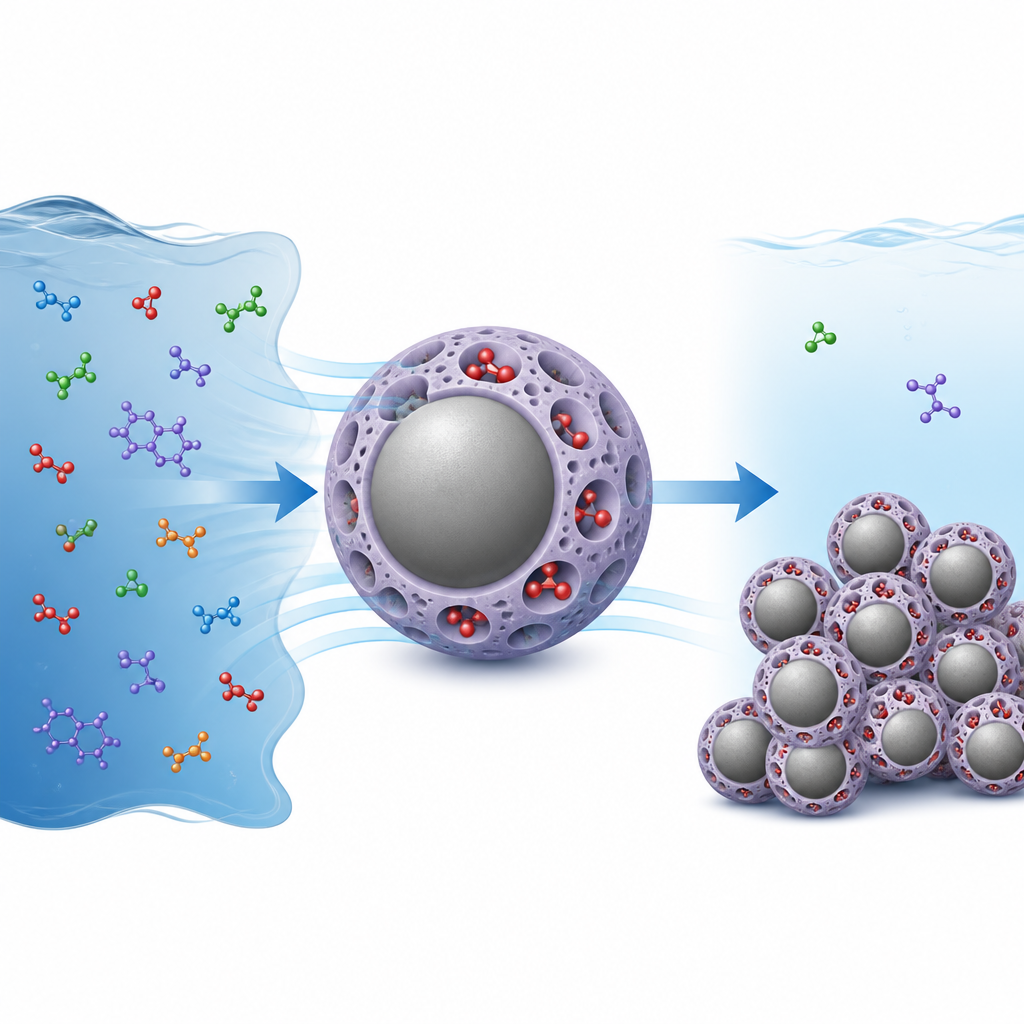
The researchers designed special plastic beads that work like a lock made to fit just one key. During production, they mixed the plastic-forming ingredients with S-metolachlor molecules. As the plastic hardened around these molecules, it formed countless tiny cavities that matched the herbicide in shape and chemistry. After the herbicide was washed out, the beads were left with empty “locks” that could later recognize and hold only molecules that closely resemble S-metolachlor.
A core and shell that work together
To make the material more efficient, the team built the beads with a two-part structure: a solid inner core of modified PVC and a thin outer shell that contains the selective cavities. This core shell design gives the particles a more uniform shape, a better-controlled surface, and more accessible binding sites than traditional bulk plastics. The scientists used tools such as electron microscopes, infrared light measurements, and heating tests to confirm that the shell was firmly attached, that the structure was stable, and that the surface contained the expected chemical groups.
Picking out one herbicide from a crowded mix
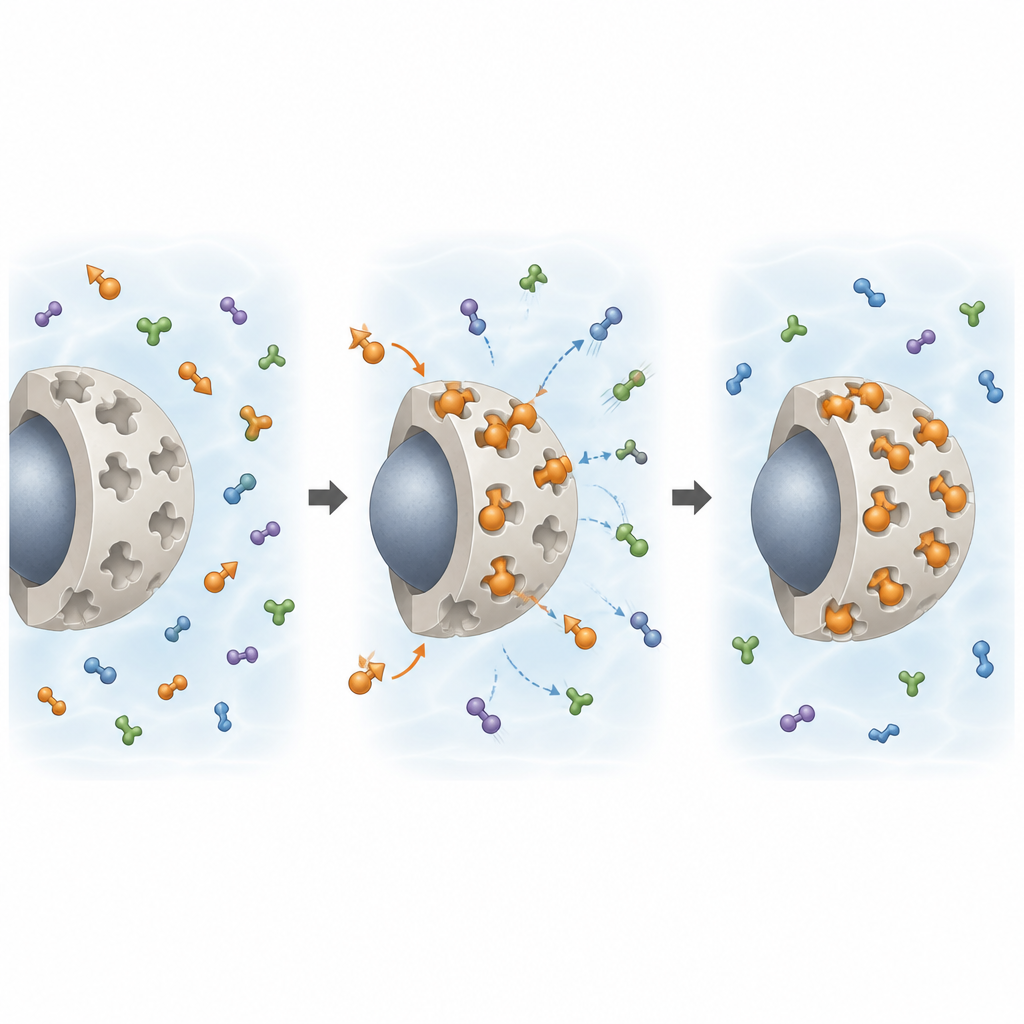
The team then tested how well these beads could pull S-metolachlor out of water. In simple test solutions, the imprinted beads captured much more of the herbicide than similar beads made without the imprinting step. Even in mixtures that also contained other common weed killers, the new material bound S-metolachlor more than twice as strongly as the competing chemicals. The beads worked over a wide range of acidity levels and were especially effective in conditions similar to real tap water.
Reusable beads for faster testing
The researchers packed the beads into small solid phase extraction columns, a common tool used before lab analysis. They found that just ten minutes of contact time was enough for the imprinted beads to grab most of the S-metolachlor from water flowing through the column. After use, the herbicide could be washed out with simple ethanol and the same material reused at least three times with little loss of performance. This reusable behavior, combined with the use of water instead of harsh organic solvents during production, supports the idea of a more environmentally friendly testing method.
What this means for everyday water safety
In plain terms, the study shows that these custom made beads act like selective sponges that can find and hold one troublesome herbicide even in complex water samples. They make it easier to concentrate S-metolachlor before measurement, speed up testing, and reduce the amount of chemicals needed in the lab. While they are not a full water treatment system by themselves, these smart filters could become an important part of routine checks that help keep drinking water safer and cleaner.
Citation: Rapacz-Kinas, D., Smolińska-Kempisty, K. & Wolska, J. Core-shell molecularly imprinted polymer for selective recognition and detection of S-metolachlor in aqueous samples. Sci Rep 16, 14750 (2026). https://doi.org/10.1038/s41598-026-44780-2
Keywords: S-metolachlor, molecularly imprinted polymers, water pollution, pesticide detection, core shell polymers