Clear Sky Science · en
A Chain mediation model linking experiential avoidance, cognitive flexibility, negative emotions, and sleep quality in university students
Why this matters for student life
Many university students lie awake at night, thoughts racing, phones glowing, and worries piling up. This study looks at a subtle mental habit called “experiential avoidance” – the tendency to run away from uncomfortable thoughts and feelings – and asks how it might quietly undermine students’ sleep. By tracing how avoidance affects flexible thinking and emotional health, the researchers reveal a chain of psychological links that may explain why some young adults struggle to get a good night’s rest, and what kinds of interventions could help.
Turning away from uncomfortable feelings
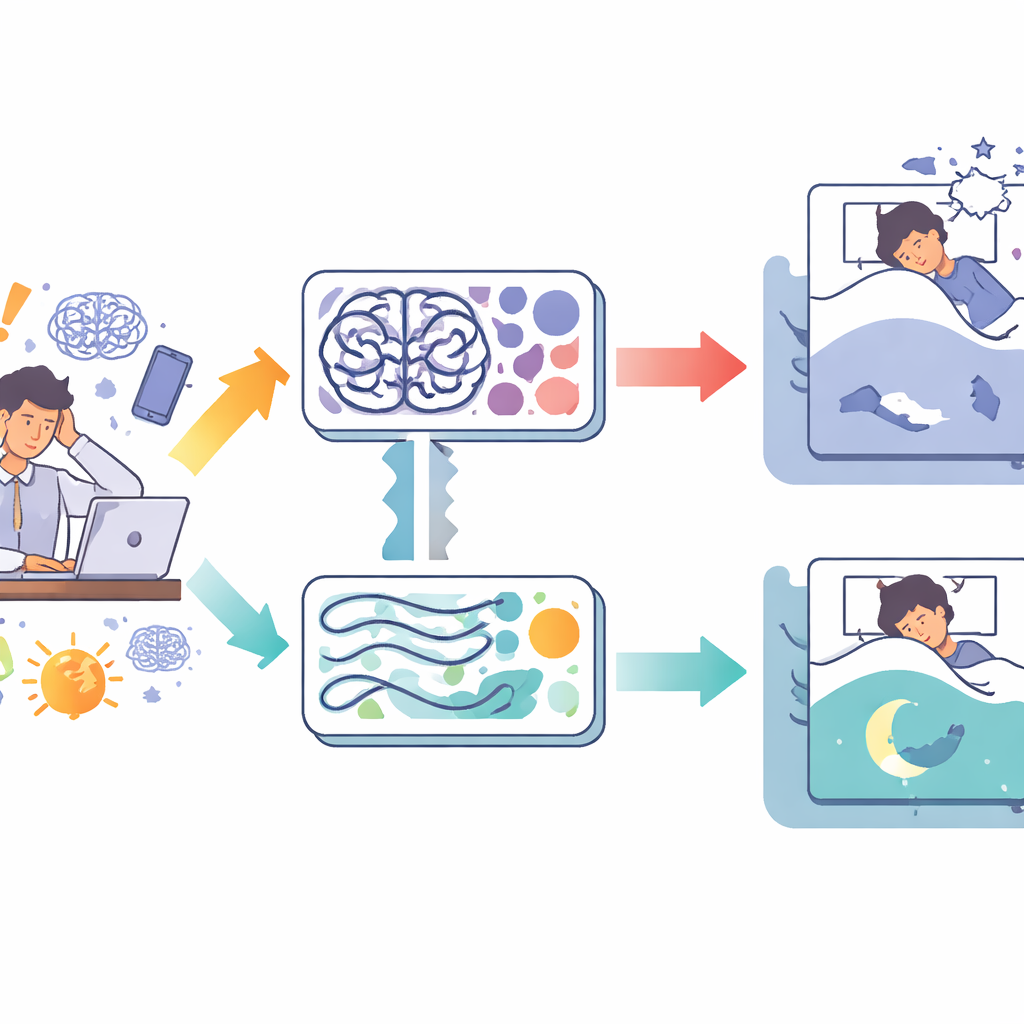
Experiential avoidance is the habit of trying to push away or control distressing inner experiences, such as painful memories, anxiety, or sadness. Instead of facing these feelings, people distract themselves, suppress thoughts, or avoid situations that might trigger discomfort. The authors note that while this can feel helpful in the moment, it often backfires. Avoidance keeps negative experiences mentally “alive,” drains mental energy, and can raise stress levels. At bedtime, these efforts to suppress or dodge worry can make the mind more alert rather than calmer, tightening the link between night-time and distress and setting the stage for poor sleep.
How thinking habits and mood fit into the picture
The study highlights two key pieces in this puzzle: cognitive flexibility and negative emotions. Cognitive flexibility is the ability to shift perspectives and change strategies when circumstances change. Students who rely heavily on avoidance may fall into rigid thought patterns – for example, repeatedly interpreting events in the same negative way – which erodes this flexibility. At the same time, a pattern of avoidance can feed anxiety and depression, as people become more fearful of their own emotions and less confident in their ability to cope. Together, less flexible thinking and a heavier emotional load make it harder to wind down, stay asleep, and feel rested.
What the researchers did with real students
To test these ideas, the team surveyed 833 university students in southern China. Participants completed standard questionnaires measuring how strongly they tend to avoid difficult experiences, how flexible their thinking is, how much anxiety and depression they have felt recently, and how they rate their overall sleep quality. The researchers then used statistical models to see how these factors relate. Even after accounting for age, gender, and other basic characteristics, students who scored higher on experiential avoidance generally reported worse sleep. They also tended to show less cognitive flexibility and more negative emotions, which in turn were linked to poorer sleep.
The chain reaction inside the mind
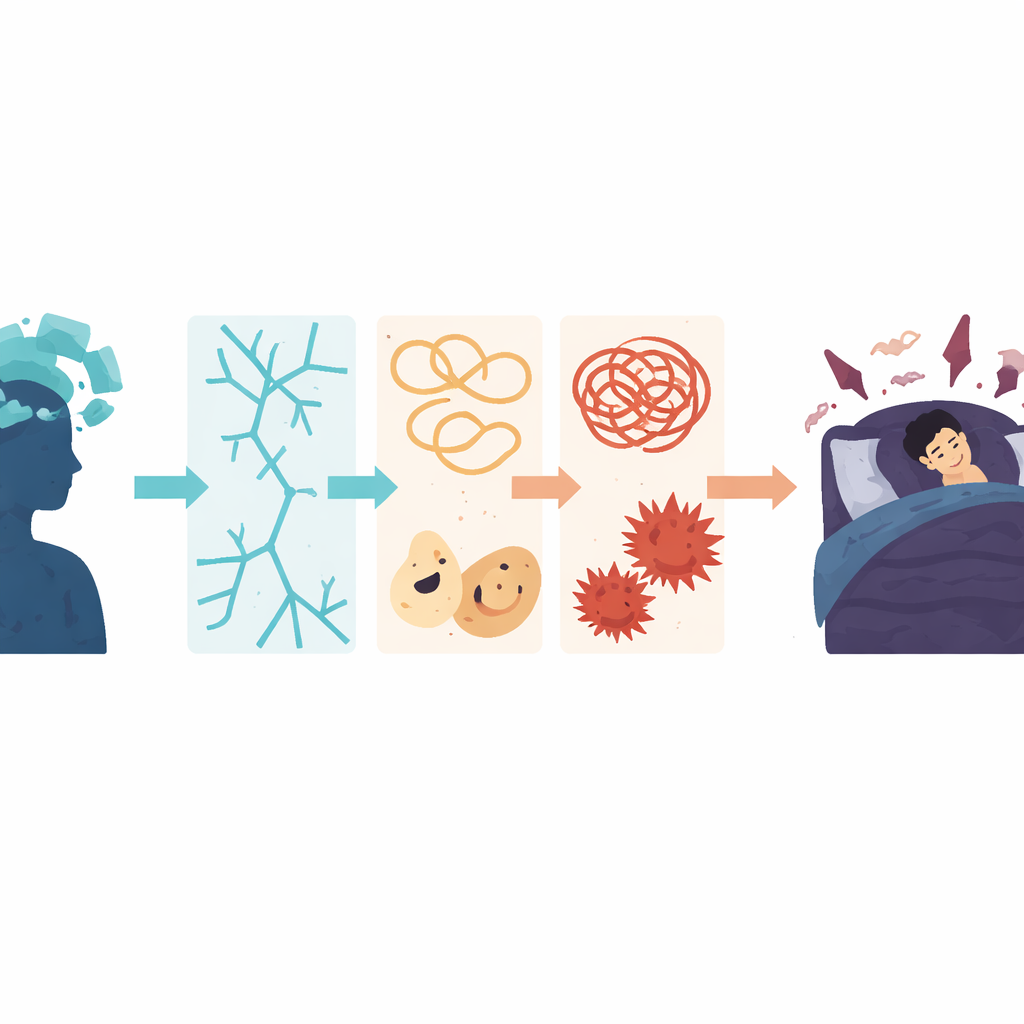
The analysis revealed not just simple links but a chain reaction. First, higher avoidance was tied to more rigid thinking. Second, both avoidance and low flexibility were connected to higher anxiety and depression. Third, these negative emotional states were strongly associated with worse sleep quality. When all of these pieces were put into a single model, nearly half of the overall link between avoidance and sleep ran through this sequence of reduced flexibility and heightened negative emotion. In other words, trying hard not to feel bad may lock thinking into narrow grooves, allow anxiety and sadness to build, and ultimately disturb sleep.
What this means for helping students sleep better
The findings suggest that improving student sleep is not just about turning off screens or going to bed earlier, but also about how young people relate to their own thoughts and feelings. Approaches such as Acceptance and Commitment Therapy, mindfulness, or other practices that encourage facing rather than fleeing inner experience may help loosen rigid thinking and reduce emotional distress. By gently increasing openness to uncomfortable feelings, and strengthening flexible ways of responding to them, such interventions could ease pre-sleep arousal and support more stable, restorative sleep. For students navigating academic pressure and digital overload, learning to stop fighting every difficult emotion may be a surprisingly powerful step toward better nights and healthier days.
Citation: Jiang, Y., Peng, T., Wang, N. et al. A Chain mediation model linking experiential avoidance, cognitive flexibility, negative emotions, and sleep quality in university students. Sci Rep 16, 13998 (2026). https://doi.org/10.1038/s41598-026-44776-y
Keywords: sleep quality, university students, experiential avoidance, anxiety and depression, cognitive flexibility