Clear Sky Science · en
Reproductive strategies of the most geographically isolated Trachylepis support predictions of the island syndrome
Life on a Remote Island
On a tiny volcanic archipelago far off the coast of Brazil lives a small brown lizard that has quietly rewritten the rules of family life. This Noronha skink, Trachylepis atlantica, is the most isolated member of its group anywhere in the Atlantic. By comparing its breeding habits with those of related lizards on the mainland, the authors show how extreme isolation can push animals toward having fewer, larger young less often—a strategy that helps them in calm times but may leave them vulnerable as human-driven changes accelerate.
Islands That Change the Rules
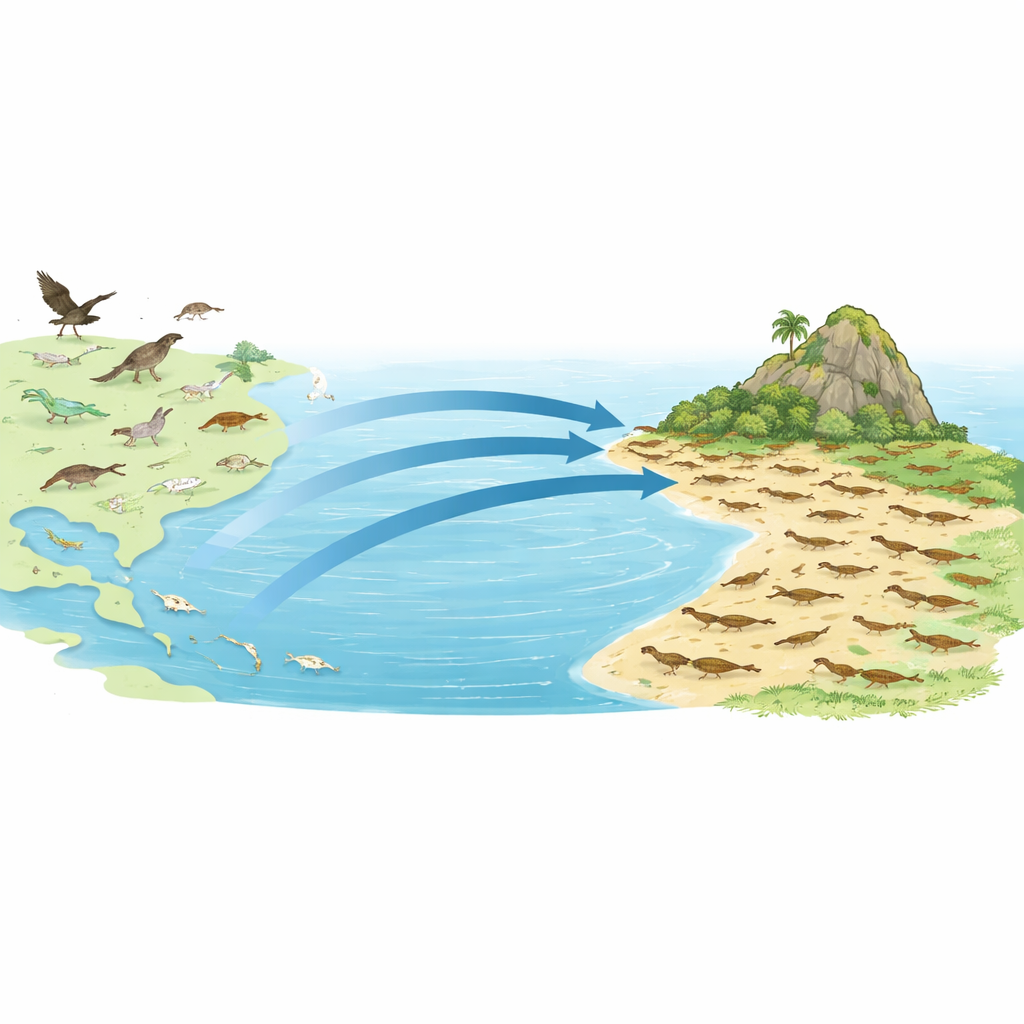
Biologists have long noticed that animals on islands often look and live differently from their mainland relatives, a collection of patterns known as the "island syndrome." Islands usually have fewer species, fewer predators, and milder climates. That combination lets resident animals become more abundant and bolder, while competition with their own kind becomes more intense. Theory predicts that, under these conditions, many island animals should shift to a slower lifestyle: they mature later, breed less often, and invest more in each offspring instead of producing large numbers of young.
A Skink Cut Off by the Sea
The Noronha skink is an ideal test case for these ideas. It lives only on the Fernando de Noronha Archipelago, more than 500 kilometers from mainland South America and over 2,500 kilometers from the African region where its closest relatives occur. Earlier work had already shown typical island traits in this lizard: it is very common, unusually tame, and eats a wide variety of foods, including a surprising amount of plant material. What was missing was a clear picture of how and when it reproduces, and how that compares with other species of its genus, Trachylepis, scattered across Africa and nearby islands.
Peering Inside to Track the Seasons
To uncover the skink’s breeding rhythm, the researchers examined 67 individuals from the wild and museum collections, along with a long-monitored pair kept in a zoo. By dissecting males and females and analyzing their reproductive organs under the microscope, they could tell when sperm were being produced, when eggs were developing, and when females were carrying shelled eggs ready to be laid. They then compared these measurements with published information on more than 50 other Trachylepis species, allowing them to see where the island skink falls along a spectrum of clutch sizes, egg sizes, and breeding schedules.
Fewer, Bigger Eggs on a Tight Schedule
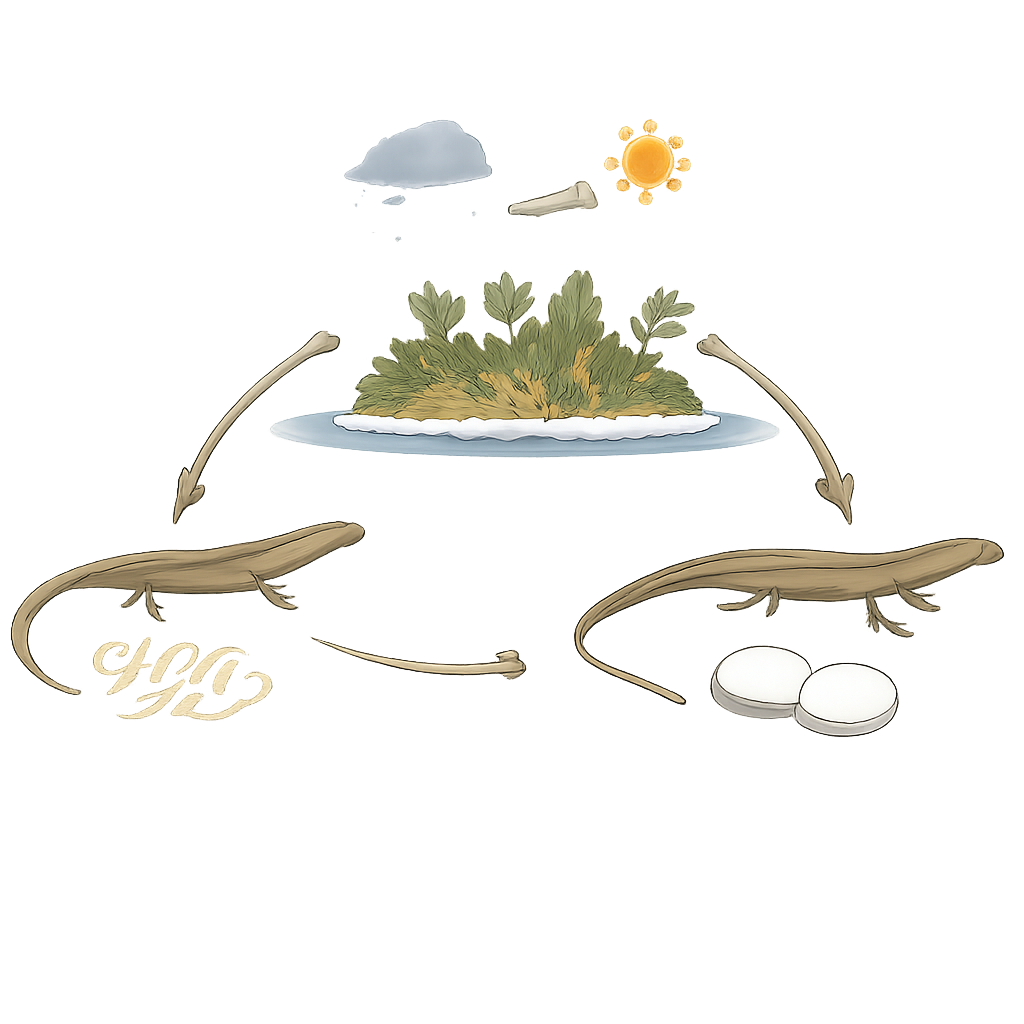
The Noronha skink turned out to be an extreme case of the island lifestyle. Both males and females concentrate their breeding in the long dry season, with active reproduction lasting about seven months—a much shorter window than in most related tropical species, which often breed year-round. Wild females almost always carried only two developing follicles or two eggs at a time, giving the smallest clutches relative to body size in the entire genus, but each egg was the largest relative to the mother’s size. Field data suggest that females reproduce only every other year, or even every third year, while the zoo female, kept in a food-rich, low-stress setting, produced larger and more frequent clutches. This contrast hints that the skink’s low output in nature reflects energy limits and crowding rather than rigid biological ceilings.
Why Island Life Favors Big Babies
The authors argue that several island forces jointly shape this slow, high-investment strategy. Historically, the skink seems to have faced few natural predators and little competition from other lizard species, but intense competition with its own kind, including adults attacking eggs and young. Larger hatchlings may be better able to withstand such pressures, favoring big eggs and small clutches. At the same time, the island’s climate brings a brief, intense rainy season followed by a long dry spell, so food peaks only for a short period each year. Females likely store energy during the wet months and channel it into reproduction early in the dry season, timing hatching to coincide with rising resources. The fact that closely related island species also tend to breed in the dry season suggests that evolutionary history, not just local climate, helps set the schedule.
A Delicate Balance in a Changing World
In everyday terms, the Noronha skink has adopted a "slow and careful" reproductive strategy: it raises a few robust offspring rather than many fragile ones, and it does so less often. That approach has probably worked well for millennia in a relatively safe, stable setting. But it also means the population rebounds slowly from losses. With new threats such as invasive predators and human-driven habitat changes already affecting the archipelago, these skinks may be less resilient than their "Least Concern" status implies. Protecting this unusual lizard—and the evolutionary story it represents—will require conservation plans that take its slow pace of life into account.
Citation: Migliore, S.N., Braz, H.B., Gasparotto, V.P.O. et al. Reproductive strategies of the most geographically isolated Trachylepis support predictions of the island syndrome. Sci Rep 16, 14190 (2026). https://doi.org/10.1038/s41598-026-44759-z
Keywords: island syndrome, reproductive strategies, Noronha skink, life history, oceanic islands