Clear Sky Science · en
Nobiletin enhances Doxorubicin sensitivity in osteosarcoma through ER stress-induced apoptosis mediated by the PI3K/AKT pathway
Why this matters for bone cancer patients
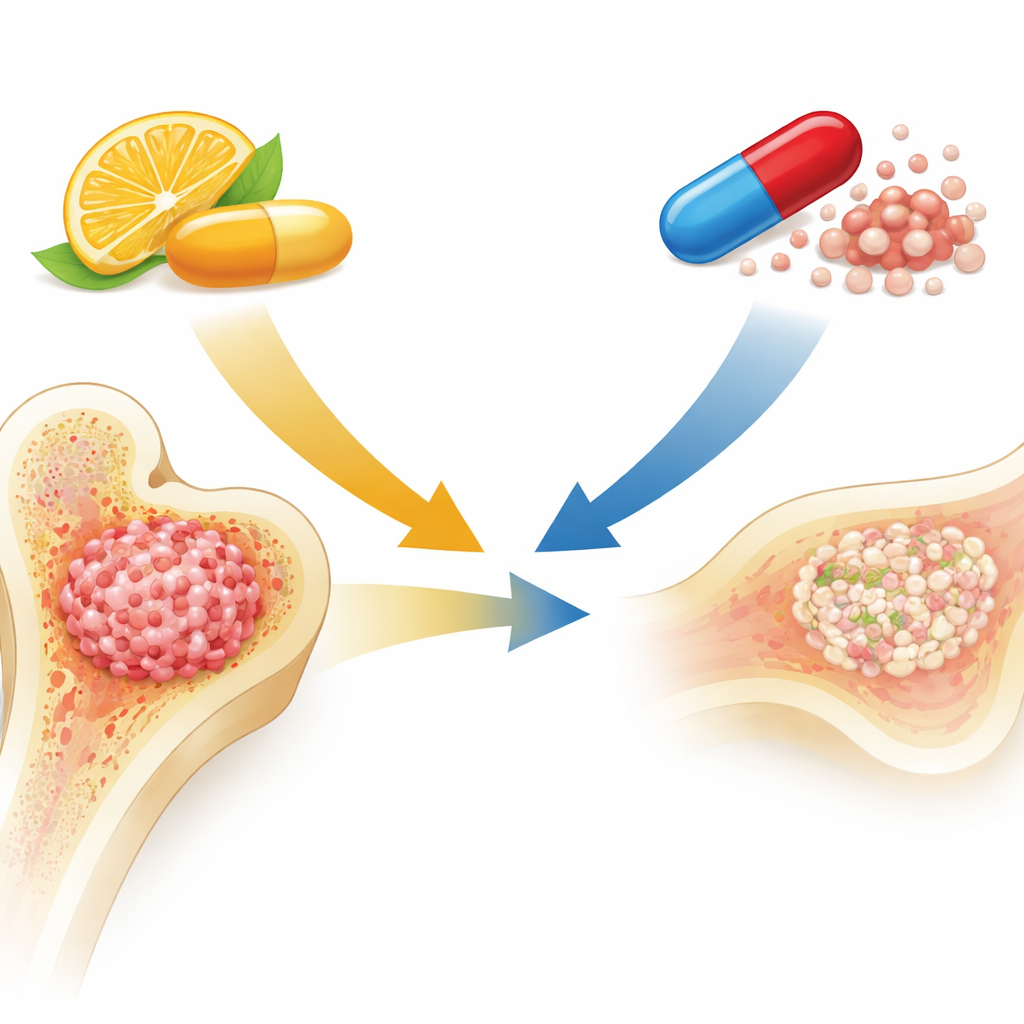
Osteosarcoma is an aggressive bone cancer that mostly strikes children and teenagers. Doctors have relied on the chemotherapy drug doxorubicin for decades, but many tumors gradually stop responding, while patients endure serious side effects. This study explores whether a natural compound from citrus peels, called nobiletin, can make osteosarcoma cells more vulnerable to doxorubicin, potentially allowing treatment to work better without simply increasing the dose.
A citrus compound joins the fight
Nobiletin belongs to a family of plant chemicals found in oranges and other citrus fruits that have drawn attention for their anti-cancer properties in laboratory studies. On its own, nobiletin can slow the growth of several tumor types, but how it might help standard chemotherapy in bone cancer was unclear. The researchers focused on osteosarcoma cells grown in the lab, using two commonly studied human cell lines, and on mice implanted with these cancer cells, to test whether combining nobiletin with doxorubicin would curb tumor growth more effectively than either treatment alone.
Stronger together than alone
In cell culture experiments, the team exposed osteosarcoma cells to different doses of nobiletin and doxorubicin, separately and together. Using growth and migration tests, they found that the combination treatment inhibited cell proliferation and movement much more strongly than either drug by itself. A computational tool that evaluates drug interactions confirmed that the pair behaved synergistically: the joint effect was greater than the sum of their parts. At specific concentrations, nobiletin and doxorubicin together drastically reduced the cells’ ability to form colonies and to spread across a surface, both hallmarks of aggressive cancer behavior.
Pushing cancer cells over the edge
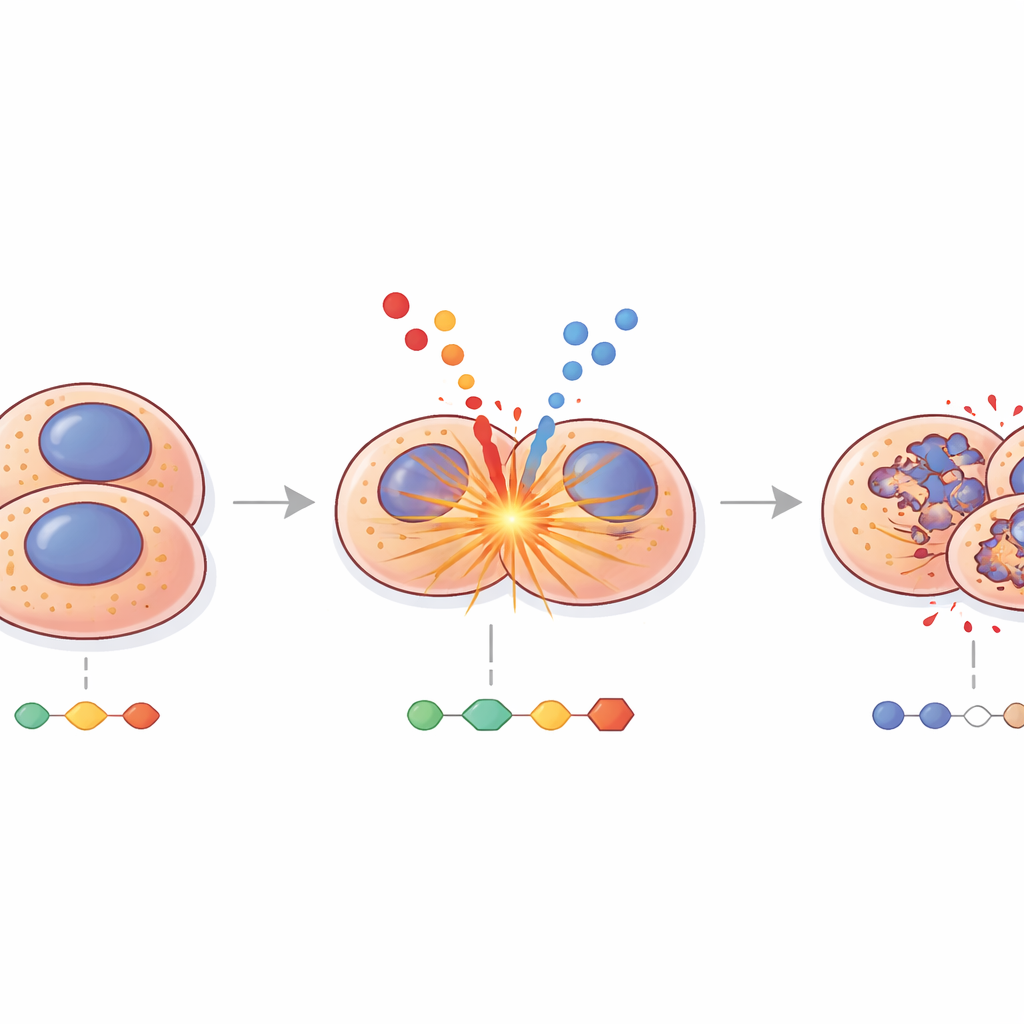
The researchers then looked at how the combined treatment actually kills osteosarcoma cells. They measured apoptosis, a form of programmed cell death in which cells essentially dismantle themselves in an orderly fashion. Flow cytometry showed that far more cells underwent apoptosis when given both drugs. At the molecular level, proteins that promote cell death, such as Bax and caspase-3, increased, while a key survival protein, Bcl-2, decreased. These shifts indicate that the drug pair does not just poison cells; it actively tips the internal balance toward self-destruction.
Triggering stress inside the cell’s factories
Digging deeper, the scientists focused on a cellular structure called the endoplasmic reticulum, a network that helps fold and process newly made proteins. When overloaded, it enters a state known as stress, which can trigger apoptosis if not resolved. By analyzing gene activity data and protein markers, the team found that osteosarcoma progression is closely tied to this stress response and to a major growth-control signaling route called the PI3K–AKT pathway. In their experiments, the nobiletin–doxorubicin combination sharply boosted several classic stress markers inside the endoplasmic reticulum while simultaneously dialing down PI3K and AKT signaling. When they added a chemical that relieves this internal stress, cancer cells regained viability and the death signals weakened, showing that stress in this cellular “factory” is a key driver of the treatment’s power.
Testing the approach in living animals
To see whether these effects extend beyond dishes of cells, the researchers used a mouse model in which human osteosarcoma cells grow as tumors under the skin. Mice treated with either nobiletin or doxorubicin alone showed some tumor shrinkage, but those receiving both drugs had much smaller tumors and lower tumor weights. Importantly, mice given doxorubicin alone lost more body weight, a rough sign of toxicity, whereas animals on the combination therapy were better able to maintain their weight. Tumor samples from the combined-treatment group showed elevated markers of internal stress and apoptosis, and reduced activity of the PI3K–AKT pathway, mirroring the cell culture findings.
What this could mean for future care
To a non-specialist, the central message is that a natural compound from citrus peels can make a standard chemotherapy drug work better against an aggressive bone cancer in laboratory and animal models. By heightening internal stress in cancer cells and switching off a key growth signal, nobiletin appears to push osteosarcoma cells past their breaking point, leading them to self-destruct while possibly limiting some side effects. Although much more work, including clinical trials, is needed before this strategy could reach patients, the study points to a promising way to pair plant-derived molecules with existing drugs to overcome resistance and improve treatment outcomes.
Citation: Liu, F., Yuan, D., Zhang, Z. et al. Nobiletin enhances Doxorubicin sensitivity in osteosarcoma through ER stress-induced apoptosis mediated by the PI3K/AKT pathway. Sci Rep 16, 14124 (2026). https://doi.org/10.1038/s41598-026-44757-1
Keywords: osteosarcoma, chemotherapy resistance, nobiletin, doxorubicin, endoplasmic reticulum stress