Clear Sky Science · en
Refining the diagnosis of house dust mite-induced allergic rhinitis: optimizing SPT and sIgE cutoff values as predictors of clinically relevant allergy
Why this dusty problem matters
Many people blame a constant stuffy or itchy nose on “dust allergies,” but figuring out exactly what is going on is not always simple. This study looks at adults whose noses react to house dust mites—tiny creatures that live in bedding and soft furnishings—and asks a practical question: how can doctors tell, from quick office tests, who is truly allergic and who is merely sensitized but not actually sick from these mites? Getting that answer right matters for everyday comfort and for deciding who should go on long, costly allergy treatments.
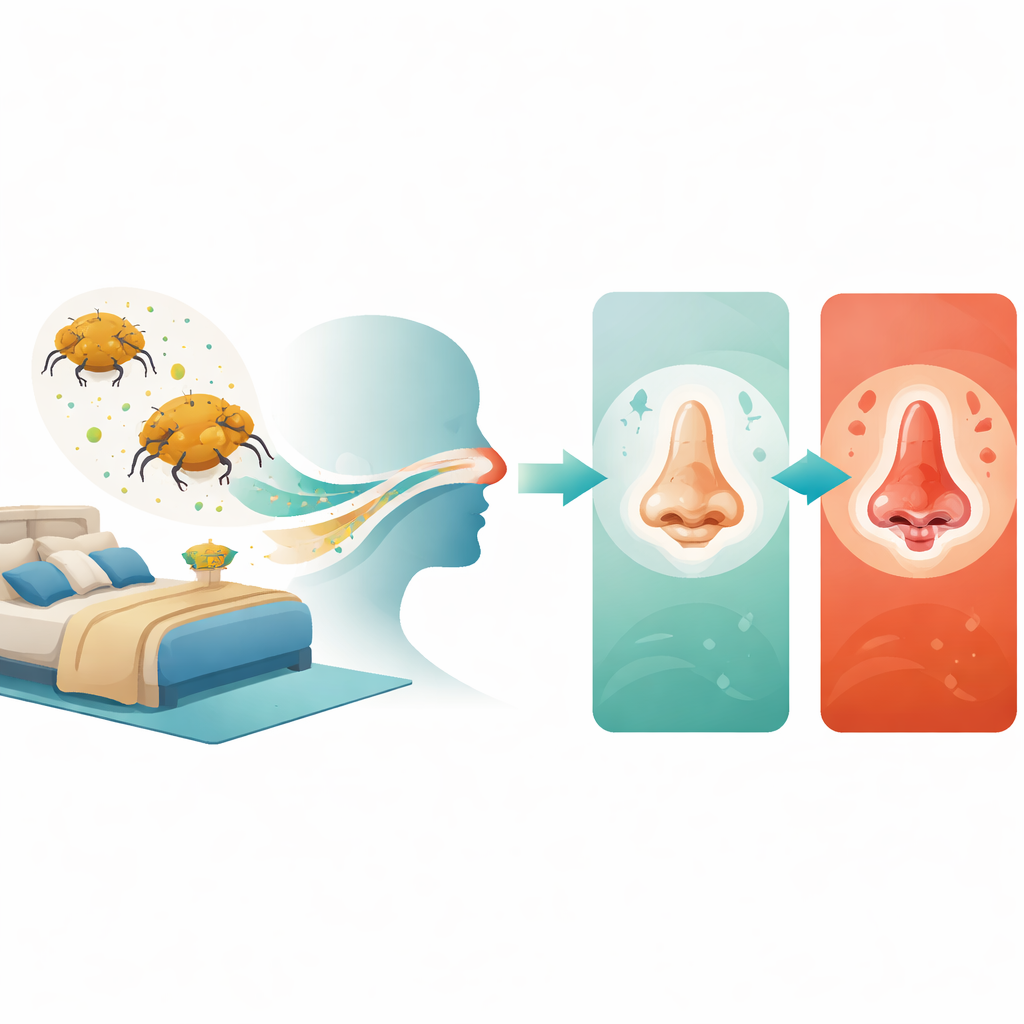
From bedroom dust to runny nose
Allergic rhinitis is the medical term for allergy-driven nasal symptoms such as sneezing, congestion and itching. House dust mites, especially two common species called Dermatophagoides pteronyssinus and Dermatophagoides farinae, are among the main culprits worldwide. Doctors usually start with a patient’s story and then use two simple lab tools: the skin prick test, which measures how strongly the skin reacts to a pinpoint of allergen, and a blood test that measures specific IgE antibodies against mite proteins. These tests reveal whether the immune system recognizes mite allergens, but recognition alone does not always mean that mites are the real cause of a person’s symptoms.
The challenge of telling signal from noise
The most direct way to prove that mites are driving a person’s nasal problems is the nasal provocation test. In this procedure, small, carefully controlled amounts of mite extract are sprayed into the nose, and changes in symptoms and airflow are measured. If the nose reacts strongly, the allergy is considered clinically relevant. However, this gold-standard test is slow, uncomfortable for some patients and not widely available. As a result, many clinics rely on skin and blood tests alone, using a long-accepted “positive” line on the lab report. The trouble is that some people cross that line yet remain symptom-free, while others with bothersome noses never reach it, leading to both over- and under-diagnosis.
Putting common tests to the test
In this study, 122 adults with diagnosed allergic rhinitis underwent all three assessments: skin prick tests, mite-specific IgE blood tests and nasal provocation tests with each mite species. The researchers then asked a key question: for the skin and blood tests, what cut-off values best matched the nasal provocation results? Using statistical tools that weigh how many true allergies are caught versus how many false alarms are avoided, they compared the usual low cut-off to higher thresholds. They found that raising the bar for a “positive” skin wheal and for IgE levels improved the ability of these tests to correctly identify those whose noses truly reacted when challenged.
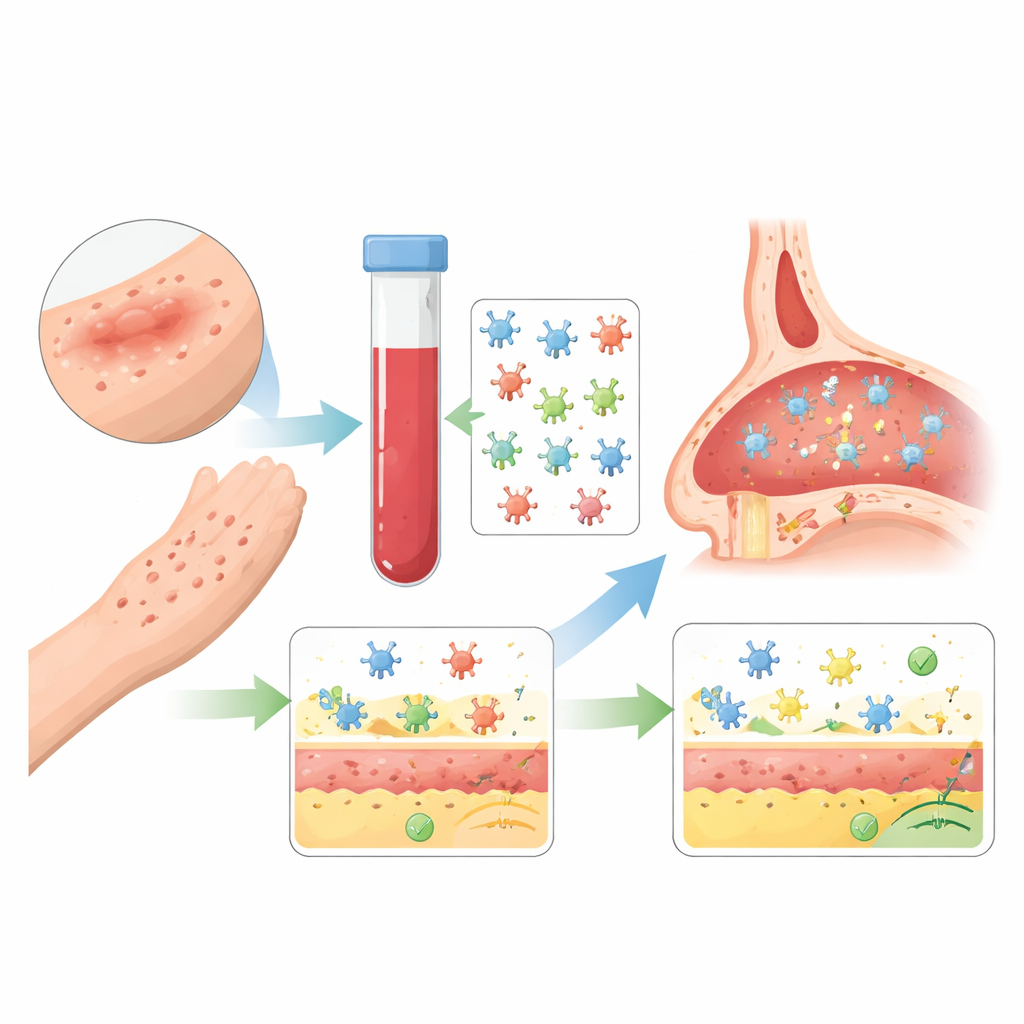
Sharper lines for clearer decisions
For the main mite species, modestly higher cutoffs—around four millimeters for the average skin wheal and about one unit for the IgE blood level—greatly increased the chance that a positive result really meant a positive nasal provocation test. Similar, slightly lower thresholds for the second mite species provided the same kind of gain. At the same time, the traditional low IgE cutoff still proved very good at catching most true allergies and remained the strongest single predictor of a positive nasal challenge. In other words, the usual threshold works well as a wide net for screening, but a higher number on either test offers stronger reassurance that mites are genuinely responsible for a patient’s symptoms.
What this means for people with dust mite trouble
For patients and clinicians, the take-home message is a layered approach to diagnosis. A low-level positive blood test or skin reaction can flag someone as likely sensitive to dust mites and may justify basic steps like reducing dust exposure. But when a major treatment decision is on the line—such as starting years of allergy shots or tablets—using the higher, study-derived cutoffs can provide added confidence that the nose will truly benefit. In places where nasal provocation testing is not available, these refined numbers can help narrow the gap between simple screening and precise, personalized care for those living with stubborn “dust” noses.
Citation: El-Korashi, L.A., Hammad, N.M., Gheith, T. et al. Refining the diagnosis of house dust mite-induced allergic rhinitis: optimizing SPT and sIgE cutoff values as predictors of clinically relevant allergy. Sci Rep 16, 12070 (2026). https://doi.org/10.1038/s41598-026-44756-2
Keywords: house dust mite allergy, allergic rhinitis, skin prick test, specific IgE, nasal provocation test