Clear Sky Science · en
Exudate compositions differ between the cover crops vetch and oat
Why hidden root gifts matter
When we look at a field in winter, it is easy to focus on the bare stems above ground and forget that roots are busy below the surface. This study dives into that unseen world, asking how two popular cover crops—common vetch, a legume, and bristle oat, a grass—feed the soil with carbon-rich compounds. Because storing more carbon in farmland soils can help slow climate change and build healthier, more fertile ground, understanding what different plant species leak from their roots is important for farmers, breeders, and anyone interested in climate‑smart agriculture.
Two plant partners with different talents
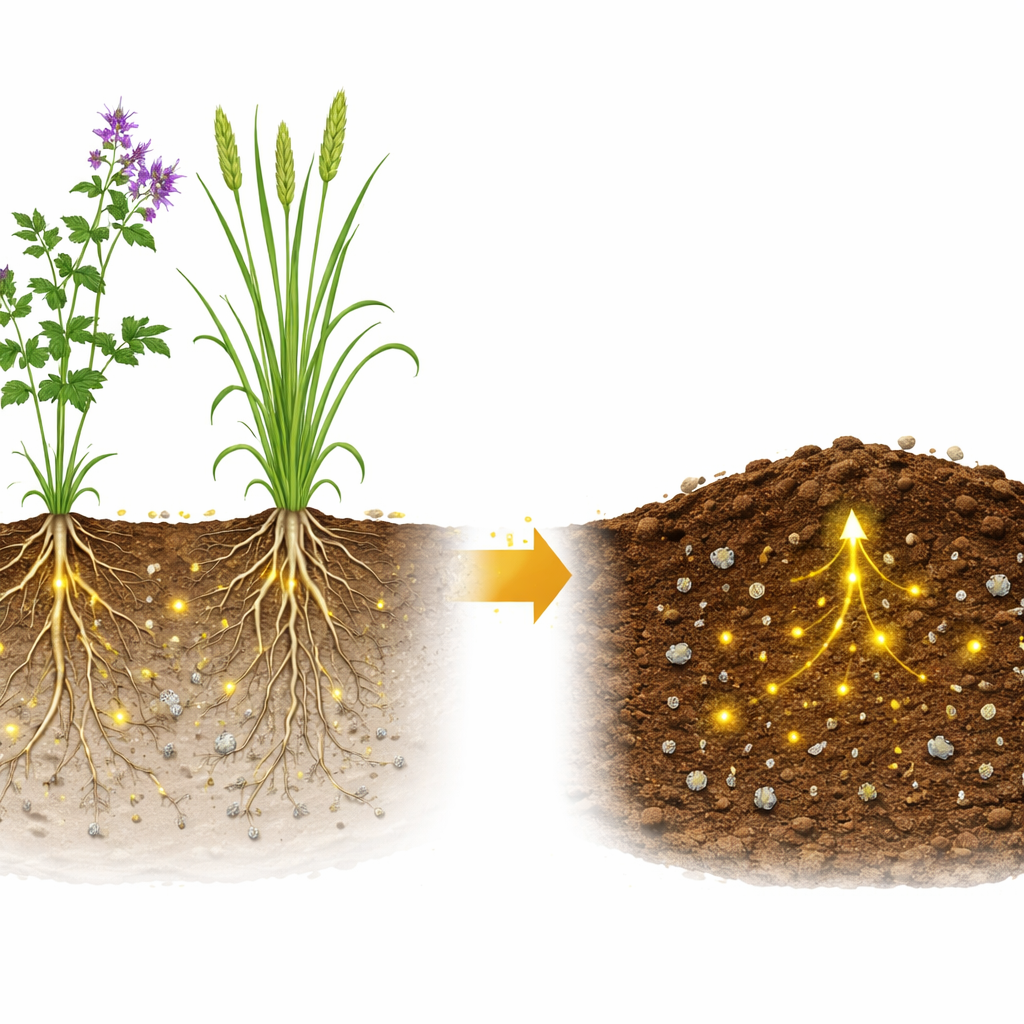
Farmers often sow vetch and oat together between main crops to protect soil from erosion, add organic matter, and support beneficial microbes. Vetch has a deep taproot and partners with bacteria to capture nitrogen from the air, while oat has a dense, fibrous root system that physically structures the soil. The authors wanted to know whether these two species also differ in how they store and release carbon below ground—not only in their root tissue, but also in the cocktail of small molecules they exude into the surrounding soil. They compared four commercial varieties of each species, grown under controlled hydroponic conditions that allowed precise collection of roots and exudates.
How much carbon plants keep and how much they share
The team first measured how much carbon ended up in roots and in exudates. Vetch plants produced more shoot and root biomass overall, and their roots contained more carbon per plant than oat roots. However, when the researchers looked at the carbon that actually left the roots as exudates, the pattern changed. On a per‑plant basis, vetch and oat exuded similar amounts of carbon over 24 hours. Relative to leaf biomass, though, oat directed a slightly larger share of carbon out through its roots, hinting at species‑specific strategies of carbon allocation. Even so, the root system of each plant held roughly 50 to 70 times more carbon than what was exuded in a day, emphasizing that long‑term carbon storage still relies heavily on root and shoot residues as well as exudates.
Different chemical mixes beneath the surface
To move beyond total carbon, the researchers used advanced chemical profiling to catalog 143 distinct compounds in roots and exudates, including sugars, amino acids, organic acids, fatty acids, nucleotides, and specialized small molecules. Every metabolite found in roots appeared in both species, but the relative amounts differed: oat roots held more amino acids, sugars, organic acids, and specialized compounds, while vetch roots contained more nucleotides. In contrast, exudates showed clearer species “signatures.” Vetch exuded more sugars, organic acids, and nucleotides, whereas oat exuded more fatty acids and certain specialized compounds. Very few of these exuded molecules were unique to a single plant variety, indicating that the main differences arise between species rather than between commercial lines.
The special role of sugars and other simple molecules
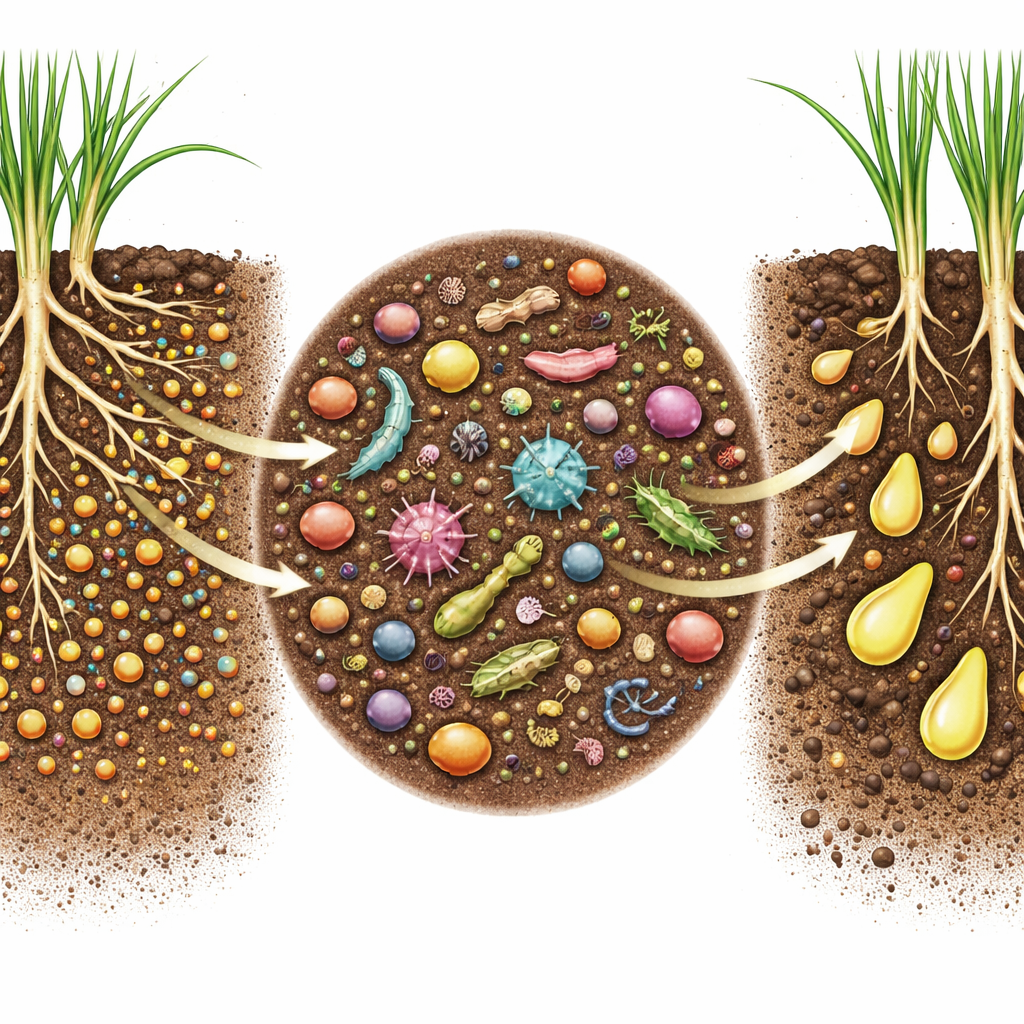
Sugars stood out as major building blocks in this underground chemistry. Detailed measurements showed that oat roots stored more sucrose, glucose, and fructose than vetch roots, even though their overall carbon content was lower—suggesting that vetch roots may invest relatively more carbon in other structural or specialized compounds. In the exudates, the pattern flipped: vetch released more sugars than oat, and in both species fructose dominated the exuded sugar mix. The sugar blend in exudates did not simply mirror what was stored inside roots, implying that plants actively regulate which simple molecules they leak out. Alongside sugars, the presence of fatty acids in oat exudates and nucleotides in vetch exudates hints that these primary compounds, not just more exotic specialized chemicals, could help shape the soil microbial community and influence nutrient cycling.
What this means for climate‑smart fields
To a non‑specialist, the message is that vetch and oat do not just differ in how they look above ground; they also send very different “menus” of carbon to the soil through their roots. Vetch delivers more sugars and organic acids that can quickly feed microbes, while oat supplies more fatty acids and other compounds that may contribute to longer‑lasting carbon and distinct microbial partners. When grown together as cover crops, these contrasting exudates are likely to complement each other, enriching the soil with a broader palette of carbon forms and supporting a more diverse microbial community. Over time, such mixtures could help build more stable soil organic matter while reducing the need for fertilizers and pesticides, making them a promising tool for both climate mitigation and resilient farming.
Citation: Turpin, C., Mauve, C., Rattier, A. et al. Exudate compositions differ between the cover crops vetch and oat. Sci Rep 16, 14517 (2026). https://doi.org/10.1038/s41598-026-44751-7
Keywords: cover crops, soil carbon, root exudates, vetch and oat, soil microbiome