Clear Sky Science · en
Objectively measured physical activity following lumbar decompression surgery: systematic review and meta-analysis
Why back surgery and daily movement matter
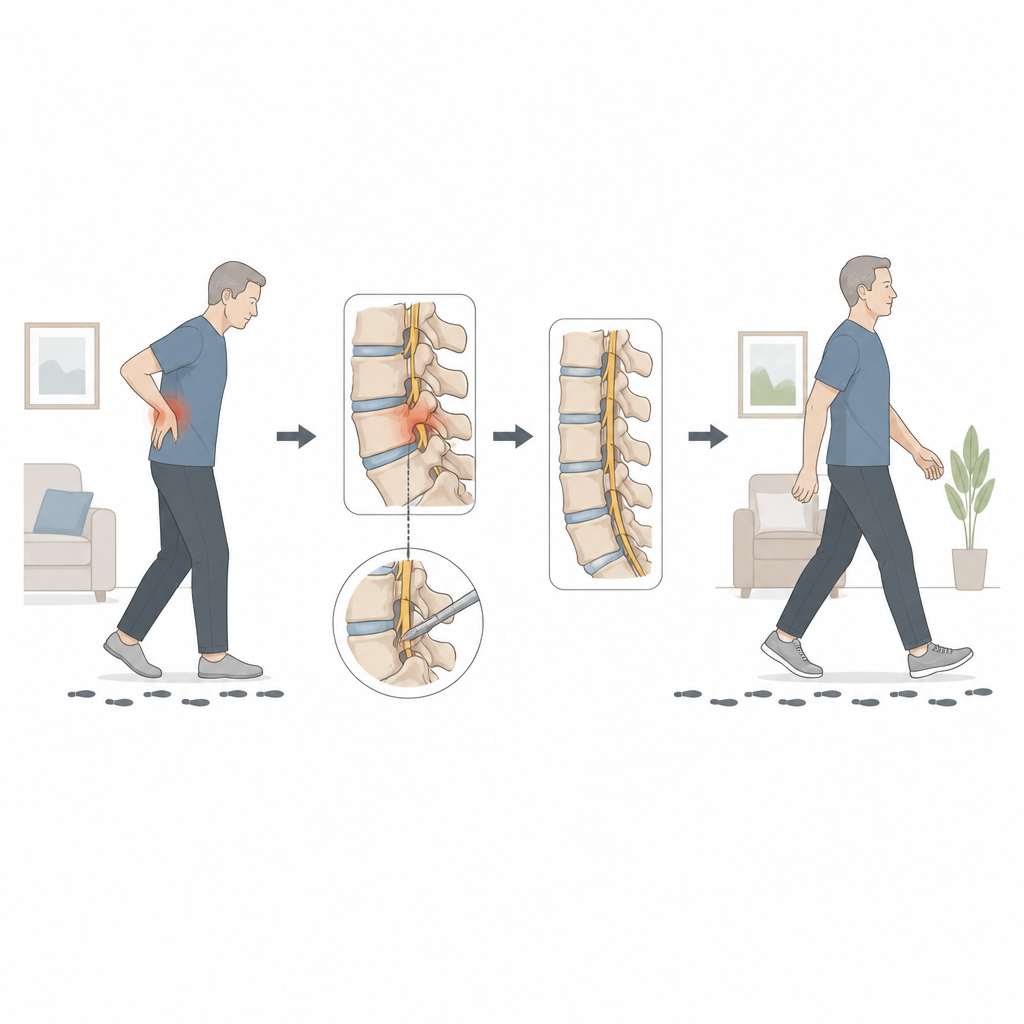
Lumbar decompression surgery is often offered to people whose lower back and leg pain is so severe that walking to the kitchen can feel like a marathon. Many patients hope that once the pressure on their spinal nerves is relieved, they will not only hurt less but also get back to a more active, healthier life. This study asks a simple but important question: after this common spine operation, do people actually move more in their day to day lives when we track their steps and activity with modern wearable devices?
What the researchers set out to explore
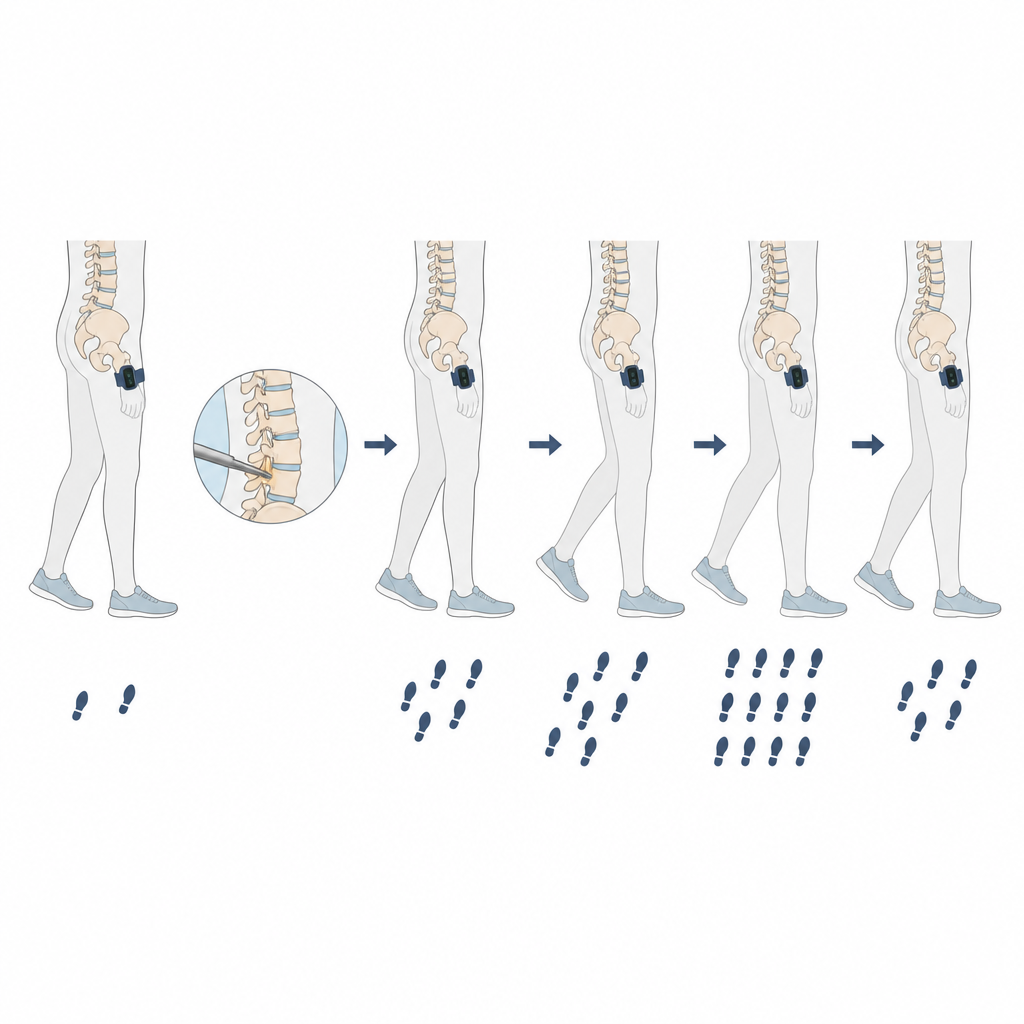
The authors reviewed and combined results from ten studies including 549 adults who had lumbar decompression for conditions such as slipped discs and spinal narrowing. Instead of relying only on questionnaires about pain and disability, these studies used devices like accelerometers, fitness trackers and smartphones to count steps and capture movement over weeks and months after surgery. The team focused on two main aspects of movement: overall volume, such as daily step counts, and intensity, which distinguishes gentle activity from more vigorous effort like brisk walking.
How activity changed after surgery
Across most studies, patients followed a similar pattern. Immediately after surgery, their activity dropped, which is expected while they recover from the operation. Over the next few weeks, step counts and other measures of movement climbed again, typically returning to pre surgery levels by about three to four months. When the researchers pooled data from six studies in a formal meta analysis, they found only small, statistically uncertain increases in total activity at three and six months. In other words, on average, people did not clearly surpass the amount of movement they managed before surgery, even though their pain and disability scores improved a great deal.
How hard people moved, not just how much
A smaller number of studies looked at how intense patients activity was, breaking time up into sedentary minutes, light movement and moderate to vigorous activity, such as faster walking. Early after surgery, some patients showed slight increases in time spent in moderate to vigorous movement, but overall these gains were modest and often remained below levels seen in healthy people. Light activity and sedentary time tended to change little. These limited shifts suggest that while patients may feel better and resume their usual routines, they do not routinely push themselves into the higher effort activity that is closely linked to heart health, longevity and mental wellbeing.
Why feelings and real world movement do not always match
One striking finding was a weak and inconsistent connection between what patients reported about their recovery and what the devices recorded. In the first few months, higher step counts sometimes lined up with lower disability and better physical function scores, but these links often faded by a year. Other measures, such as pain relief and psychological resilience, did not reliably predict who would move more. The authors describe this mismatch as a function activity gap: after decompression, people can walk farther in tests and feel less limited, yet many still lead largely inactive lives when back at home.
What this means for patients and care teams
For someone considering or recovering from lumbar decompression, this review offers both reassurance and a caution. The operation consistently reduces pain and improves comfort and capacity, but those gains do not automatically translate into a more active lifestyle that protects long term health. The authors argue that simple step counters and similar tools should be used alongside symptom questionnaires to give a fuller picture of recovery. They also suggest that tailored exercise plans, clear activity goals and behavioural support may be needed to help patients turn surgical relief into lasting, everyday movement rather than a return to the same low activity patterns as before.
Citation: Kanakala, S., Mahmud, A., Ali, I. et al. Objectively measured physical activity following lumbar decompression surgery: systematic review and meta-analysis. Sci Rep 16, 15291 (2026). https://doi.org/10.1038/s41598-026-44749-1
Keywords: lumbar decompression, physical activity, wearable devices, step count, spine surgery recovery