Clear Sky Science · en
Real-time bioluminescence imaging of mycobacteria with Akaluc: a novel method for monitoring drug efficacy
Why glowing germs matter
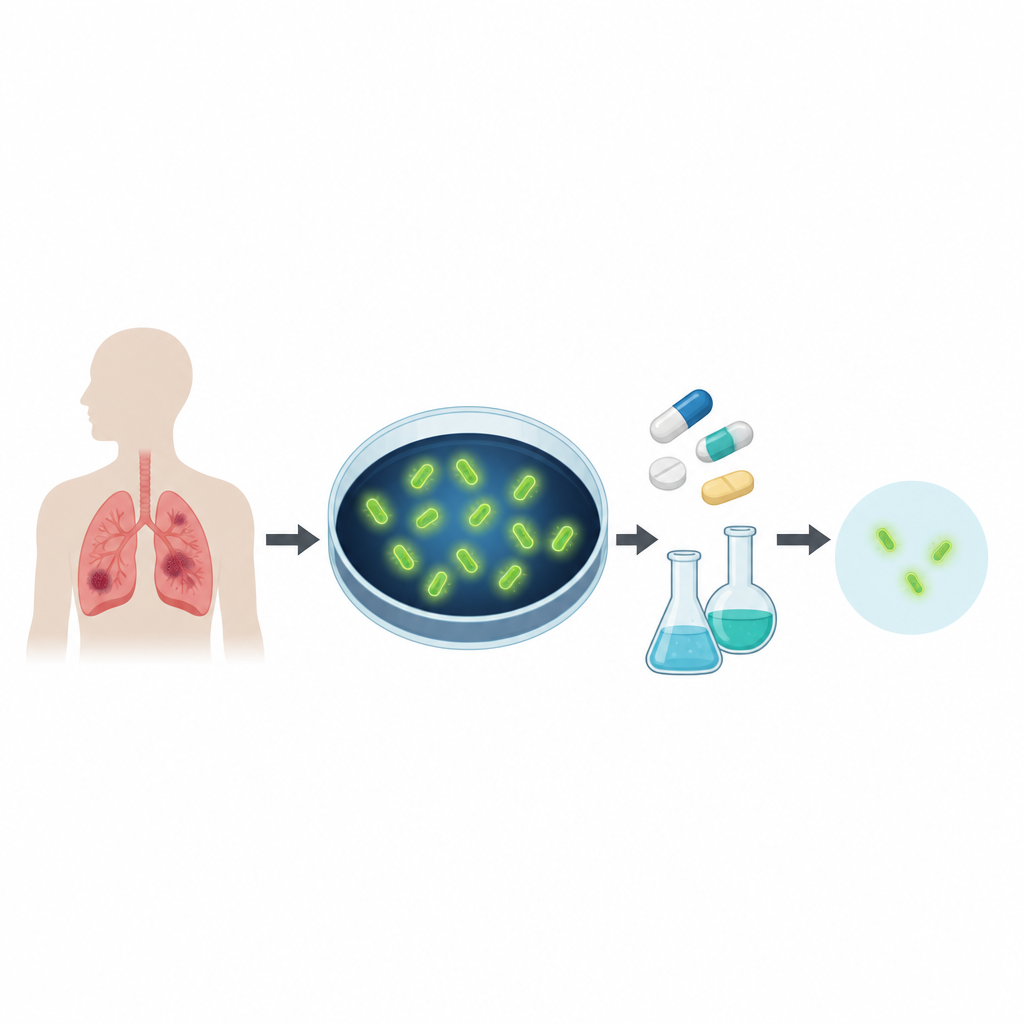
Tuberculosis remains one of the world’s deadliest infectious diseases, and new drugs are urgently needed to outpace rising antibiotic resistance. Yet testing whether a compound can kill tuberculosis bacteria is slow, often taking weeks and relying on animal experiments. This study introduces a faster, more humane lab method that makes tuberculosis-related bacteria glow, allowing researchers to watch in real time how well drugs work both in test tubes and inside immune cells.
Turning bacteria into tiny light bulbs
The researchers equipped harmless laboratory relatives of the tuberculosis germ with a special enzyme called Akaluc that makes cells emit light when they encounter its matching chemical fuel. By inserting the Akaluc gene into the bacteria using different genetic carriers and switches, they tested which combinations produced the strongest and most stable glow. They focused on two bacterial species used as stand-ins for the true tuberculosis pathogen, including the vaccine strain known as BCG, because these are safer to handle but respond to drugs in comparable ways.
Finding the best way to make them shine
Next, the team compared several light-producing chemical fuels to see which one worked best with Akaluc in mycobacteria. They discovered that a compound called TokeOni at a very low concentration produced the brightest signal, especially when measured about 10 to 20 minutes after it was added. The glow rose as the bacteria multiplied during their active growth phase and faded as they entered a resting phase, closely mirroring their real biological activity. Among the genetic settings they tested, one particular gene switch, originally taken from a tuberculosis surface protein called Ag85B and carried on a plasmid named pMV261, consistently gave the strongest light signal in both fast and slow growing strains.
Watching drugs work in real time
With a bright and reliable glow established, the scientists asked whether this light could report how well antibiotics were working. They exposed glowing BCG bacteria in broth to standard tuberculosis drugs such as isoniazid and rifampicin and tracked three things over a week: cloudiness of the culture, the number of living bacteria counted on plates, and the light they emitted. As the drugs killed the bacteria, the bioluminescence dropped in step with the fall in live cell counts, and rifampicin in particular caused a rapid collapse in both viability and glow. When they treated the glowing bacteria with a range of drug doses, stronger doses caused a bigger and quicker loss of light, clearly separating effective from ineffective concentrations.
Following hidden infections inside immune cells
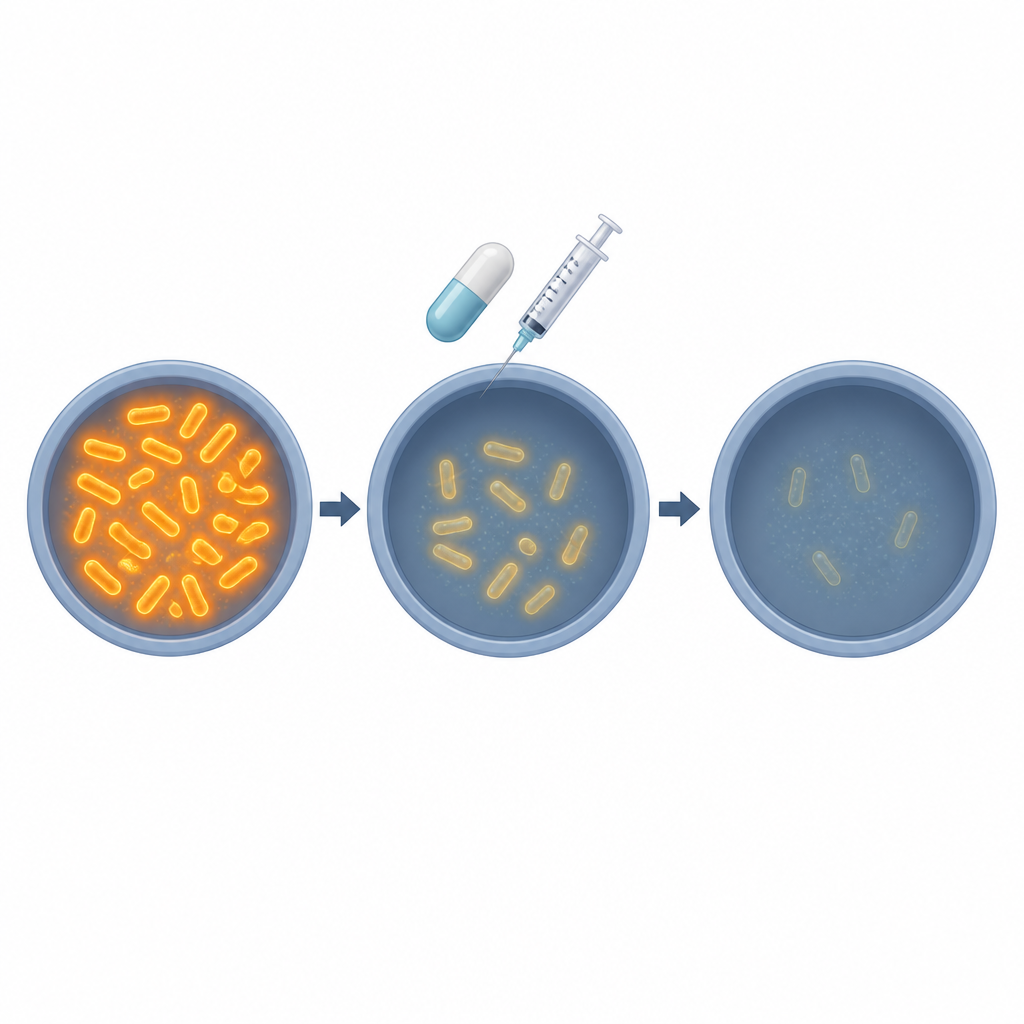
Because tuberculosis bacteria mainly live inside immune cells in the body, the team also tested their glowing strains in a human cell line called THP-1, commonly used to mimic macrophages. These cells were infected with BCG that carried the brightest Akaluc setup and then treated with antibiotics. Over several days, the light coming from the infected cells rose in untreated cultures as bacteria multiplied, but fell sharply in drug-treated cells. Again, the timing and size of the drop in bioluminescence closely matched direct bacterial counts taken from within the cells, while the human cells themselves stayed largely healthy throughout the experiment.
What this means for future TB drug testing
By making tuberculosis-related bacteria glow in proportion to their health, this study provides a practical tool to judge how well drugs work in hours to days instead of waiting weeks for colonies to grow. The system works in simple broth tests and inside human immune-like cells, and its light output tracks closely with the actual number of surviving bacteria. For non-specialists, the key idea is that scientists can now watch tuberculosis stand-in germs brighten or dim in real time as medicines act on them, offering a faster and less animal-dependent way to sift through potential treatments before moving to more complex studies.
Citation: Islam, M.S., Takeishi, A., Tateishi, Y. et al. Real-time bioluminescence imaging of mycobacteria with Akaluc: a novel method for monitoring drug efficacy. Sci Rep 16, 15193 (2026). https://doi.org/10.1038/s41598-026-44744-6
Keywords: tuberculosis, bioluminescence, drug screening, mycobacteria, Akaluc