Clear Sky Science · en
Sustainable development beyond emissions: the role of ICT, load capacity factor, green technology patents, and energy transition in OECD countries
Why This Study Matters for Everyday Life
As countries race to cut carbon emissions and meet climate goals, it is easy to focus only on smokestacks and tailpipes. This study asks a deeper question: how do our growing use of the internet, new green inventions, renewable energy, and the planet’s own limits work together to shape long-term well‑being? Looking at advanced economies in the OECD from 1991 to 2021, the authors explore when digital tools and clean technologies actually help nature and people—and when they may quietly push us in the wrong direction.
Looking Beyond Emissions Alone
Most measures of environmental progress rely on a single number, such as carbon dioxide emissions or an ecological footprint. These tell us how much pressure humans put on the planet, but not how much nature can still absorb or regenerate. This study instead uses a measure called the load capacity factor, which compares what people take from ecosystems with how much those ecosystems can safely provide. At the same time, sustainable development is tracked with an index that blends income, education, and life expectancy with ecological limits, asking not just whether life is improving, but whether it is doing so within the planet’s boundaries.
Four Big Forces Shaping Sustainability
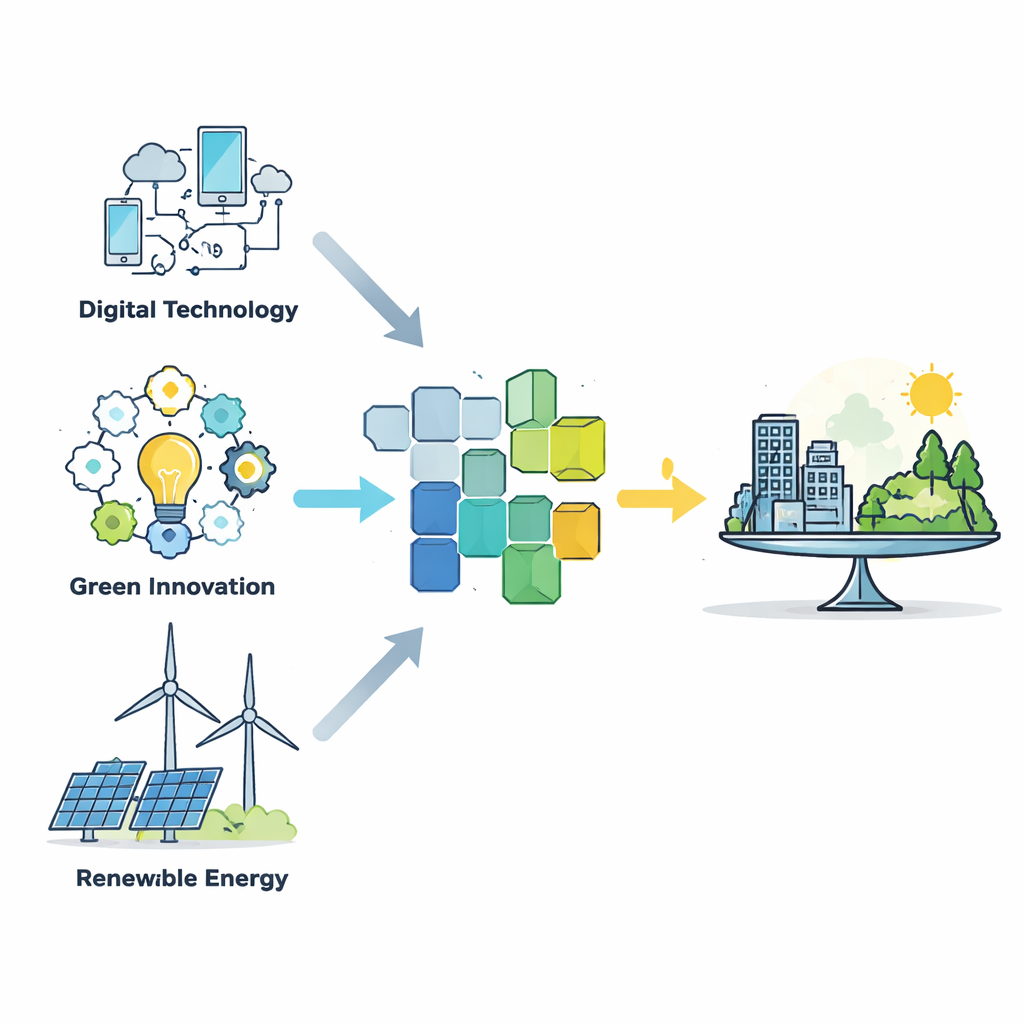
The researchers focus on four key forces. Information and communication technologies (ICT) capture how deeply the internet and digital tools have spread through daily life. Green technology patents stand in for the strength of environmentally focused innovation, such as cleaner industrial processes or energy‑saving devices. The green energy transition is measured by the share of renewables in a country’s energy use. Finally, the load capacity factor reflects how well a country balances human demand with the land and sea’s ability to recover. Together, these elements represent the digital, technological, energy, and ecological sides of sustainable development.
How the Study Was Carried Out
To understand long‑term patterns rather than short‑term swings, the authors use advanced statistical tools that can handle both shared global shocks—like oil crises or major climate agreements—and differences between countries. They analyze data from 25 OECD nations over three decades, a period that includes milestones such as the Rio Earth Summit, the Kyoto Protocol, and the Paris Agreement. By examining each country separately as well as the group as a whole, they can see where similar policies and technologies lead to very different environmental outcomes.
Surprising Country‑by‑Country Patterns
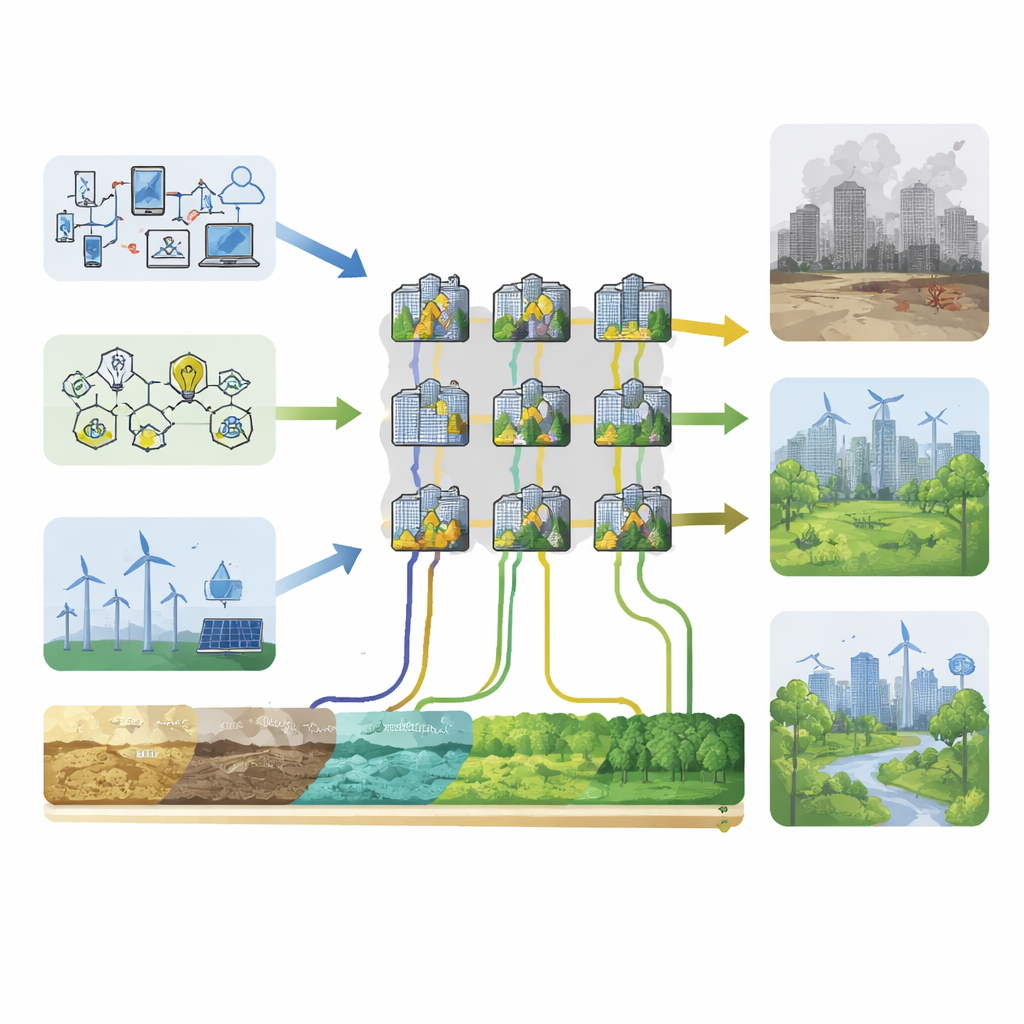
The results reveal that there is no single path to sustainability. In several European countries, such as Belgium, Finland, Italy, and Spain, greater use of digital technologies is linked with better sustainable development, likely through efficiency gains and smarter management of energy and resources. Yet in Denmark, Japan, and the United States, digital expansion is associated with worse outcomes, suggesting that power‑hungry data centers and networks, still fed largely by fossil fuels, can outweigh efficiency gains. Green technology patents support sustainable development in Canada and Norway, where strong institutions help turn inventions into real‑world change, but show a negative link in the United States, where green patents remain a small slice of overall innovation and may not be widely deployed.
When Clean Energy Helps—and When It Hurts
The shift toward renewable energy also tells a mixed story. In Greece, Italy, Luxembourg, Portugal, and Spain, a rising share of renewables goes hand‑in‑hand with better sustainable development, reflecting coherent policies that pair clean power with broader changes in transport, buildings, and industry. In Canada and Sweden, however, higher renewable use is tied to weaker performance. There, heavy reliance on biomass—such as wood for energy—and slow uptake of carbon‑capture technologies mean that nominally renewable sources can still strain ecosystems. The study also finds that in the Netherlands, explicitly managing the balance between ecological demand and nature’s capacity, captured by the load capacity factor, supports long‑term sustainability as the country moves away from coal and natural gas.
What This Means for the Future
For a lay reader, the central message is that digital tools, green inventions, and renewable energy are not automatically good or bad. Their impact depends on how they are powered, whether new ideas spread beyond the lab, and how closely policies watch the planet’s limits. The authors conclude that countries need integrated strategies: pairing digital growth with clean power, backing green patents with finance and adoption, and judging success not only by lower pollution but by whether human well‑being stays within what ecosystems can safely support. In other words, true sustainable development is less about any single technology and more about how societies weave technology, energy, and nature into a balanced whole.
Citation: Demirtas, N., Okoth, E., Sogut, Y. et al. Sustainable development beyond emissions: the role of ICT, load capacity factor, green technology patents, and energy transition in OECD countries. Sci Rep 16, 10628 (2026). https://doi.org/10.1038/s41598-026-44740-w
Keywords: sustainable development, digitalization, green technology, renewable energy, ecological capacity